 Admin
Admin If your hair feels dull, frizzy, or keeps falling out no matter what products you try, the problem usually isn’t the products — it’s the routine. India’s hard water, pollution, heat, and humidity put hair under daily stress that most generic “hair care tips” don’t account for.
The best hair care routine isn’t about expensive products or 10-step routines copied from Instagram. It’s a simple, consistent system built around three things: a healthy scalp, protected hair strands, and minimal environmental damage. Get these right, and your hair fall reduces, texture improves, and shine comes back — naturally, over time.
This guide breaks down exactly how to build that routine, step by step.
Why Most Hair Care Routines Fail
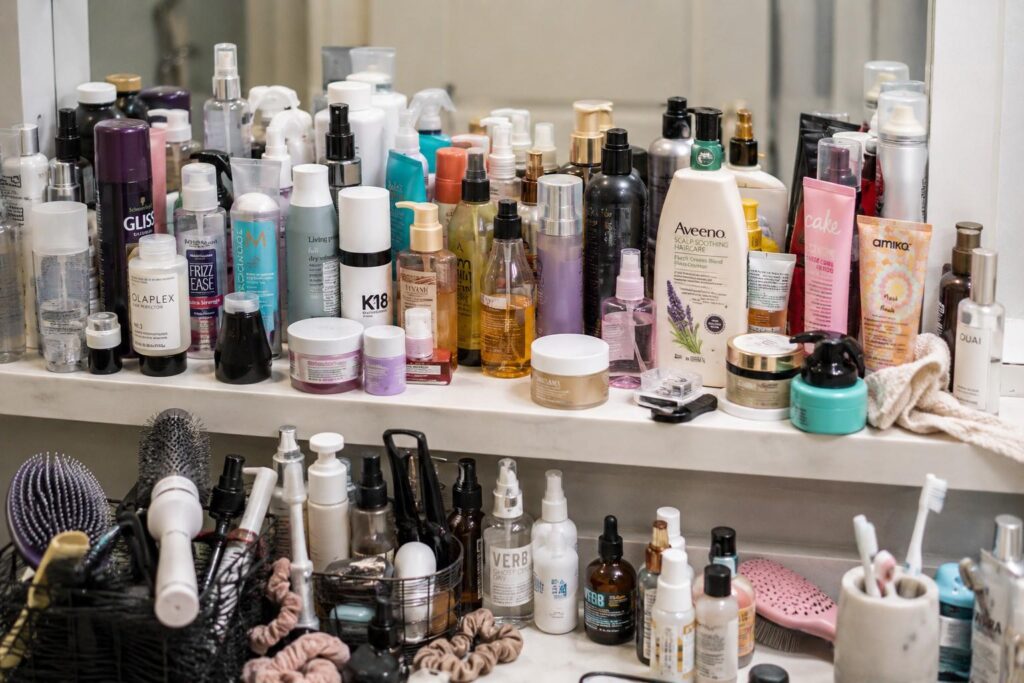
Before diving into the steps, it helps to understand why routines don’t work for most people:
- They’re inconsistent — oiling once a month or using a hair mask “when they remember”
- They’re copied, not customized — a routine made for dry, cold climates doesn’t work for humid Indian summers
- They ignore the scalp — most damage starts at the root, not the strand
- They overload on products — more products often means more buildup, not better hair
A good routine fixes all four. Here’s how.
Step 1: Oiling — The Foundation, Not an Afterthought
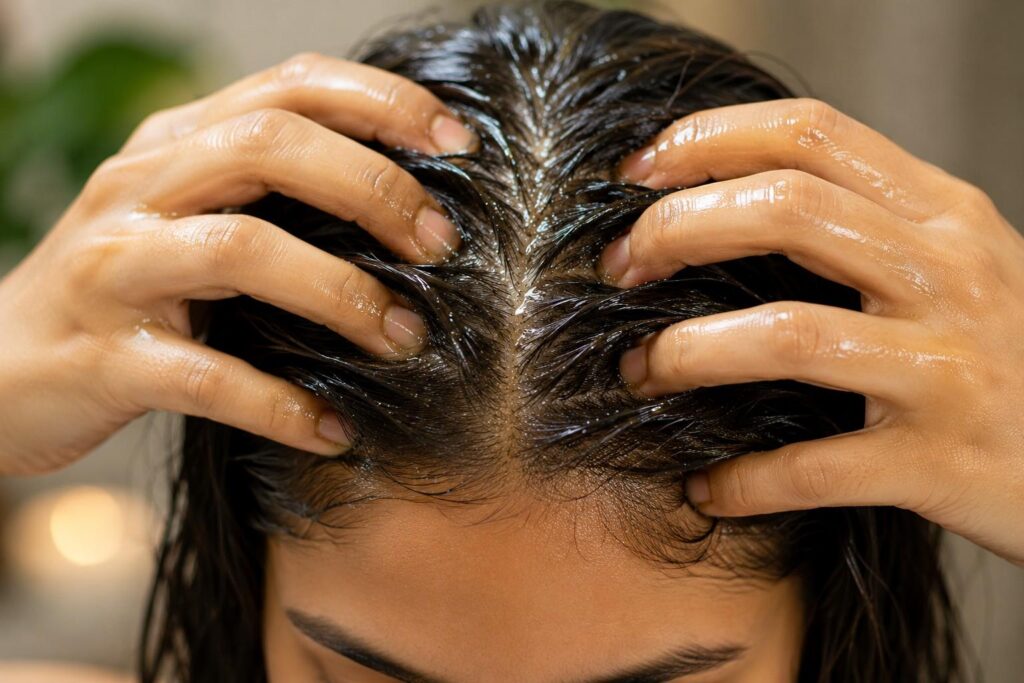
Oiling is often the most skipped step, but it’s one of the most effective — when done right.
What oiling actually does:
- Penetrates the scalp to deliver fatty acids that strengthen hair follicles
- Creates a protective layer before shampooing, so strands lose less protein during washing
- Improves elasticity, making hair less prone to snapping during combing or styling
How to oil correctly:
- Use light, circular massage motions for 5–10 minutes — this boosts blood circulation to the scalp
- Oil 2–3 times a week is enough; daily oiling can lead to buildup
- Match the oil to your need: coconut oil for strength and protein retention, almond oil for softness and shine, castor oil for thickening, bhringraj or amla oil for traditional Ayurvedic scalp support
Pro tip: Apply oil at least 30–60 minutes before washing (or leave it overnight) so it has time to absorb rather than just sitting on the surface.
Step 2: Shampooing — Clean the Scalp, Not Just the Hair

The biggest shampoo mistake? Treating it like a full-length cleanser when its real job is scalp hygiene.
Why this matters:
- Sweat, oil, and pollution build up mainly at the scalp — that’s where shampoo should focus
- Over-washing strips natural oils, triggering the scalp to overproduce sebum (leading to a greasy-then-dry cycle)
- Harsh, frequent washing weakens hair roots over time and contributes to thinning
Smart washing approach:
- Dilute shampoo slightly with water before applying — this distributes it more evenly and reduces harshness
- Focus massage on the scalp; let the lather rinse naturally through the lengths
- Wash 2–3 times a week for most hair types (oily scalps may need more, dry scalps less)
- Choose a sulfate-free, mild shampoo if you live in a hard water area — this is especially important for North Indian households
Step 3: Conditioning — Don’t Skip This Step

Conditioner isn’t just for softness — it’s a protective layer for already-vulnerable hair.
What it does:
- Seals the hair cuticle (which stays open after shampooing), locking in moisture
- Reduces friction damage from daily combing, tying, and touching
- Makes hair easier to detangle without snapping strands
How to use it right:
- Apply only from mid-length to ends — avoid the scalp (this can cause buildup and greasiness)
- Leave it on for 2–3 minutes minimum before rinsing
- Rinse with cool or lukewarm water — this helps seal the cuticle and adds shine
Step 4: Hair Masks — Weekly Deep Repair
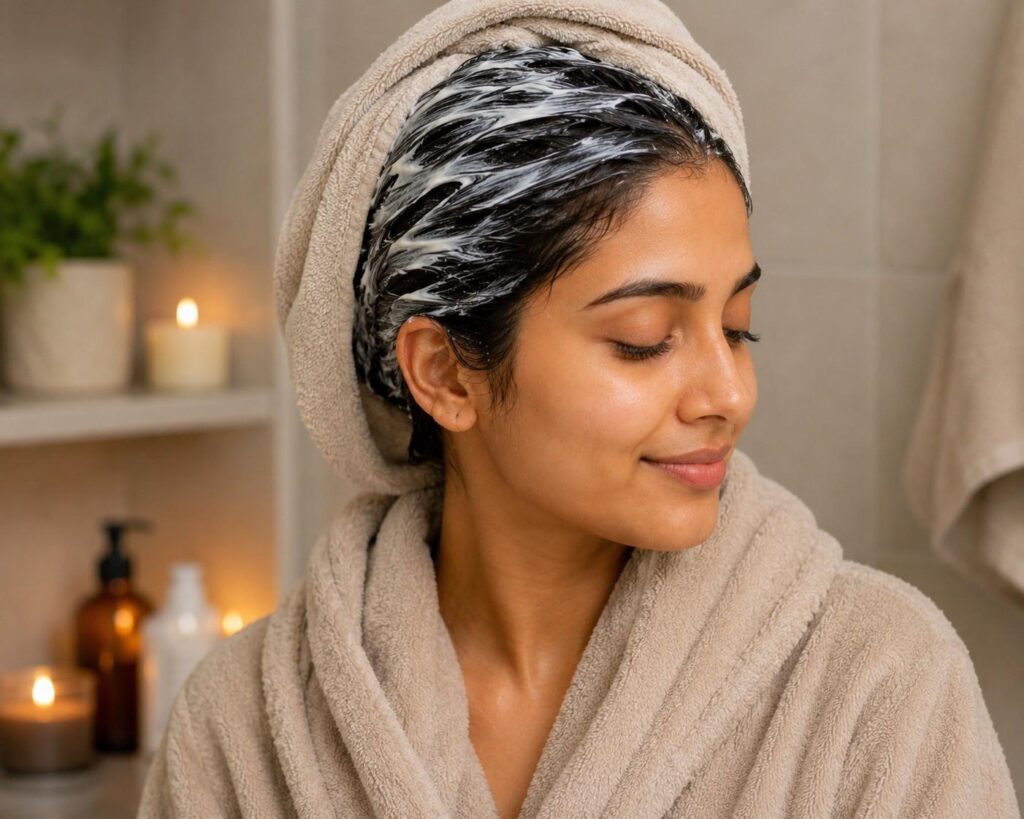
Think of hair masks as the “deep treatment” your hair needs once a week, beyond daily conditioning.
Benefits:
- Penetrates deeper than regular conditioner, helping repair damage from within the strand
- Improves long-term moisture retention, especially for dry or chemically treated hair
- Builds overall resilience against heat, pollution, and styling damage
For best results:
- Apply on damp (not soaking wet) hair for better absorption
- Cover with a warm towel or shower cap for 15–20 minutes — heat helps the mask penetrate
- Use once a week consistently; results build up over 4–6 weeks
DIY option: A simple mix of curd, banana, and a few drops of coconut oil works as an effective at-home hair mask for dryness and frizz.
Step 5: Post-Wash Care — The Most Overlooked Step
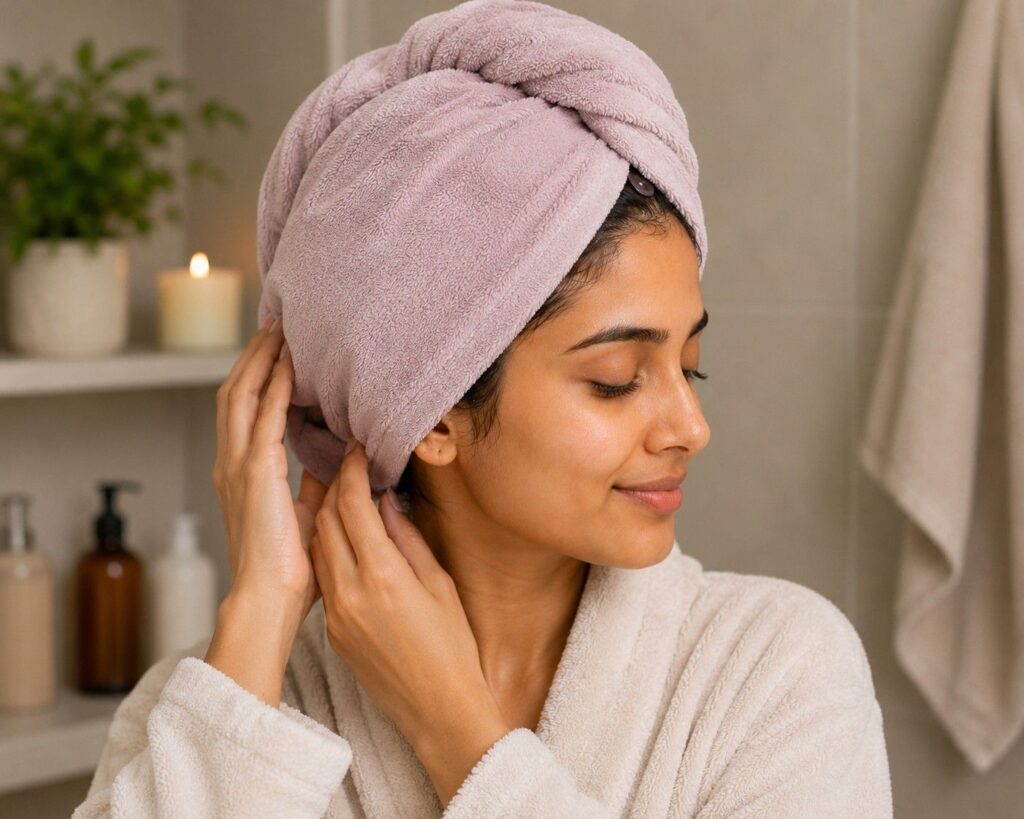
What you do right after washing can undo (or protect) everything else in your routine.
Why it matters:
- Wet hair is at its weakest — it stretches more and breaks more easily
- Rough drying and aggressive detangling cause most post-wash breakage
Do this instead:
- Pat hair dry with a microfiber towel or soft cotton T-shirt — never rub vigorously
- Detangle starting from the ends, working upward — never start from the roots on wet hair
- Apply a leave-in serum or light cream to create a protective barrier against humidity and pollution
- Let hair air-dry as much as possible before using any heat
Step 6: Managing Heat & Styling Damage
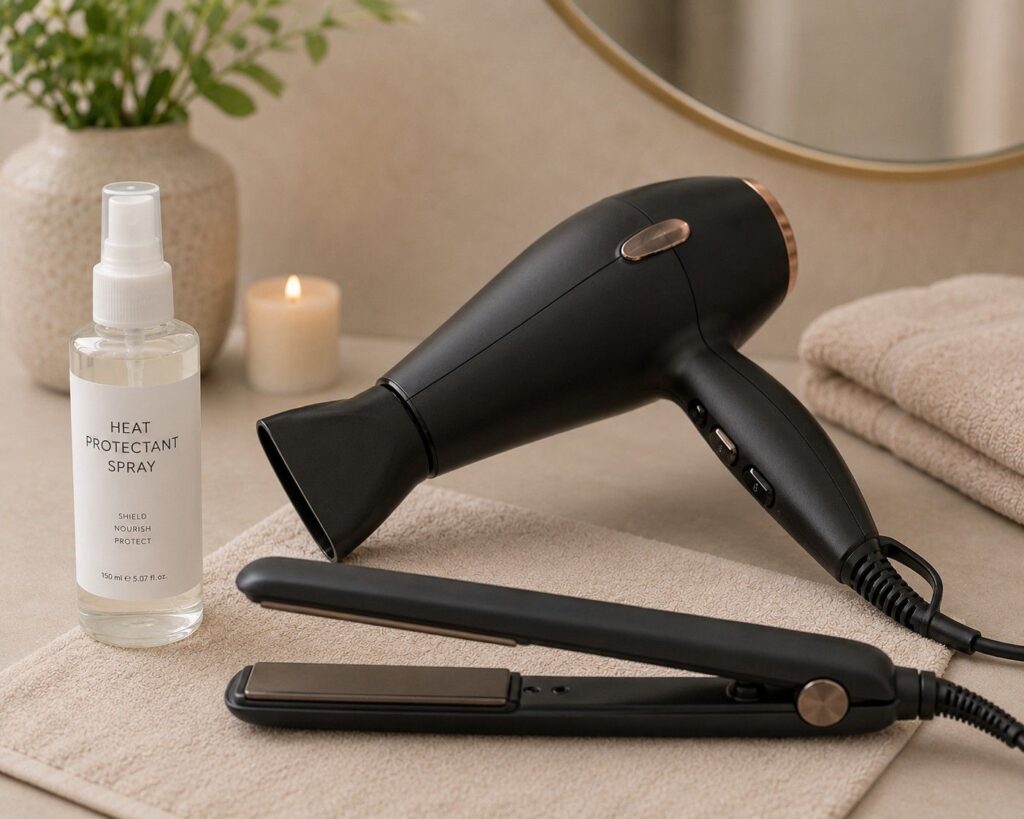
Heat styling gives instant results but causes cumulative, often invisible damage.
What’s happening:
- Heat breaks down protein bonds in hair, leading to dryness, split ends, and dullness over time
- Frequent styling gradually changes your hair’s natural texture
A balanced approach:
- Limit heat styling to special occasions, not daily use
- Always apply a heat protectant spray before using straighteners, curlers, or blow dryers
- On non-styling days, try heatless options — braids, rollers, or twist-outs — for texture and volume
Step 7: Night Routine — Protection While You Sleep

Hair care doesn’t stop when you go to bed — in fact, nighttime habits matter more than most people realize.
Why:
- Cotton pillowcases create friction, leading to tangles, frizz, and split ends over time
- Tight hairstyles overnight put continuous stress on hair follicles
- Satin or silk surfaces reduce moisture loss compared to cotton
Simple nighttime habits:
- Switch to a satin or silk pillowcase (or use a silk scarf/bonnet)
- Tie hair in a loose braid or bun — never tight
- Never sleep with soaking wet hair — it weakens the hair shaft and can lead to scalp issues
Step 8: Nutrition — Hair Health Starts From Inside

No external routine can fully compensate for poor nutrition. Hair is essentially made of protein, and its growth cycle depends on what your body has access to.
Key nutrients for hair health:
- Protein — eggs, lentils (dal), paneer, and sprouts support keratin production
- Iron — leafy greens, jaggery, and pomegranate help prevent hair fall linked to iron deficiency (common among Indian women)
- Omega-3 fatty acids — walnuts, flaxseeds, and fish support scalp hydration and shine
- Biotin and Vitamin E — found in almonds, sunflower seeds, and sweet potatoes, support hair strength
Simple daily habit: Add one source of protein, one iron-rich food, and adequate water intake to your daily diet — small, consistent changes show results within 2–3 months.
Common Mistakes That Quietly Damage Your Hair
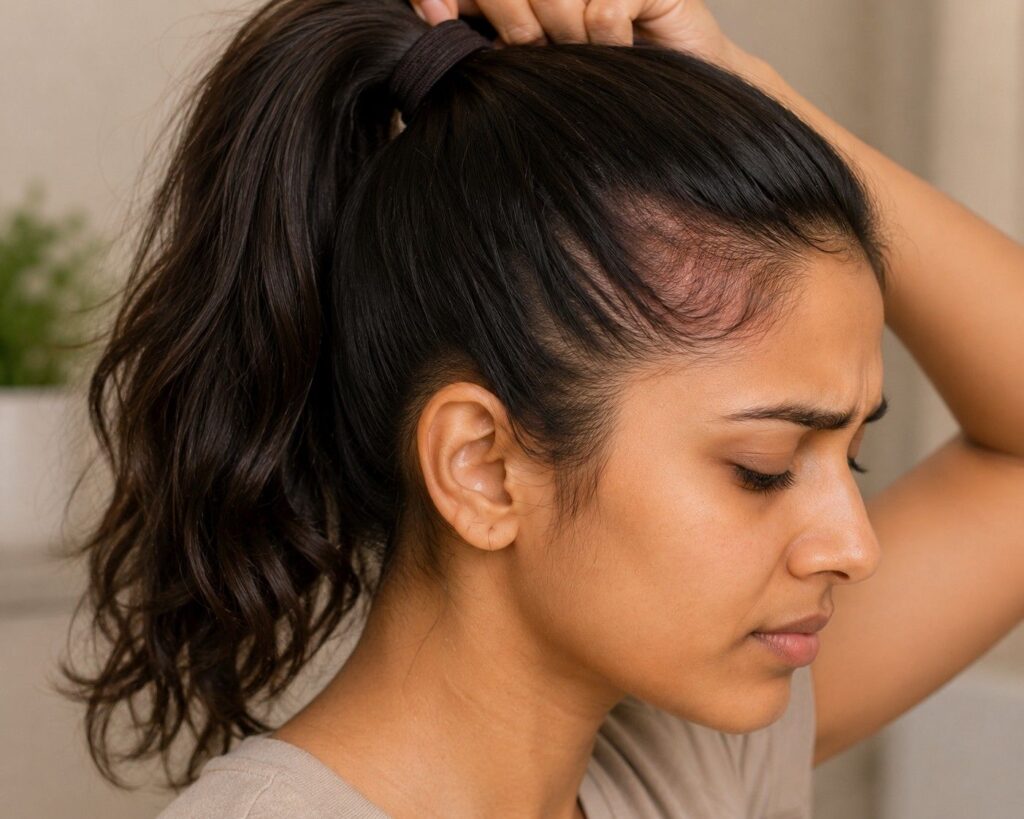
- Inconsistency — switching routines every few weeks doesn’t give any method time to work
- Product overload — using too many serums, oils, and treatments together can clog the scalp
- Ignoring early signs — mild dandruff or slightly increased hair fall often signals something that’s easy to fix early, but harder later
- Tying hair too tightly, too often — leads to traction alopecia over time
- Skipping trims — split ends travel up the hair shaft if not cut regularly
Sample Weekly Routine (Quick Reference)
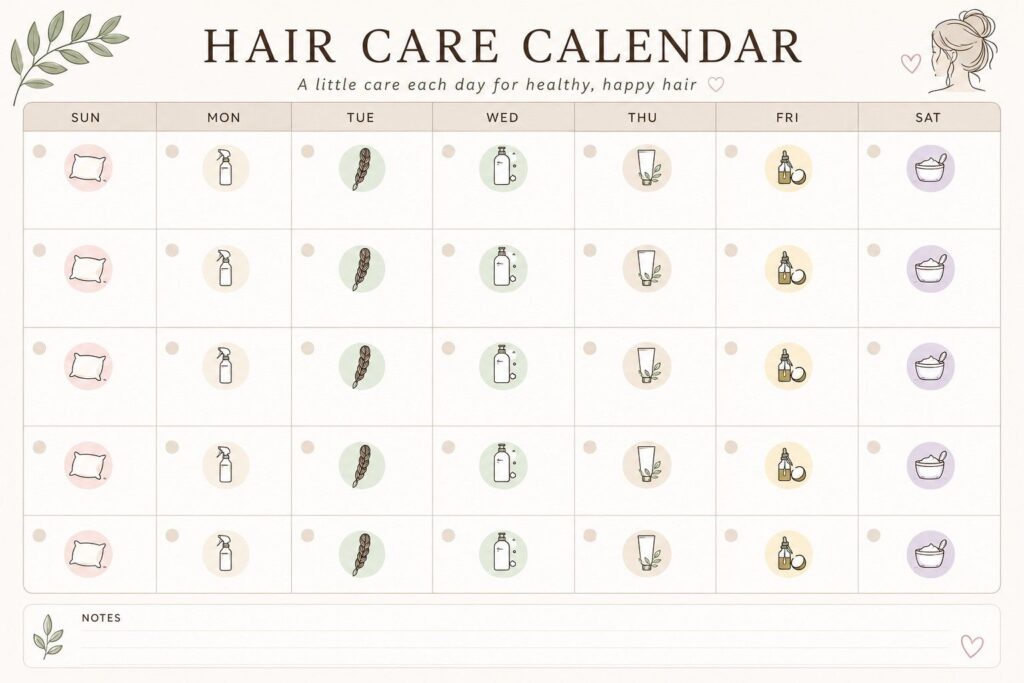
| Day | Routine |
|---|---|
| Mon | Oil massage (overnight) |
| Tue | Shampoo + conditioner |
| Wed | Light serum, satin pillowcase |
| Thu | Oil massage |
| Fri | Shampoo + hair mask |
| Sat | Rest day — minimal products |
| Sun | Oil massage (light) |
For more information:https://hairglowguide.com/7-days-hair-care-routine-a-complete-weekly-plan/
https://hairglowguide.com/hair-care-oil-benefits/
https://hairglowguide.com/10-hair-care-tips-for-healthy-hair/
FAQ Section
Q1: How often should I follow a hair care routine?
A consistent routine should be followed daily for basic steps (gentle detangling, night care) and 2–3 times weekly for oiling, shampooing, and conditioning. Hair masks work best once a week.
Q2: Can a hair care routine reverse hair fall?
A good routine can significantly reduce hair fall caused by poor scalp health, breakage, or nutritional gaps. However, hair fall linked to medical conditions or hormonal changes may need professional consultation alongside the routine.
Q3: How long does it take to see results from a new hair care routine?
Most people notice reduced hair fall and improved texture within 4–6 weeks, with more visible results in hair growth and shine after 2–3 months of consistency.
Q4: Is oiling necessary every day?
No — daily oiling can lead to product buildup on the scalp. Oiling 2–3 times a week, left on for at least 30–60 minutes (or overnight), is more effective.
Q5: What’s the best hair care routine for hard water areas?
Use a sulfate-free shampoo, rinse with a mild diluted apple cider vinegar solution occasionally to remove mineral buildup, and follow up with a good conditioner or hair mask to counter dryness caused by hard water.
Final Thoughts
The best hair care routine isn’t complicated — it’s consistent. When you take care of your scalp, protect your strands, manage environmental damage, and support your hair from the inside through diet, results follow naturally.
Give any routine 6–8 weeks before judging results — hair growth and repair take time. Small, daily habits compound into visibly healthier, stronger, and shinier hair.

 Admin
Admin