 Admin
Admin Introduction
If you have ever stood in front of the mirror and wondered why your hair looks dull or frizzy or rough after trying a lot of different products. You are not alone. A lot of people who’re new to taking care of their hair make the same mistake. They try to fix problems of doing things that will prevent these problems from happening in the first place.
The weather in India is very different in parts of the country. It is very humid near the coast and very dry in the north. This makes it really hard to take care of your hair. Then you have to think about the water, the pollution, the heat from styling tools and the fact that a lot of people do not eat food that is good for their hair. All these things together can cause a lot of problems for your hair.
The good news is that you do not need to do a lot of things to take care of your hair. You do not need to buy products or follow a routine that is very complicated. What you need is a routine that is based on facts and works for Indian hair types.
This guide is for people who’re new, to taking care of their hair. It will tell you everything you need to know to take care of your hair in a simple steps. Whether your hair is oily or dry or curly or wavy or straight. This guide is a place to start with hair care.
What Makes Indian Hair Special?

Before we start talking about how to take care of hair we need to understand what makes it different from other types of hair.
People from India usually have hair that’s medium to thick. The shape of the hair follicle is often oval or round which means the hair is usually straight or wavy.. There are some problems that people with Indian hair often face. For example the water in cities like Delhi, Mumbai and Chennai can be very hard. This can damage the hair. Also using a lot of oil and heat styling tools can cause problems like much oil on the scalp dryness, at the ends of the hair and buildup on the scalp. Some people even start to get grey hair early.
Indian hair likes it when we use oil to take care of it. This is something that people have known for a time and it is also what scientists who study hair have found out. So when we make a routine to take care of hair we should use oil and also add in some modern ways of taking care of hair that are based on science. This way we can take care of Indian hair and make it healthy and strong.
Step 1: Understand Your Hair and Scalp
The first thing you need to do for a hair care routine is to know your hair. Using the hair products for your hair type is a big mistake that people who are new to hair care make.
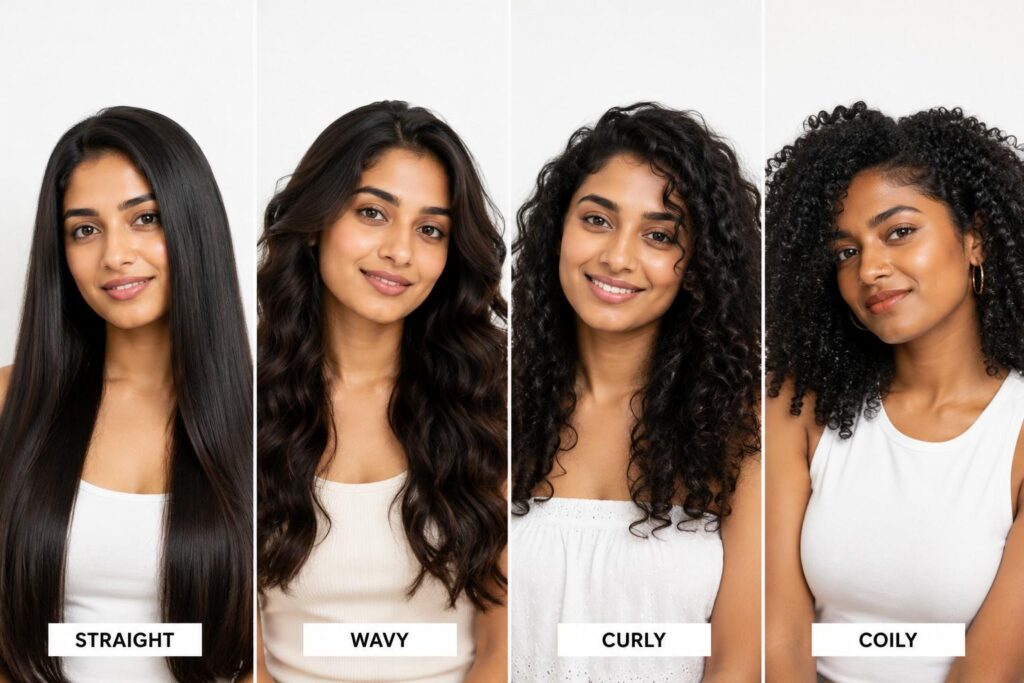
There are kinds of hair textures:
- Hair. This is common in North and West India
- Wavy hair. You find this kind of hair in coastal and Southern India
- Curly hair. This is more common in South India and in some tribes
- Coily or Kinky hair. This is not as common. It is still found in some people
Then there are kinds of scalp types:
- Oily scalp. This kind of scalp makes too much oil and starts to look greasy within a day or two of washing your hair
- Dry scalp. This kind of scalp does not make enough oil and can get flaky and itchy
- Combination scalp. The scalp is oily at the top and dry, at the sides and back
- Normal scalp. This kind of scalp makes the right amount of oil and does not have many problems
To figure out what kind of scalp you have wash your hair without using any products. Then wait for a day. Look at your scalp. If it looks shiny and feels greasy that means you have a scalp. If it feels tight or flaky that means it is dry. Knowing your hair type and scalp type determines how you should take care of your hair.ten you wash, which oils you use, and what products to invest in.
Step 2: -Wash Oil Massage (Champi). A Important Step
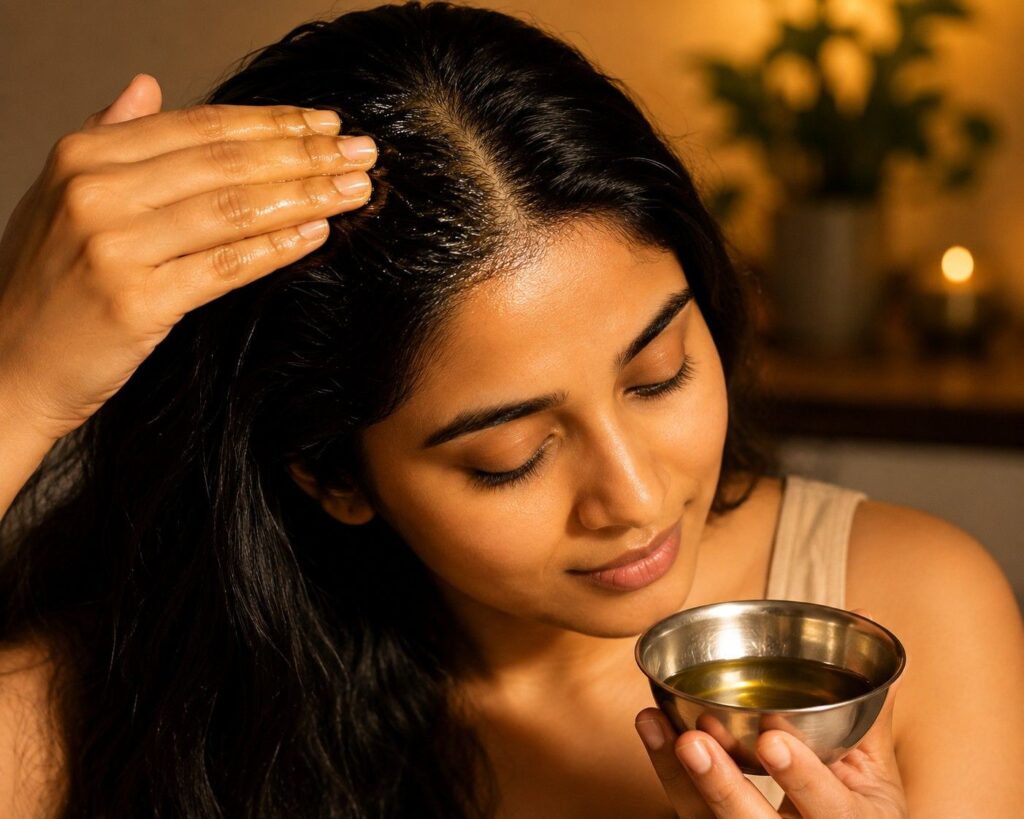
In India people have been oiling their hair before washing for a long time. It is good for hair. A pre-wash oil massage, done one to two hours before shampooing or overnight helps to coat the hair with oil. This reduces the amount of water that enters the hair during washing.
When hair gets wet it. Then shrinks. This can cause damage over time. Oiling hair before washing helps to prevent this.
Best oils to use based on scalp type:
- Coconut oil. Good for hair types in India. It goes into the hair easily. Helps to reduce protein loss.
- Bhringraj oil. A Ayurvedic choice to prevent hair fall. It also improves blood circulation in the scalp.
- Castor oil.. Very conditioning. If your scalp gets oily easily mix it with another oil.
- Neem oil. Good for scalp issues like dandruff.
- Amla oil. Rich in Vitamin C it helps to make hair healthy and prevents greying.
How to do it: Warm the oil a bit. Part your hair into sections. Apply oil to your scalp first using your fingertips. Massage in motions for five to ten minutes. Then apply the remaining oil to the rest of your hair. Cover with a towel or shower cap.
Frequency: Do it one to two times, per week if you have a scalp.ps; 2–3 times for dry scalps.
Step 3: Choosing the Right Shampoo

Shampooing is the step most beginnersWe often get shampooing either by washing our hair too much not enough or using the wrong shampoo formula.
The main job of shampoo is to clean the scalp, not the rest of our hair. Our hair gets cleaned when we rinse it and the water runs down.
When we are looking for a shampoo there are a things to consider.
- Sulphate-free shampoos are really gentle. Are great for hair that is dry, damaged or color-treated.
- If we have a scalp using a mild clarifying shampoo one or two times a week can be very effective.
- For people with dandruff we should look for shampoos that have Zinc Pyrithione, Ketoconazole or Selenium Sulphide in them.
- We should avoid shampoos that have a lot of alcohol in them because they can strip our hair of its oils.
Some good shampoo options that we can find in stores are Head & Shoulders, for dandruff Biotique Bio Kelp which has protein in it Mamaearth Onion Shampoo which helps with hair fall and WOW Apple Cider Vinegar Shampoo which helps to clarify our scalp.
To shampoo our hair correctly we should first wet it really with lukewarm water. We should never use water because it can strip our hair of its natural oils.
Then we should apply the shampoo to our scalp.We should massage it in gently with our fingertips, not our nails.As we rinse our hair the soap should run down the length of our hair.We should rinse our hair well because any leftover shampoo can cause buildup and itching.How often we should shampoo our hair depends on our scalp type.If we have a scalp we should shampoo it every two or three days.If we have a scalp we should shampoo it twice a week.
If we have a scalp we should shampoo it two or three times a week.
Step 4: Conditioning — Non-Negotiable for Healthy Hair
If you are skipping the conditioner because you think it makes your hair greasy. Stop doing that. The idea that conditioner makes hair greasy is not true. Conditioner helps to put moisture into your hair and it closes the cuticle after you have used shampoo. When you do not use conditioner your hair can become frizzy and rough. It can break easily.
To use conditioner the way you should do the following things:
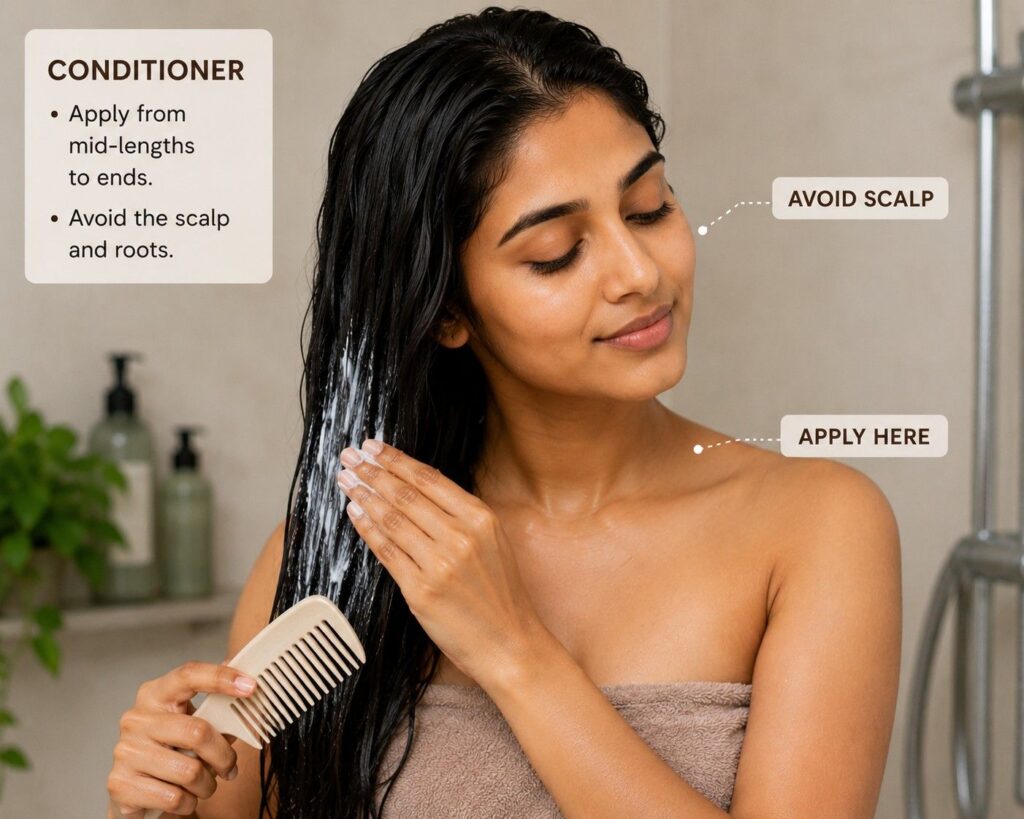
- Apply conditioner only to the middle and the ends of your hair. Never put it on your scalp.
- Use a comb with wide teeth to spread the conditioner evenly through your hair when it is damp.
- Leave the conditioner on your hair for two to three minutes.. Follow the instructions on the bottle.
- Rinse your hair with water to close the cuticle and make your hair shine.
There are kinds of conditioner that you can use.
- The kind of conditioner that you rinse out is for use.
- The deep conditioner or hair mask is something you should use once a week if your hair is dry or damaged.
- The leave-in conditioner is for people with hair or very dry hair. You put it on your hair when it is damp and you do not rinse it out.
If you want to make your conditioner at home here are some things you can try:
- You can make a mask using curd. It has protein and lactic acid, which’s great for making your hair shiny and getting rid of frizz.
- You can make a mask using eggs and olive oil. This is a treatment that can help make your hair stronger.
- You can make a mask using bananas and honey. This is good, for hair that’s extremely dry or brittle.
Step 5: Post-Wash Care — How You Handle Wet Hair Matters

Wet hair is really fragile. The tiny bonds that hold each hair strand are broken so the hair can get damaged easily.
The right way to take care of hair is:
- Never rub your hair with a towel it is not good for your hair. Instead gently pat it with a towel. Use an old cotton T-shirt to get rid of extra water. You can also use a microfibre towel.
- When you detangle your hair use a wide-tooth comb. Start from the ends of your hair. Work your way up to the roots. Never start from the roots and go down this can cause damage to your hair.
- Do not tie your hair too tightly in a bun or ponytail. This can cause hair loss over time which is called traction alopecia.
- Let your hair dry naturally whenever you can especially when it is warm outside in India.
Heat styling guidance for beginners: if you have to use heat on your hair remember that wet hair is, at its vulnerable state so be careful when you use heat styling tools on your wet hair.e a blow dryer, flat iron, or curling tong — always use a heat protectant spray or serum first. Keep blow dryers on medium heat and at least 6 inches from the scalp. Limit heat styling to 1–2 times per week maximum.
Step 6: Weekly Deep Treatment
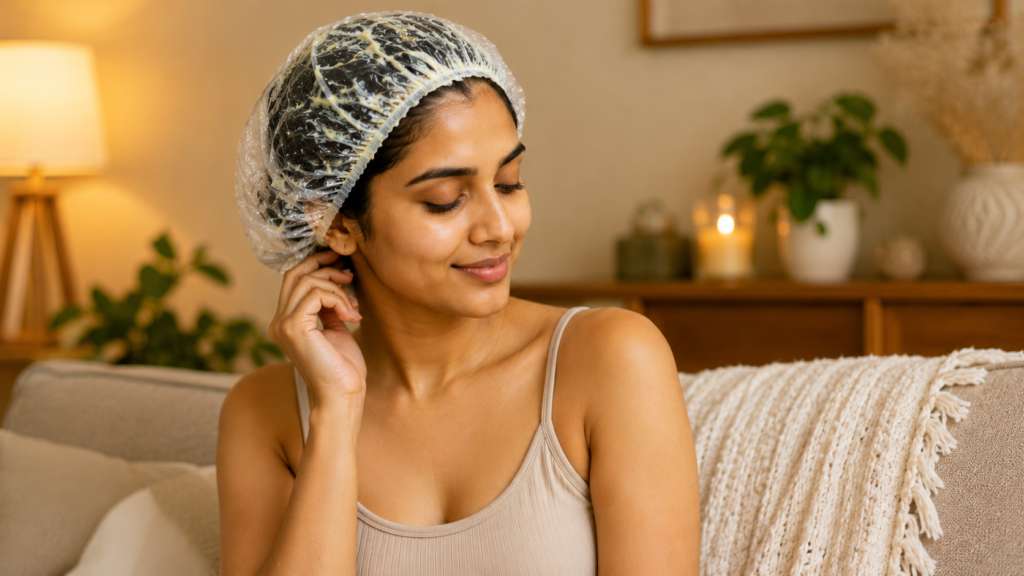
OA week your hair really needs a special treatment that does more than what you do every day.
Options:
- Protein treatment. This is for hair that’s weak limp or has been treated with chemicals. You should look for products that have things like keratin, wheat protein or rice protein in them. You can also try putting an egg mask on your hair.
- Moisture treatment or deep conditioning mask. This is for hair that’s dry, frizzy or coarse. Things like shea butter argan oil and coconut milk are really good for this.
- Scalp scrub. This is, for scalps that get a lot of buildup. You can make your mix with brown sugar and coconut oil or you can buy a scalp scrub from a store. This helps get rid of skin cells and leftover product and you should do it every two or three weeks.
Note for beginnerss: Don’t overload on protein treatments. Over-proteination makes hair stiff and prone to breakage. If your hair feels rough after a protein treatment, follow with a moisture mask.
Step 7: Nutrition and Internal Care. The Ignored Pillar
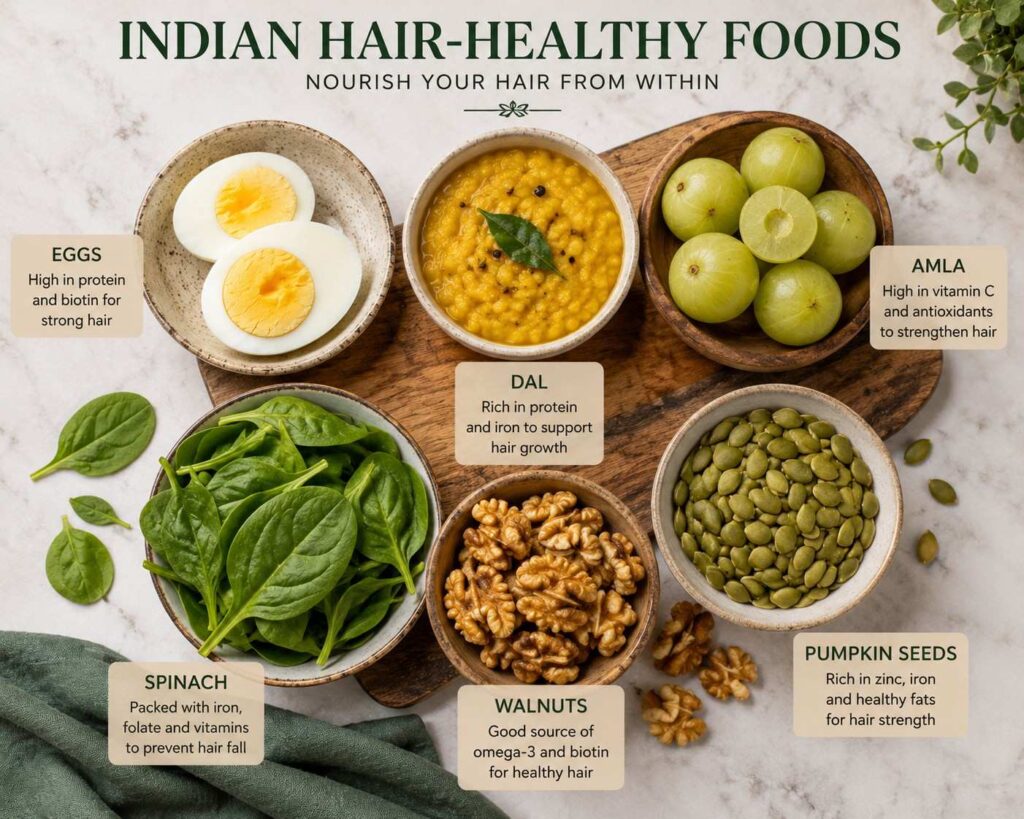
No external product can make up for what Nutrition and Internal Care is missing.
Indian diets, the ones that do not have a lot of animal protein can be lacking in the critical nutrients that are necessary for hair building.
This is why Nutrition and Internal Care is so important for our health and, for our hair.
We need to make sure we are getting the right Nutrition and Internal Care to keep our hair healthy.
Key nutrients for hair health:
| Nutrient | Role | Indian Food Sources |
|---|---|---|
| Protein | Builds keratin | Dal, paneer, eggs, chicken, soya |
| Iron | Carries oxygen to follicles | Spinach, rajma, liver, pomegranate |
| Biotin (B7) | Strengthens hair shaft | Peanuts, eggs, sweet potato |
| Zinc | Regulates oil glands, repairs follicles | Pumpkin seeds, chickpeas, meat |
| Vitamin D | Activates hair follicles | Sunlight, mushrooms, fortified milk |
| Omega-3 fatty acids | Adds shine, reduces shedding | Flaxseeds, walnuts, fatty fish |
Simple dietary upgrades:
- Add a small bowl of sprouted moong or chickpeas to your breakfast
- Include one source of Vitamin C (amla, guava, lemon) daily — it helps iron absorption
- Drink 2.5–3 litres of water daily — dehydration directly impacts scalp health
Step 8: Protective Styling and Lifestyle Habits

The last part of taking care of your hair is what you do when you are not in the bathroom.
You should do these things to help your hair:
- Sleep on a pillowcase that is made of satin or silk because it helps reduce the friction on your hair and stops it from getting tangled and breaking when you are sleeping
- You should tie your hair in a braid or a low bun at night
- When you go outside on a hot summer day you should wear a scarf or a hat because the suns rays can hurt your hair proteins
- You should try to manage your stress because when you are stressed for a time it can cause hair to fall out and this is a big problem, for a lot of young Indians who have hair that falls out
You should not do these things to your hair:
- You should not use much dry shampoo because it can build up on your hair and clog the hair follicles over time
- You should not wear your hair in styles every day because the rubber bands and tight braids can hurt your hair and cause damage
- You should not ignore the fact that you have water because if your water has a lot of minerals in it you should think about using a shower filter or you should rinse your hair with water that has been filtered or boiled and then cooled down to help your hair care routine and your hair will be happy.
Your Weekly Hair Care Schedule at a Glance
| Day | Activity |
|---|---|
| Sunday | Oil massage (overnight or 2 hrs), shampoo, deep condition |
| Wednesday | Co-wash or rinse (skip shampoo if scalp is not oily) |
| Friday | Shampoo + condition as needed |
| Ongoing | Leave-in or serum on dry days; scalp massage with oil |
Common Mistakes Beginners Make
- Washing your hair every day is not an idea. It strips your hair of the oils it needs which can make it really dry or even cause it to produce too much oil.
- Using water to wash your hair is also bad for it. It damages the layer of your hair and dries out your scalp.
- If you do not use conditioner after you wash your hair it will be really porous and frizzy.
- When you want to apply oil to your hair make sure it is clean first. Do not apply oil to hair because it will just trap all the dirt and buildup. It is better to apply oil to your hair after you wash it. Then leave it on overnight.
- A lot of people think they will see results away but that is not how it works. Hair only grows about one to one and a half centimeters per month. You have to be patient and keep taking care of your hair for least eight to twelve weeks before you will see any real change, in your hair.
For more information:https://hairglowguide.com/best-vitamins-for-hair-growth-naturally/
https://hairglowguide.com/best-breakfast-for-hair-growth/
https://hairglowguide.com/can-poor-sleep-cause-hair-loss/
Frequently Asked Questions
Q: How times a week should beginners wash their hair?
Most Indians with normal to hair scalps do well with washing their hair 2 to 3 times per week. People with dry hair scalps can wash their hair twice a week.
Q: Is oiling hair every day good for hair?
No it is not good. Oiling hair every day can clog the hair follicles. Attract a lot of dust. Oiling hair 1 to 2 times per week is good for hair types.
Q: Can I follow this hair care routine if I have colour-treated hair or chemically treated hair?
Yes I can follow this routine.. I need to use a sulphate-free shampoo. I also need to avoid using much protein because it can make my chemically treated hair brittle. I should use a deep conditioning treatment that is based on moisture.
Q: What is the best age to start taking care of my hair?
There is no age limit to start a hair care routine.. It is a good idea to start a consistent hair care routine when I am in my teens or early twenties. This can help prevent a lot of hair problems, like hair fall and premature greying and scalp sensitivity. Starting a hair care routine early helps my hair and my hair scalps.
Conclusion
To get a good hair care routine going you do not need to buy expensive stuff or do a lot of complicated things. You just need to know what kind of hair you have pick the things to put on your scalp do the oil and conditioner thing regularly and take care of your hair from the inside.
Indian hair is really great. It is naturally thick and strong. It loves things like coconut oil, amla and bhringraj. When you use these Indian tricks along with what we know about hair today you can get really amazing results.
So try this hair care routine. Do it for a couple of months like 8 to 12 weeks. See how your hair changes. Then change the routine a bit based on what works for your hair.
Getting hair is not just about the things you put on it. It is, about how you take care of it. Your hair care routine is what makes your hair look good not the products you use it is the hair care routine itself.

 Admin
Admin