 Admin
Admin If you’ve been noticing more hair on your comb than usual, your diet could be the silent culprit. For vegetarian women in India — especially those juggling demanding routines, seasonal changes, hard water, and hormonal shifts — getting the right nutrients from food is the single most powerful thing you can do for your hair.
The good news? India’s plant-based food culture is incredibly rich in hair-loving nutrients. You don’t need expensive supplements or imported superfoods. What you need is already available in your local sabzi mandi, kirana store, and kitchen.
This guide covers the 15 best hair growth foods for vegetarian women, what specific nutrients each one delivers, how those nutrients work inside your scalp, and exactly how to eat them for maximum benefit.
Why Diet Matters More Than Your Shampoo
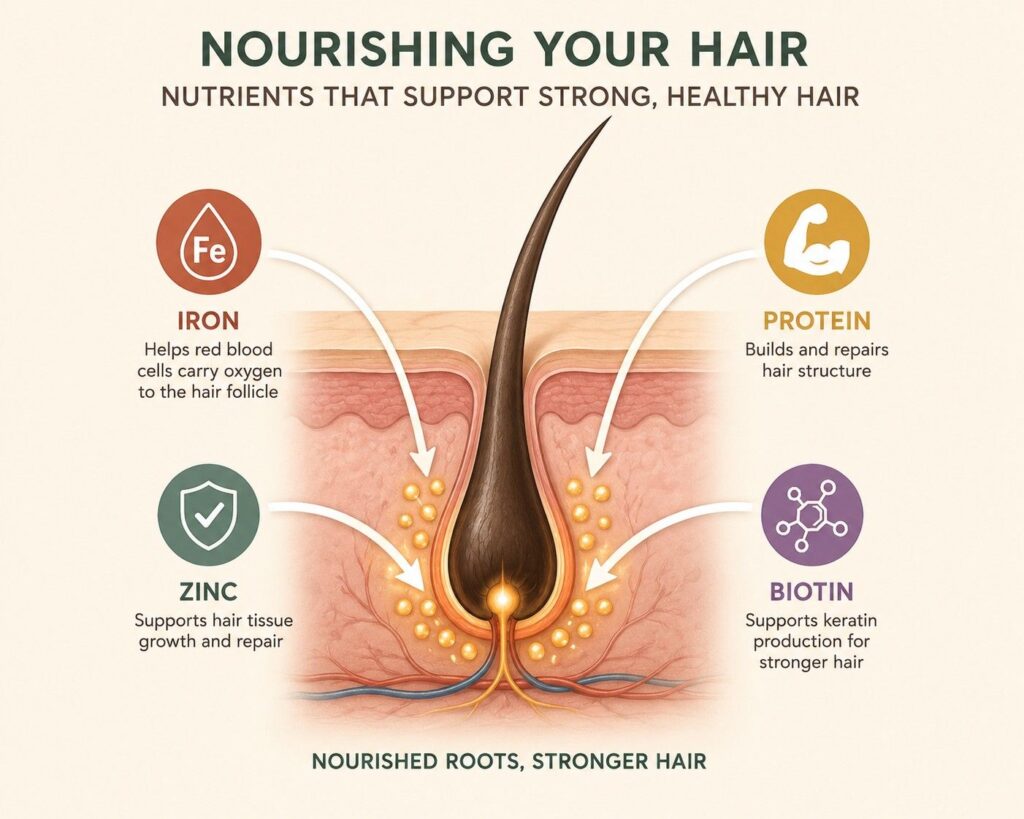
Your hair strand is made of a protein called keratin. Every strand grows from a follicle embedded in your scalp, and those follicles need a constant supply of oxygen, vitamins, minerals, and amino acids to function properly.
When your diet is deficient — even slightly — in iron, zinc, biotin, or protein, your body redirects available nutrients to vital organs first. Hair growth is considered non-essential by the body, so it gets cut off. The result: thinning, breakage, slow growth, and excessive shedding.
For vegetarian women specifically, the most common deficiencies linked to hair loss are:
- Iron (especially in women of reproductive age)
- Protein / Essential amino acids
- Vitamin B12 (rare in plant foods)
- Zinc
- Omega-3 fatty acids
- Vitamin D
The foods below are strategically chosen to address all of these gaps — using ingredients that are affordable, familiar, and deeply rooted in Indian cooking.
15 Best Hair Growth Foods for Vegetarian Women
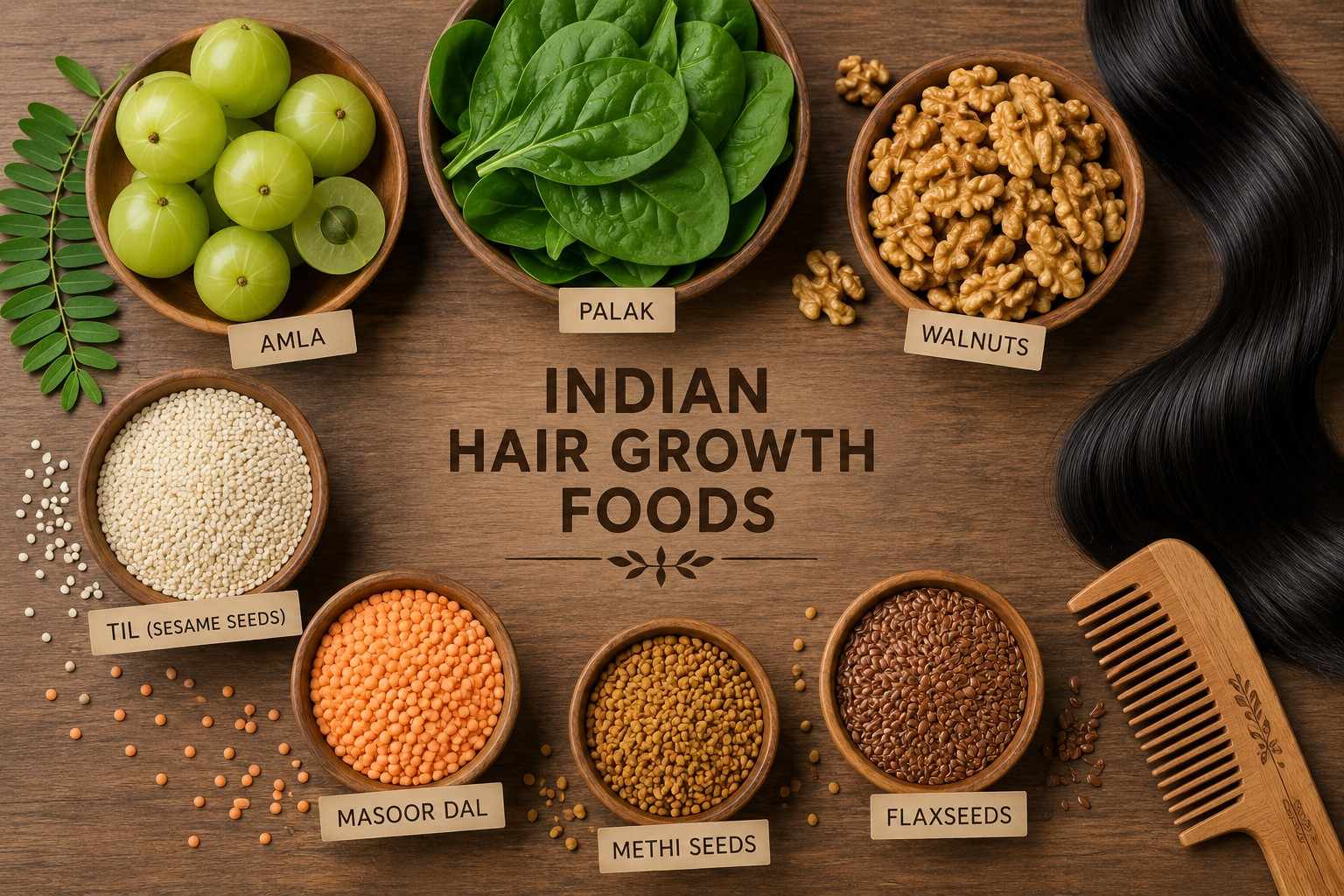
1. Spinach (Palak) — The Iron Powerhouse
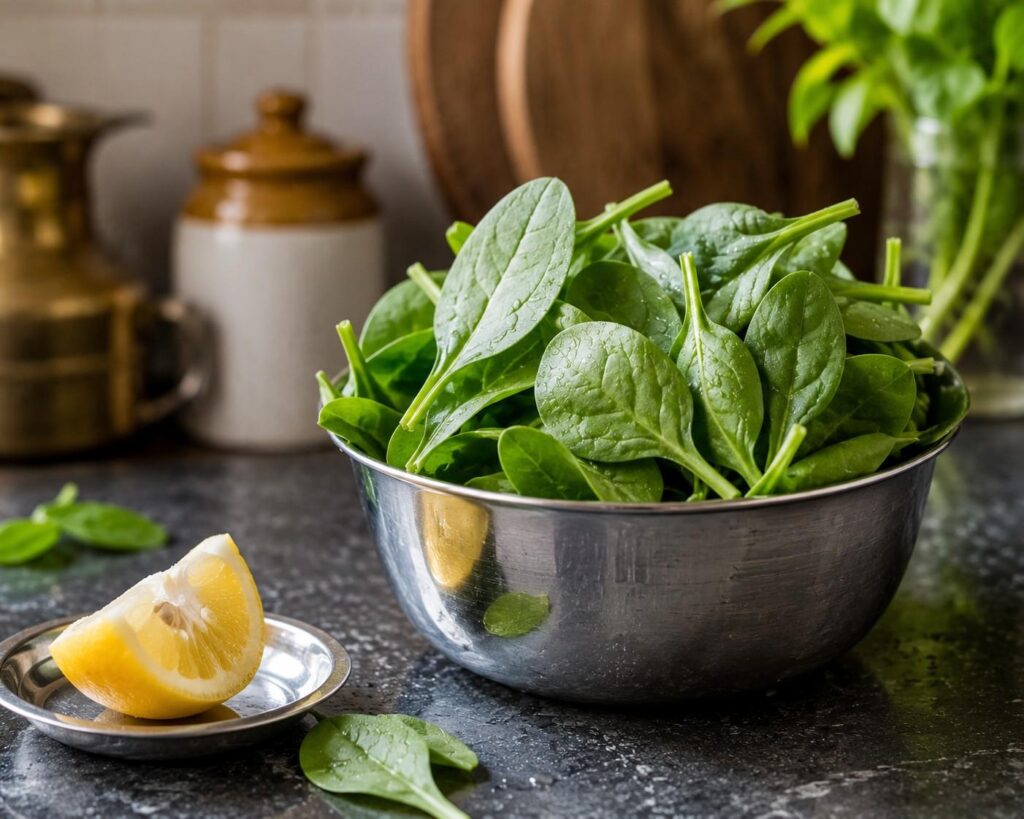
Palak is one of the most nutrient-dense leafy greens available in India, and it’s a non-negotiable for women dealing with hair fall linked to iron deficiency.
Key nutrients: Iron, Vitamin A, Folate, Vitamin C, Beta-carotene
How it helps your hair: Iron carries oxygen to your hair follicles through red blood cells. Without adequate iron, follicles enter a resting phase and hair sheds prematurely. Vitamin A in spinach stimulates sebum production, which naturally conditions the scalp. Folate supports rapid cell division inside follicles, directly fueling hair growth.
Pro tip for absorption: Always pair palak with a Vitamin C source — squeeze lemon into your palak sabzi or dal palak. Vitamin C converts non-heme iron (the plant-based form) into a more absorbable form, dramatically improving uptake.
How to eat it: Palak dal, palak paneer, palak raita, or sautéed with garlic and a squeeze of lemon. Aim for at least 3–4 servings per week.
2. Lentils (Dal) — The Everyday Protein Fix
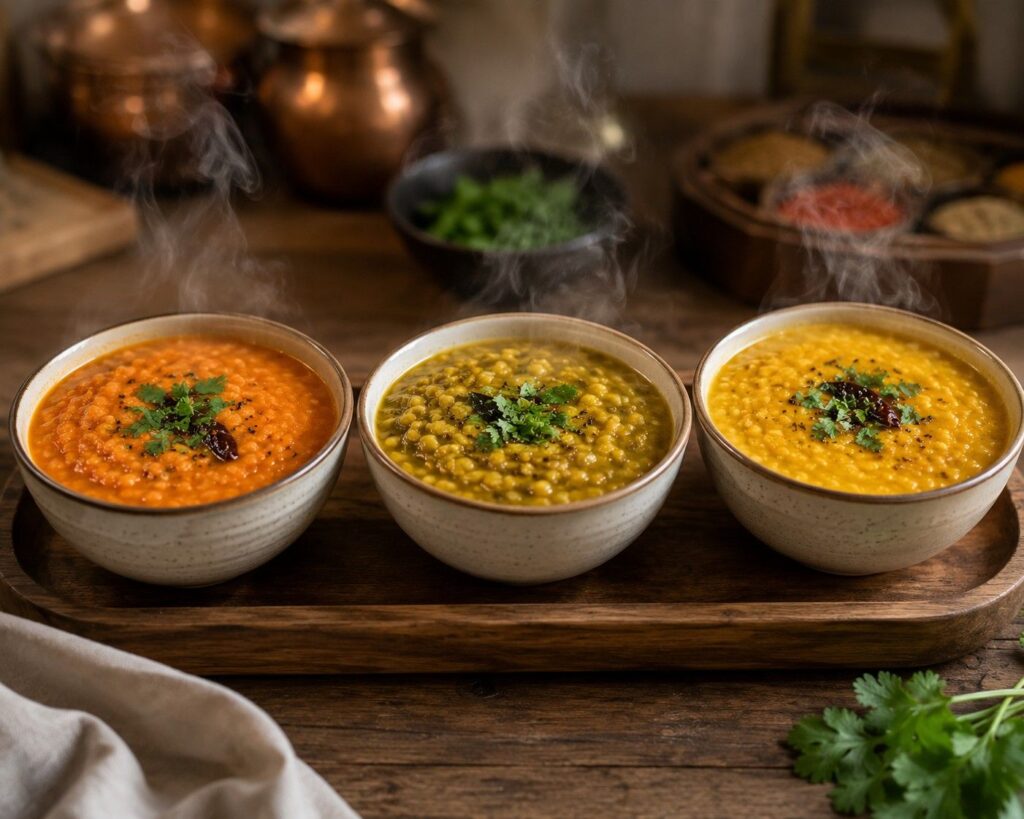
No food is more central to the Indian vegetarian diet than dal — and for hair health, that’s excellent news. Masoor dal, moong dal, toor dal, and urad dal are all exceptional sources of plant-based protein and biotin.
Key nutrients: Protein, Biotin (Vitamin B7), Iron, Zinc, Folate
How it helps your hair: Hair is 95% keratin protein. Without enough dietary protein, your body can’t manufacture new hair strands. Biotin is a co-enzyme essential for keratin synthesis — a deficiency is directly linked to brittle hair and hair loss. Zinc in lentils supports follicle repair and regulates oil glands around follicles.
Did you know? A single cup of cooked masoor dal contains approximately 18g of protein and covers about 90% of your daily folate requirement.
How to eat it: Make dal a non-negotiable part of at least one meal per day. Rotate between masoor, moong, and chana dal to diversify your amino acid profile. Eat with rice or roti for a complete protein combination.
3. Amla (Indian Gooseberry) — The Scalp’s Best Friend
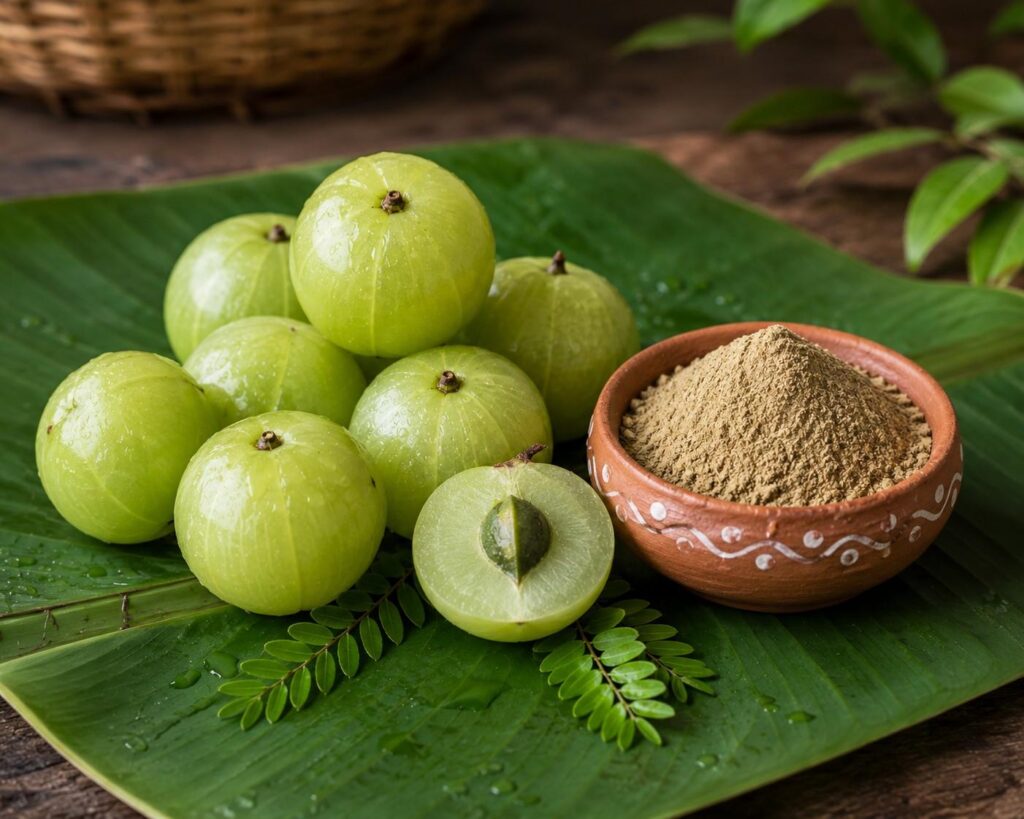
Amla has been used in Ayurvedic hair care for thousands of years, and modern nutrition science fully validates why. It is arguably the single most powerful hair-specific food available to Indian women.
Key nutrients: Vitamin C (highest natural source), Tannins, Ellagic acid, Iron, Phytochemicals
How it helps your hair: Amla contains one of the highest concentrations of Vitamin C in any food — far more than oranges. Vitamin C is essential for collagen synthesis, and collagen strengthens the hair shaft and the connective tissue around follicles. Amla also inhibits the enzyme 5-alpha reductase, which converts testosterone to DHT — the hormone most responsible for androgenetic hair loss in women. Its antioxidant profile protects follicle cells from oxidative damage caused by pollution, stress, and UV exposure.
How to eat it: Fresh amla murabba, amla juice with honey (1 tsp amla powder in warm water every morning), amla chutney, or raw amla with salt and turmeric. Even 1–2 fresh amlas per day deliver measurable benefits.
4. Greek Yogurt / Hung Curd (Chakka Dahi) — Protein + Probiotics
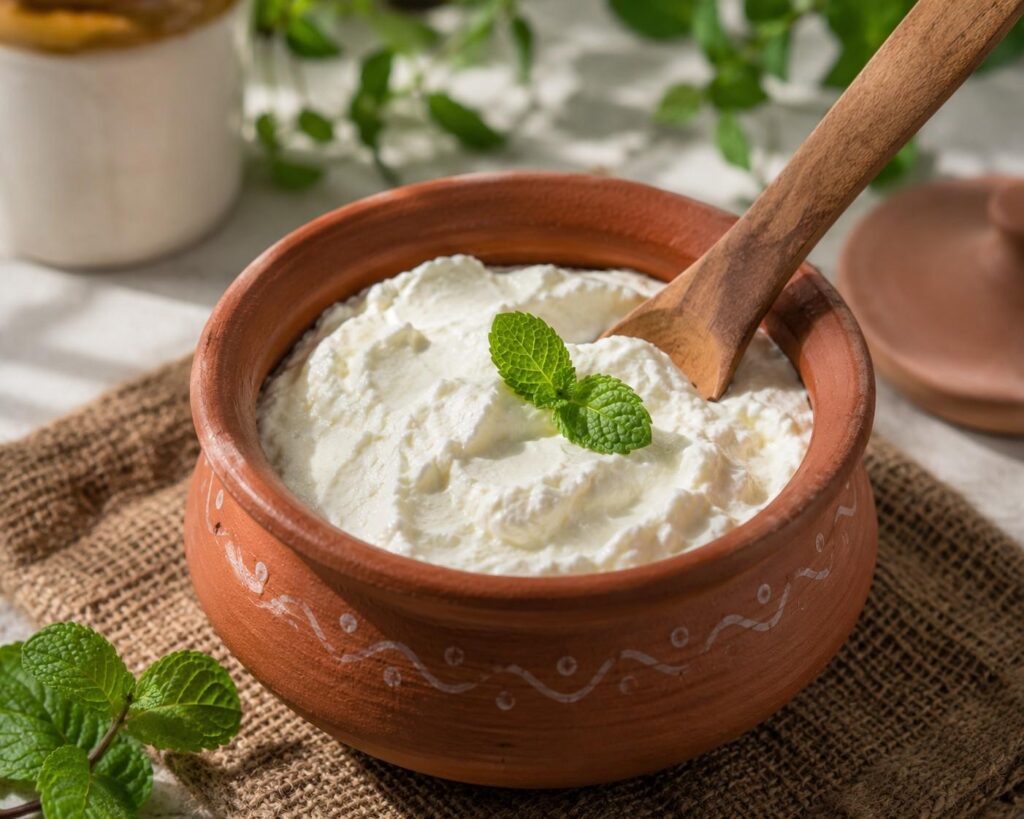
Regular dahi is good; hung curd or Greek-style strained yogurt is exceptional. It’s significantly higher in protein and supports gut health — which directly impacts nutrient absorption for hair.
Key nutrients: Protein, Vitamin B5 (Pantothenic Acid), Probiotics, Calcium, Vitamin D (if fortified)
How it helps your hair: Vitamin B5 (pantothenic acid) is clinically associated with hair follicle health. It helps the adrenal glands, reduces hair thinning under stress, and improves hair thickness and shine. The probiotics in yogurt improve gut microbiome health, which affects how well you absorb all other hair nutrients. A leaky or inflamed gut often underlies persistent hair loss that doesn’t respond to topical treatments.
How to eat it: 1 bowl of hung curd daily as a snack, in raita, lassi, or as a base for marinades. Make your own at home by straining regular dahi through a muslin cloth overnight.
5. Methi Seeds (Fenugreek) — The Follicle Stimulator
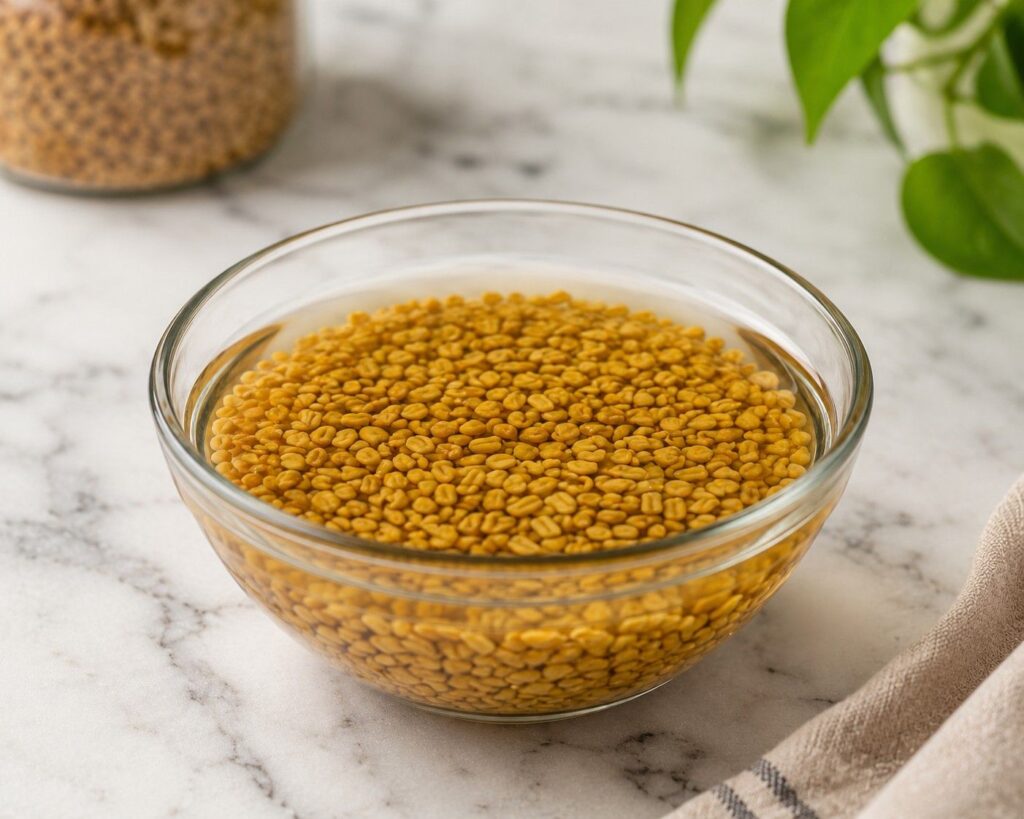
Methi dana is a staple in every Indian kitchen, yet most women don’t realize they’re sitting on a powerful hair growth tool.
Key nutrients: Protein, Lecithin, Nicotinic Acid (Niacin/B3), Iron, Potassium, Diosgenin
How it helps your hair: Fenugreek seeds contain diosgenin, a plant compound with estrogen-like effects that may support hair growth, particularly in women with hormonal hair thinning. Lecithin deeply conditions follicles and strengthens hair from the root. Nicotinic acid improves blood circulation to the scalp. As an added bonus, methi is high in mucilage, which soothes scalp inflammation — a major but overlooked cause of hair loss.
How to eat it: Soak 1 tsp of methi seeds overnight in water and drink the water in the morning. Add methi to your paratha dough, dal tadkas, or pickle. Even ½ teaspoon daily in your cooking is beneficial.
6. Walnuts (Akhrot) — Omega-3 on a Budget
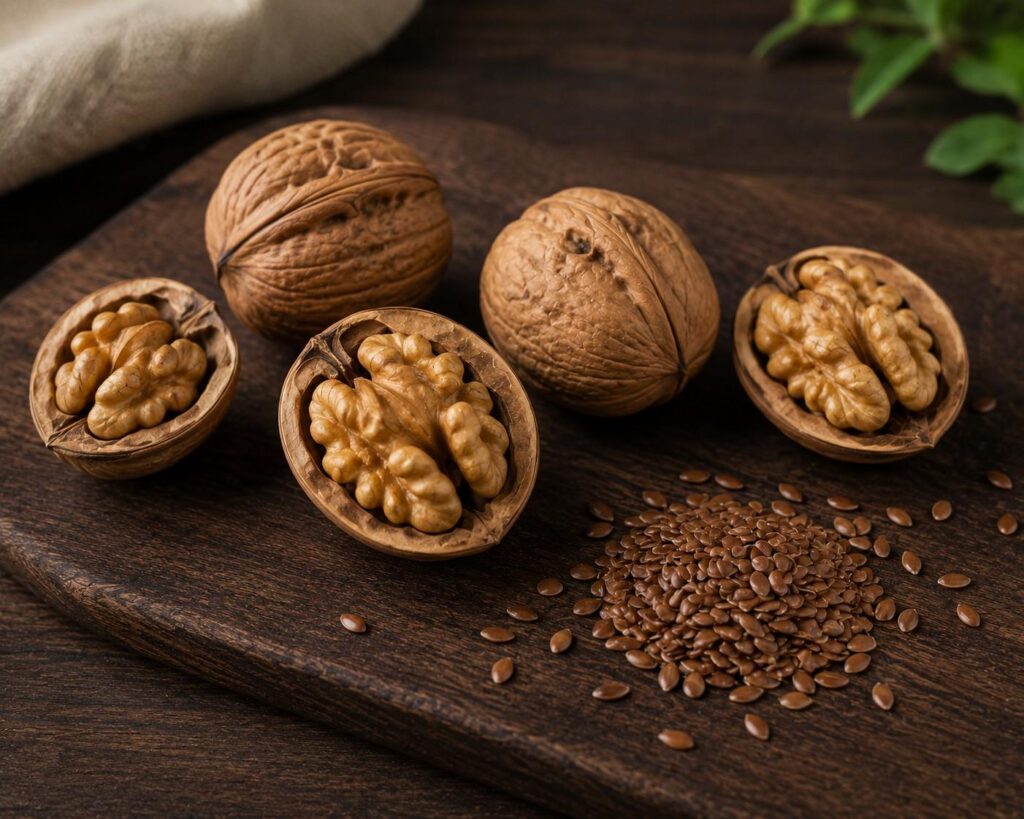
Walnuts are India’s most accessible source of plant-based omega-3 fatty acids, and they’re significantly cheaper than flaxseed supplements.
Key nutrients: Alpha-linolenic acid (ALA omega-3), Biotin, Vitamin E, Selenium, Zinc, Copper
How it helps your hair: Omega-3 fatty acids nourish the hair follicle membrane, reduce scalp inflammation, and add natural shine and elasticity to hair strands. A deficiency in omega-3 is directly linked to dry, brittle hair and scalp flakiness. Biotin and selenium in walnuts work synergistically to protect follicle DNA from oxidative damage. Copper is a trace mineral essential for melanin production — important for preventing premature greying.
How to eat it: 4–6 walnuts per day as a mid-morning snack. Add crushed walnuts to your oats, curd, or chutney. Soaking them overnight reduces phytic acid and improves mineral absorption.
7. Sweet Potato (Shakarkandi) — Beta-Carotene Bomb
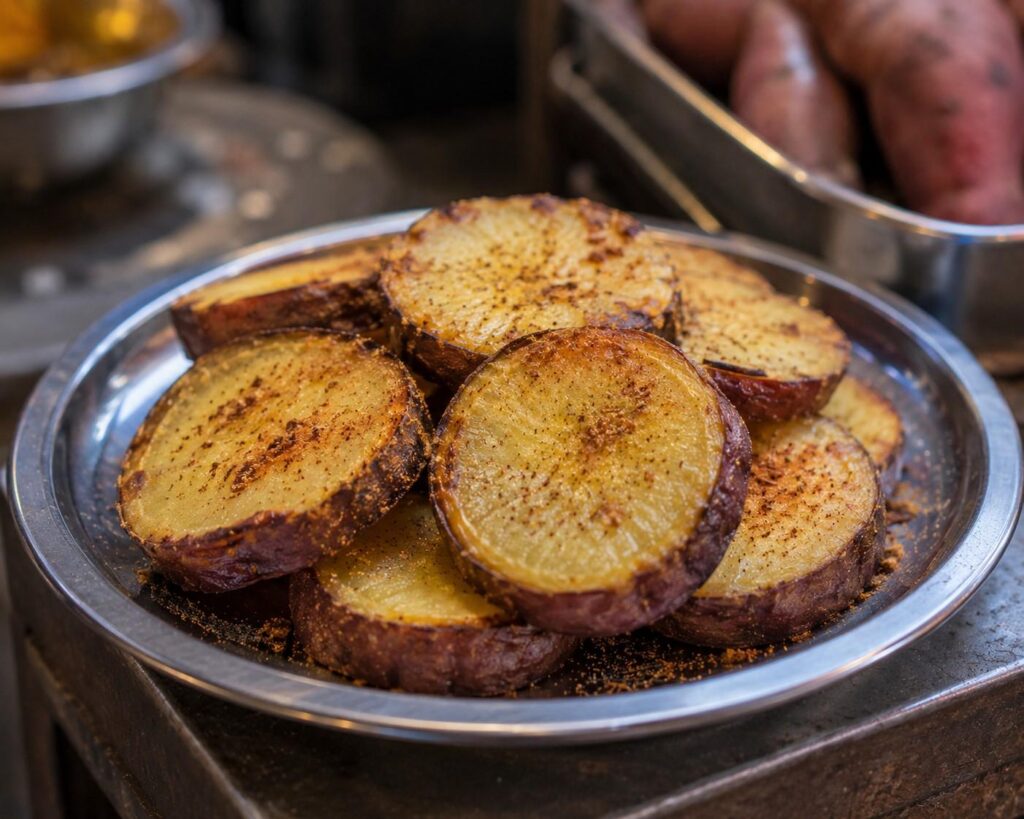
Shakarkandi is a winter staple across North India — and one of the richest sources of beta-carotene available in the country.
Key nutrients: Beta-carotene (Vitamin A precursor), Vitamin C, Potassium, Manganese, Fiber
How it helps your hair: Beta-carotene converts into Vitamin A in your body, which is critical for scalp cell turnover and sebum production. A dry, flaky scalp — common in Indian women during winters — is often a sign of Vitamin A insufficiency. Healthy sebum production keeps hair naturally moisturized from root to tip without product dependency. Vitamin A also activates hair follicle stem cells, speeding up the hair growth cycle.
Important note: Excess Vitamin A from supplements (retinol) can actually cause hair loss. Getting it from food as beta-carotene is safe — your body converts only what it needs.
How to eat it: Roasted shakarkandi as a snack, added to soups, or boiled with chaat masala. Eat with a small amount of healthy fat (like ghee or sesame oil) to improve beta-carotene absorption.
8. Sesame Seeds (Til) — Calcium + Zinc Combo
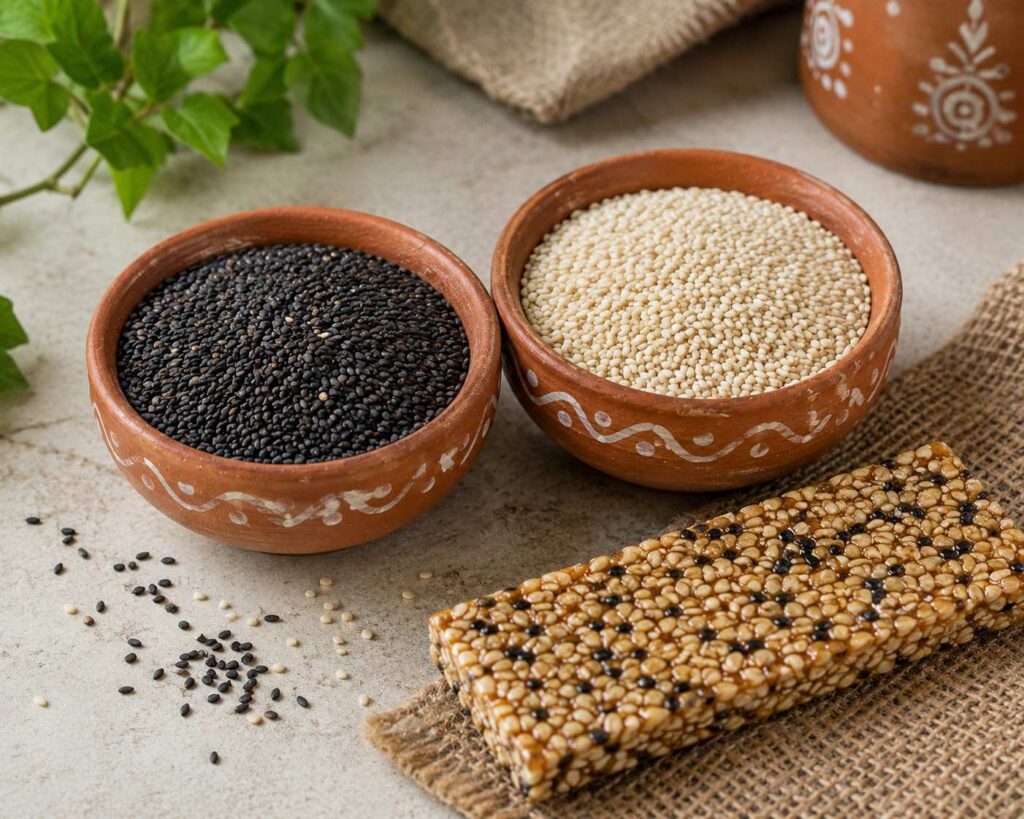
Til is used across Indian cuisine in everything from chikki to curries, and it’s one of the best plant-based sources of calcium and zinc for hair.
Key nutrients: Zinc, Calcium, Iron, Magnesium, Protein, Omega-6 fatty acids, Copper
How it helps your hair: Zinc is the mineral most directly linked to hair loss — even mild zinc deficiency can trigger diffuse thinning across the scalp. Zinc keeps oil glands around follicles functioning normally, supports protein synthesis in follicle cells, and helps repair damaged follicle tissue. Calcium supports the hair growth signal pathway within the follicle. Magnesium reduces scalp inflammation and has been linked to reduced hair fall in women with stress-related shedding.
How to eat it: Add 1 tbsp of til to your sabzi tadka, make til ki chikki, sprinkle on salads or curd, or use til-based tahini as a dip. White and black sesame seeds are equally beneficial.
9. Eggs — Complete Protein for Vegetarians Who Include Them
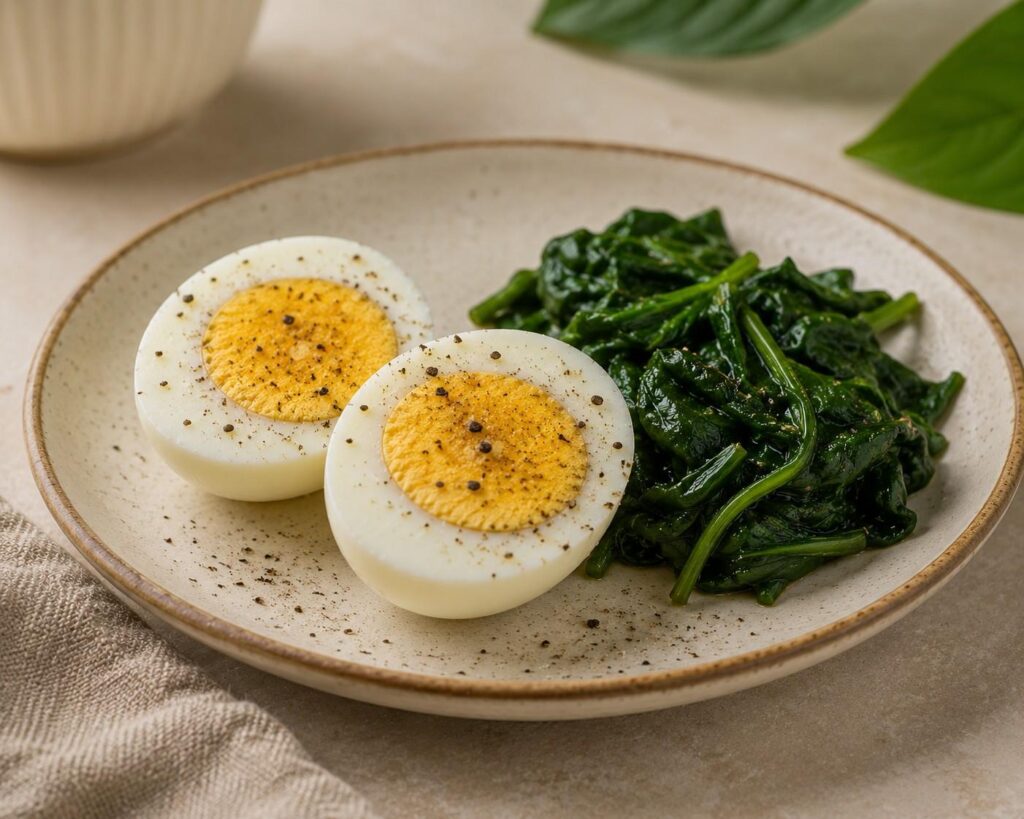
For ovo-vegetarian women, eggs are arguably the most efficient single hair growth food you can eat.
Key nutrients: Complete protein (all essential amino acids), Biotin, Vitamin D, Selenium, Choline, Zinc
How it helps your hair: Eggs provide all nine essential amino acids — including cysteine and methionine, the two sulphur-containing amino acids that form the backbone of the keratin structure. Biotin concentration in eggs is significant, and the yolk contains Vitamin D, which activates Vitamin D receptors in hair follicle cells. Low Vitamin D is now recognized as one of the primary dietary triggers of telogen effluvium (sudden, diffuse hair shedding) in Indian women.
How to eat it: Boiled, scrambled, or in an egg bhurji. Eating the whole egg — not just whites — is essential. The yolk contains most of the hair-specific nutrients. 1–2 eggs daily is optimal.
10. Chickpeas (Chana) — Zinc and Manganese Source
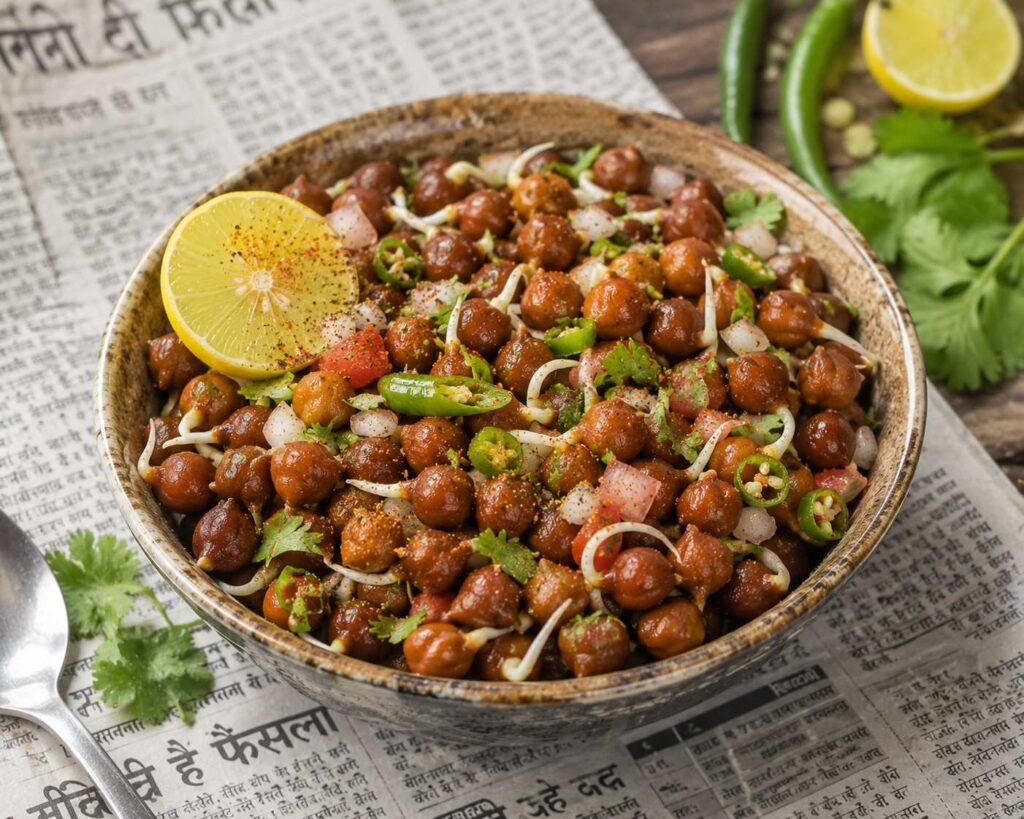
Chana — whether kabuli or kala — is a hair growth superfood hiding in plain sight in every Indian household.
Key nutrients: Protein, Zinc, Manganese, Folate, Iron, Vitamin B6
How it helps your hair: Vitamin B6 in chickpeas plays a critical role in protein metabolism — it helps your body actually use the protein you eat to build keratin. Manganese activates enzymes involved in collagen synthesis and protects follicles from free radical damage. The high fibre content of chana also regulates blood sugar — important because insulin spikes contribute to hormonal hair loss (androgenetic alopecia) in women with PCOS, which is extremely common in India.
How to eat it: Chana masala, kala chana chaat, chole, hummus, or sprouted chana salad. Sprouting chana increases its zinc and folate bioavailability significantly.
11. Flaxseeds (Alsi) — Omega-3 + Lignans
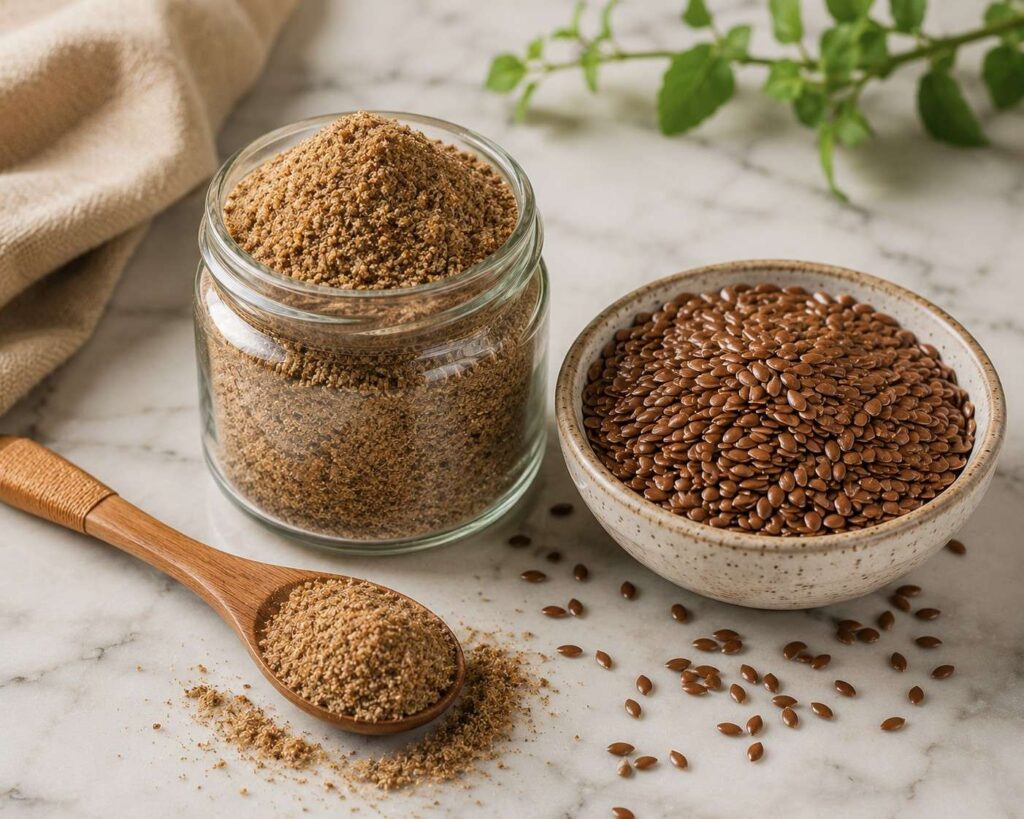
Alsi seeds have been used in rural Indian kitchens for generations, and their benefits for hormonal hair health are now scientifically well-documented.
Key nutrients: ALA Omega-3, Lignans, Fiber, Protein, Magnesium
How it helps your hair: The lignans in flaxseeds are phytoestrogens that gently modulate estrogen activity. This is particularly important for Indian women experiencing hair loss post-pregnancy, during perimenopause, or with PCOS-related hormonal imbalances. Omega-3 ALA in flaxseeds reduces prostaglandin D2 — an inflammatory compound found in high concentrations in bald scalp tissue.
How to eat it: Always use ground flaxseeds — whole seeds pass through undigested. Add 1 tbsp of ground alsi to your roti dough, smoothie, curd, or dal. Store ground flaxseeds in the fridge and use within a week to prevent oxidation.
12. Sunflower Seeds — Vitamin E Powerhouse
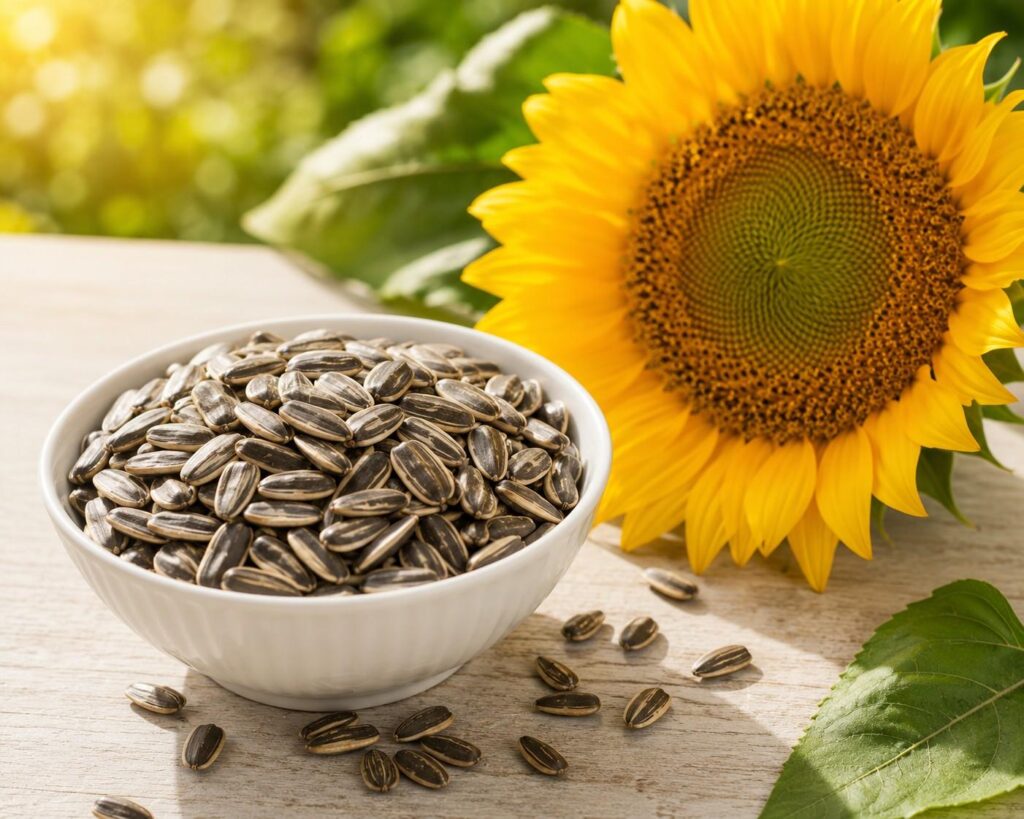
Sunflower seeds are a seriously underutilized snack food in India, yet they contain one of the highest concentrations of Vitamin E in any common food.
Key nutrients: Vitamin E, Selenium, Zinc, Vitamin B5, Protein
How it helps your hair: Vitamin E is a fat-soluble antioxidant that protects hair follicle membranes from oxidative stress — a primary mechanism of age-related hair thinning. A study published in Tropical Life Sciences Research found that Vitamin E supplementation increased hair growth by 34.5% in people with hair loss after 8 months. Food-based Vitamin E is safer and well-absorbed. Selenium works with Vitamin E to prevent follicle cell damage and supports thyroid function — thyroid imbalance is a common hidden cause of hair loss in Indian women.
How to eat it: 1 small handful (about 30g) as a snack, added to trail mix, sprinkled on salads, or mixed into energy balls with dates and til.
13. Dairy Milk / Fortified Plant Milk — Vitamin D + Calcium
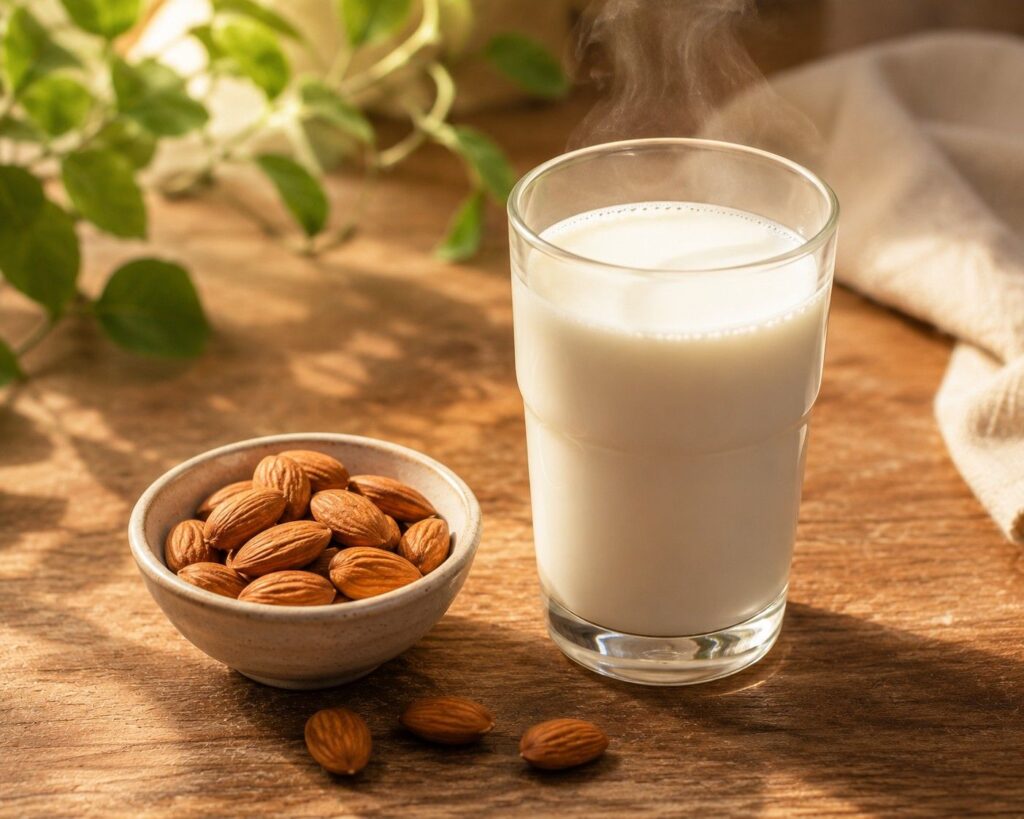
India has one of the highest rates of Vitamin D deficiency in the world — and most affected are women who stay indoors or cover up outdoors. Milk, especially fortified varieties, directly addresses this.
Key nutrients: Vitamin D (fortified), Calcium, Protein (casein and whey for dairy), B12 (fortified plant milks)
How it helps your hair: Vitamin D receptors exist directly on hair follicle cells. When Vitamin D is deficient, follicles can’t complete the hair cycle properly, leading to miniaturization and early telogen phase. For women on vegetarian diets, fortified milk or plant milks (soy, almond) are also the most reliable dietary source of Vitamin B12 — a nutrient largely absent from plant foods that’s directly linked to hair loss when deficient.
How to eat it: 1–2 glasses of milk daily, or fortified plant milk in your chai, smoothies, or overnight oats. Check labels to confirm Vitamin D and B12 fortification.
14. Carrots — Follicle-Activating Beta-Carotene
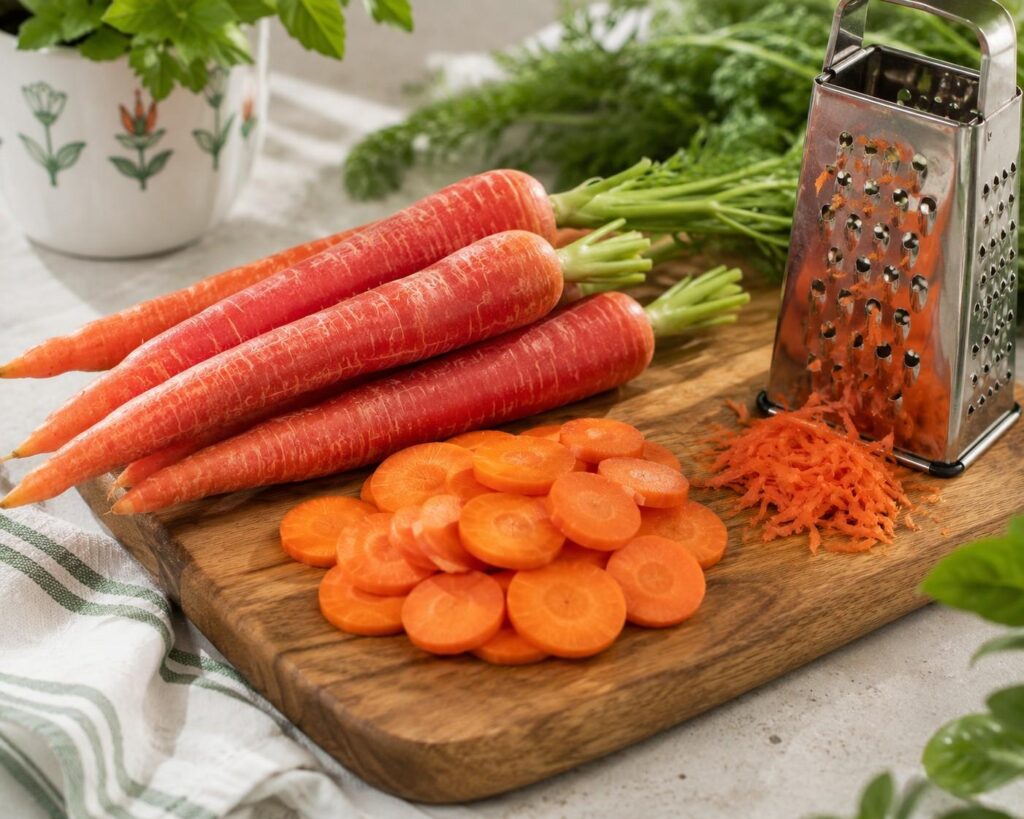
Gajar is available year-round in India and costs almost nothing — making it one of the most accessible hair growth foods on this list.
Key nutrients: Beta-carotene, Vitamin C, Biotin, Potassium, Vitamin K
How it helps your hair: Like sweet potato, carrots are dense in beta-carotene, which your body converts into Vitamin A as needed. Vitamin A is required to produce sebum — your scalp’s natural protective oil. Without enough sebum, the scalp becomes dry, itchy, and inflamed, and follicles weaken. Biotin in carrots supports keratin production. The combination of Vitamin A and Vitamin C in carrots also supports collagen formation around follicle walls.
How to eat it: Raw gajar as a snack with hummus, gajar ka halwa (in moderation), gajar juice, grated into raita, or sautéed in tadka. Cooking carrots slightly increases beta-carotene availability.
15. Soy (Tofu, Edamame, Soy Milk) — Plant-Based Complete Protein
Soy is one of the very few plant foods that provides a complete amino acid profile, making it a critical hair growth food for vegetarian women who don’t eat eggs.
Key nutrients: Complete protein, Isoflavones, Iron, Calcium, Omega-6 fatty acids, B vitamins
How it helps your hair: Research on spermidine — a compound found in high concentrations in soy — has shown exciting hair growth potential. A 2019 study published in npj Aging found that spermidine from soy prolonged the anagen (active growth) phase of hair follicles. Soy isoflavones also mildly inhibit 5-alpha reductase, the same enzyme amla targets, helping reduce DHT-driven hair miniaturization.
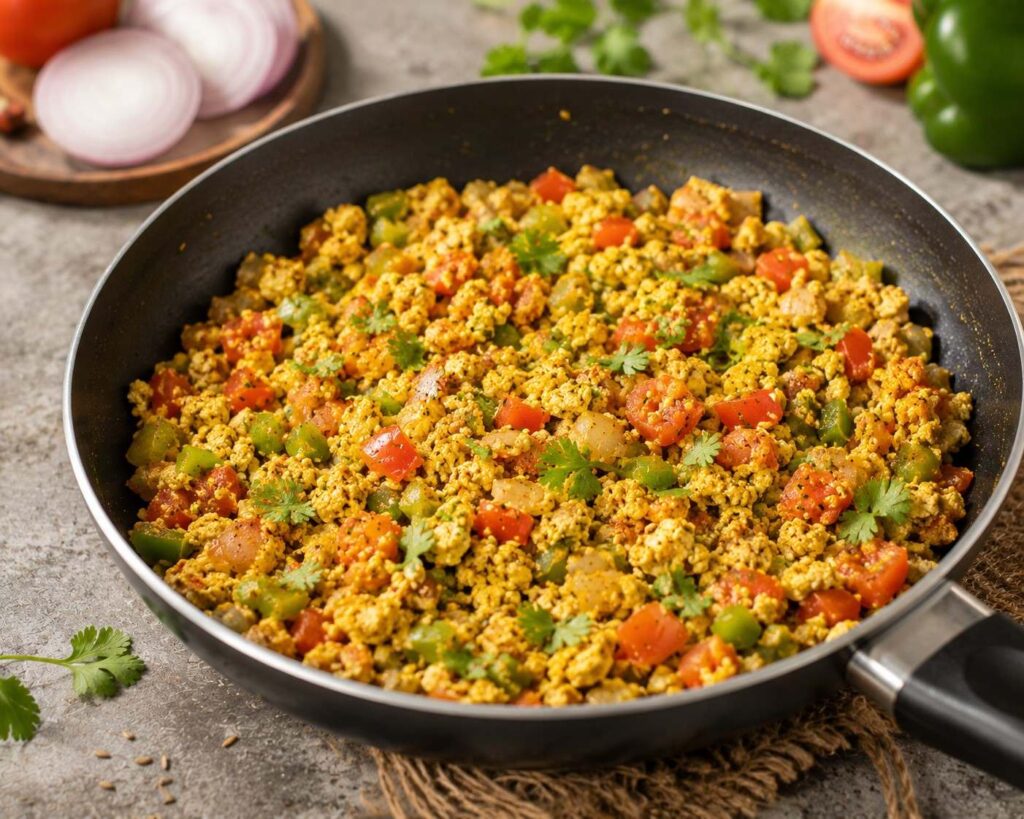
How to eat it: Tofu bhurji (scrambled tofu with vegetables), tofu in curries as a paneer substitute, soy milk in smoothies or chai, or edamame as a snack.
A Sample Day of Eating for Maximum Hair Growth
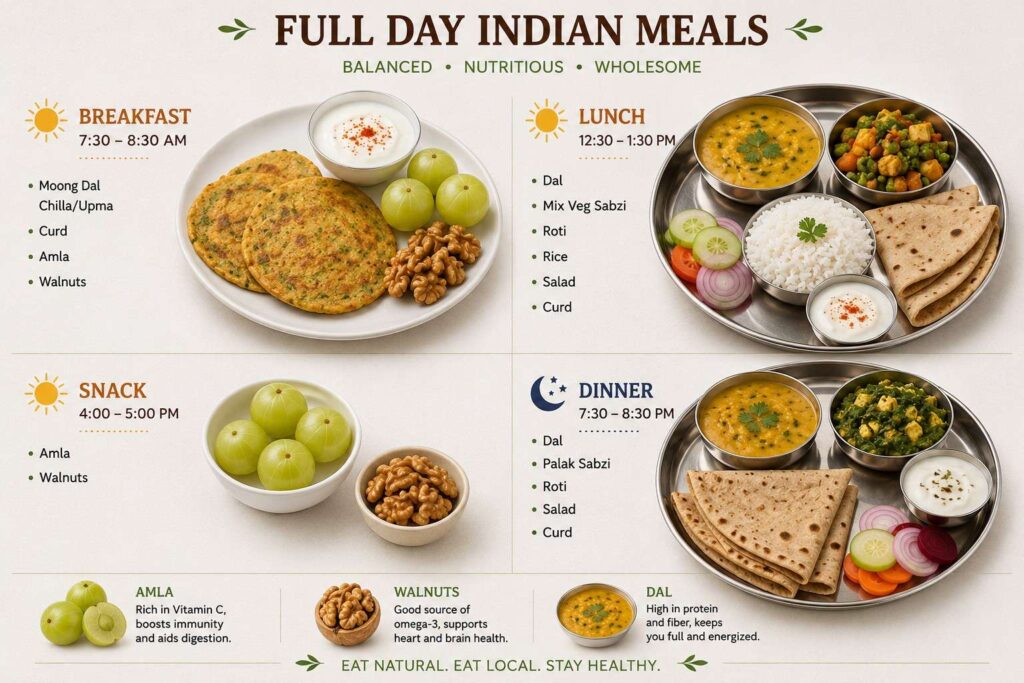
To make this actionable, here’s a practical daily meal plan using the above foods:
Morning: Warm water + 1 tsp amla powder + 1 tsp soaked methi seeds water → Breakfast: 2 boiled eggs (or tofu bhurji) + gajar and palak paratha with dahi
Mid-Morning: 4–6 soaked walnuts + a handful of sunflower seeds
Lunch: Masoor dal + palak sabzi (with lemon squeeze) + shakarkandi curry + roti + a glass of buttermilk
Evening Snack: Sprouted kala chana chaat + 1 small bowl hung curd
Dinner: Tofu or paneer curry + til-sprinkled salad + 1 glass warm fortified milk
For more information:https://hairglowguide.com/best-nuts-and-seeds-for-hair-growth/
https://hairglowguide.com/complete-hair-care-routine-for-beginners/
https://hairglowguide.com/best-vitamins-for-hair-growth-naturally/
Quick Reference: Nutrients and Their Top Food Sources
| Nutrient | Top Vegetarian Source |
|---|---|
| Protein | Lentils, soy, eggs, Greek curd |
| Iron | Palak, lentils, til, flaxseeds |
| Zinc | Sesame seeds, chana, walnuts |
| Biotin | Eggs, lentils, walnuts, carrots |
| Vitamin A | Sweet potato, carrots, palak |
| Vitamin C | Amla, lemon, bell peppers |
| Omega-3 | Walnuts, flaxseeds |
| Vitamin D | Fortified milk, eggs |
| Vitamin B12 | Eggs, fortified milk/soy milk |
| Vitamin E | Sunflower seeds, almonds |
Frequently Asked Questions
Q1. Which is the best food for hair growth for vegetarian women in India?
Amla, lentils (dal), and spinach (palak) are among the best foods for hair growth for vegetarian women in India. Amla provides the highest natural Vitamin C, dal delivers protein and biotin, and palak supplies iron — three nutrients most critical for healthy hair growth.
Q2. Can a vegetarian diet cause hair loss in women?
Yes, a poorly planned vegetarian diet can cause hair loss in women due to deficiencies in iron, protein, zinc, Vitamin B12, and omega-3 fatty acids. However, a well-balanced vegetarian diet that includes dal, leafy greens, seeds, nuts, and dairy can fully support healthy hair growth.
Q3. What foods should vegetarian women eat to stop hair fall naturally?
To stop hair fall naturally, vegetarian women should eat iron-rich foods like palak and masoor dal, zinc-rich foods like til and chana, biotin sources like eggs and walnuts, and Vitamin C foods like amla and lemon to improve iron absorption.
Q4. Are walnuts good for hair growth in women?
Yes, walnuts are excellent for hair growth in women. They are one of the richest plant-based sources of omega-3 fatty acids, biotin, zinc, and Vitamin E — all of which nourish hair follicles, reduce scalp inflammation, and strengthen hair strands from root to tip.
Q5. How long does it take to see hair growth results from diet changes?
Most women notice reduced hair shedding within 6–8 weeks of consistent dietary improvements. Visible hair growth and increased thickness are typically seen within 3–4 months, as the hair growth cycle takes time to reflect internal nutritional changes.
Final Thought
Hair growth isn’t instant — follicles cycle over weeks and months. But consistently eating from this list means you’re delivering a steady, science-backed stream of nutrients to your follicles every single day. Most women who shift their diet intentionally notice reduced shedding within 6–8 weeks and visible growth improvement within 3–4 months.
You don’t need a dramatic dietary overhaul. Start with three changes: add amla every morning, make dal a daily staple, and swap empty-calorie snacks for walnuts and seeds. Your hair will notice the difference before you do.

 Admin
Admin