 Admin
Admin One of the most common health complaints in India is hair fall. Research shows that more than 60% of Indian men and almost 30% of Indian women experience significant hair thinning by age 35 and visible hair loss prior to menopause. Stress, pollution, hard water and heat styling are all often blamed – but the main reason for most people is much simpler and completely within your control: poor nutrition
Your hair follicles are some of the most metabolically active cells in your body. They need a constant, rich supply of nutrients for strong, healthy hair strands. When your diet lacks essential vitamins and minerals, a very common scenario in India due to vegetarian diets, irregular eating habits and over-reliance on refined carbohydrates, your follicles literally starve and go dormant.
The good news is? You can reverse dieting hair loss. One of the most well-documented areas of trichology (the science of hair and scalp) is nutritional hair regrowth and the solution isn’t going to cost you a fortune in supplements or imported superfoods. The solutions are already in most Indian kitchens.
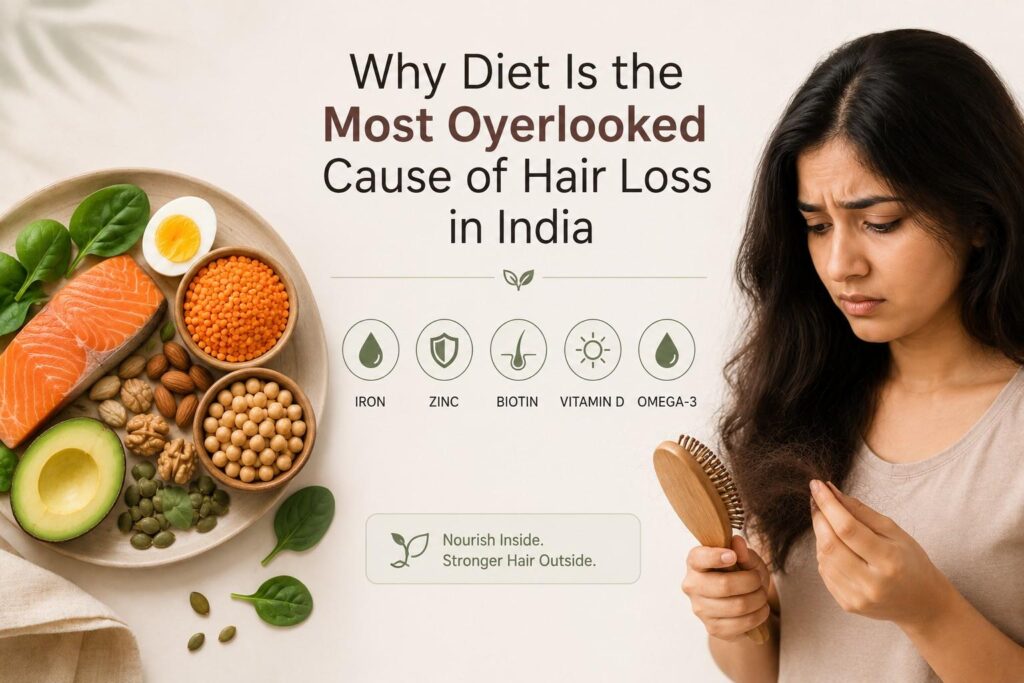
Why Diet Is the Most Overlooked Cause of Hair Loss in India
Before we dive into the list, it’s important to understand why diet affects hair so dramatically.
Hair is made of keratin — a protein. Building keratin requires amino acids, which come from dietary protein. But hair growth also depends on a cascade of micronutrients:
- Iron drives oxygen delivery to follicles
- Zinc regulates the hair growth cycle and prevents follicle shrinkage
- Biotin (Vitamin B7) strengthens the keratin structure
- Vitamin D activates dormant follicles
- Vitamin C helps absorb iron and builds collagen around follicles
- Omega-3 fatty acids reduce scalp inflammation that blocks growth
India has a hidden micronutrient crisis that directly impacts hair:
- Iron deficiency affects over 50% of Indian women (NFHS-5 data)
- Vitamin D deficiency affects 70–90% of Indians despite abundant sunshine (due to indoor lifestyles and darker skin requiring longer sun exposure)
- Protein intake is below recommended levels in 70% of Indian households (IMRB-IPSOS survey)
These three deficiencies alone explain why so many Indians experience premature hair thinning. And all three can be largely corrected through food.
10 Best Foods for Hair Regrowth in India
1. Eggs — The Complete Hair Food
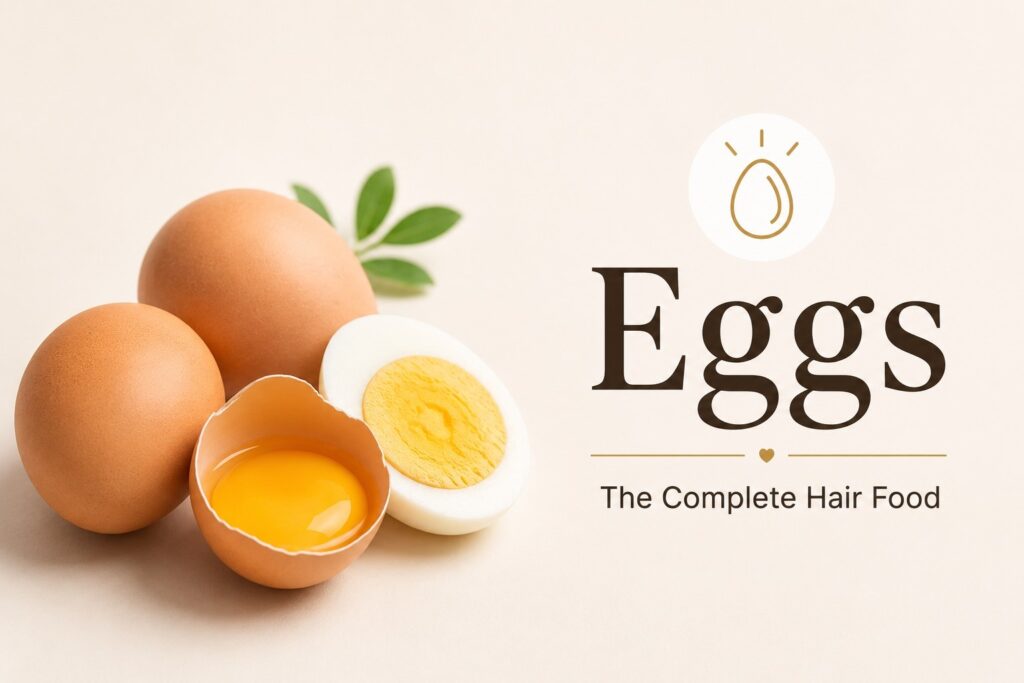
Key Nutrients: Complete protein, biotin, zinc, selenium, Vitamin D
If you could only eat one food for hair regrowth, eggs would be the best choice. One egg gives you 6 grams of high-quality, complete protein – that means it has all the essential amino acids your follicles need to make keratin.
Eggs are also one of the best sources of biotin, the vitamin most closely associated with hair strength and structure. Biotin deficiency causes brittle and thinning hair, and eggs are the most bioavailable form of biotin.
The yolk especially is full of Vitamin D and selenium — two nutrients that regulate the hair growth cycle and protect follicles from oxidative stress.
How to include it: 2 whole eggs daily — boiled, poached, bhurji, or in a vegetable omelette. Avoid raw egg whites as they block biotin absorption.
Best for: All hair types, especially those with brittle or slow-growing hair.
2. Masoor Dal and Moong Dal — The Vegetarian Protein Powerhouse
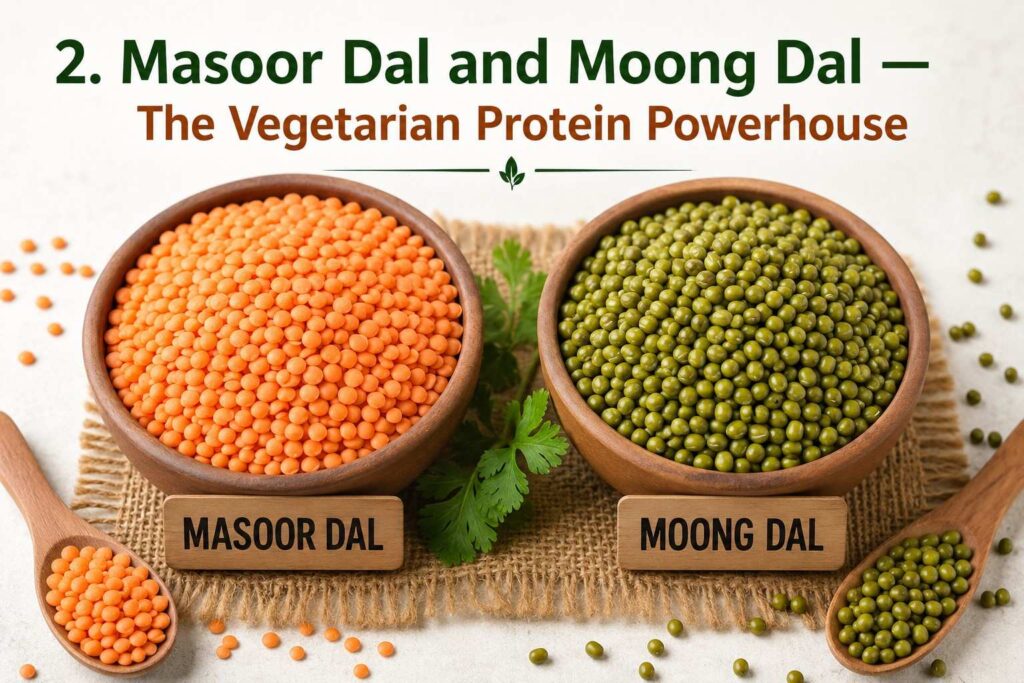
Key Nutrients: Protein, iron, folic acid, zinc, biotin
For vegetarians — who make up roughly 38% of India’s population — dal is non-negotiable for hair regrowth. Lentils like masoor dal, moong dal, and toor dal are among the densest plant-based sources of protein, iron, and biotin available in the Indian diet.
A single cup of cooked masoor dal provides approximately:
- 18 grams of protein
- 6.6 mg of iron (37% of daily requirement)
- Significant amounts of folic acid, which supports rapid cell division in follicles
Iron deficiency is the single most common nutritional cause of hair loss in Indian women. When iron levels fall, the body redirects iron to vital organs and away from “non-essential” functions like hair growth — causing diffuse hair shedding.
How to include it: Dal at lunch or dinner daily. Combine with a Vitamin C source (tomatoes, lemon juice, amla) to boost non-heme iron absorption by up to 3x.
Best for: Vegetarians, women with heavy menstrual cycles, anyone diagnosed with anaemia.
3. Amla (Indian Gooseberry) — India’s Original Hair Superfood
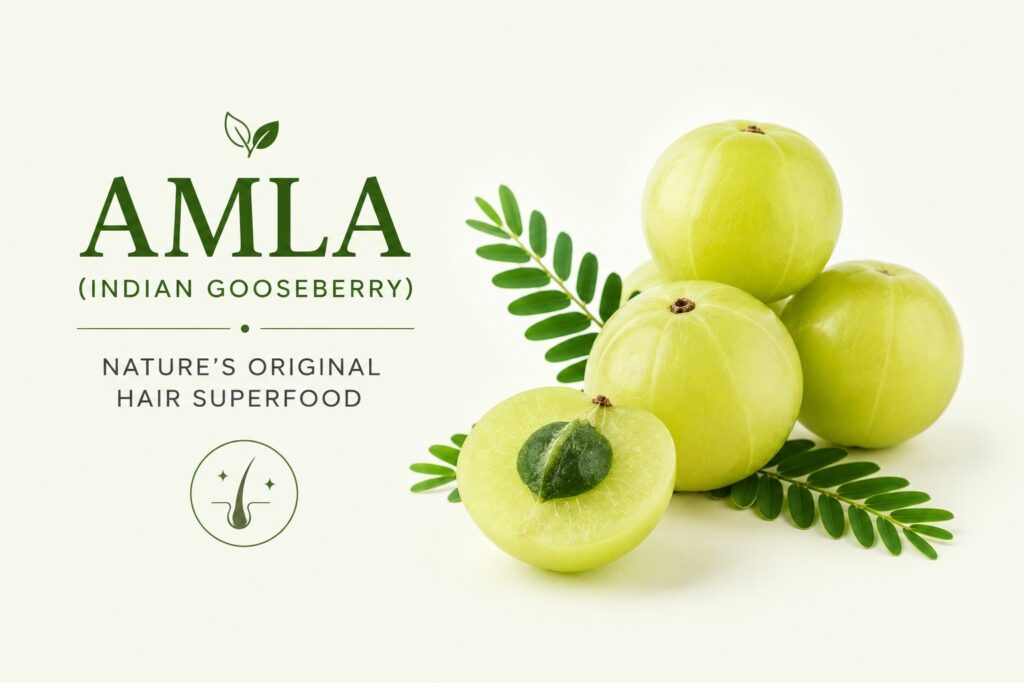
Key Nutrients: Vitamin C, antioxidants, tannins, gallic acid
Amla has been used in Ayurvedic hair care for over 3,000 years — and modern science has validated what traditional healers knew. Amla is one of the richest natural sources of Vitamin C on Earth, containing nearly 20x more Vitamin C than an orange per gram.
Why does this matter for hair? Vitamin C is essential for collagen synthesis — the structural protein that forms the hair shaft and anchors follicles in the scalp. Without adequate Vitamin C, collagen production falls, hair becomes weak and brittle, and follicles destabilize.
Amla also contains powerful antioxidants (tannins and gallic acid) that neutralize free radicals on the scalp, reduce follicle inflammation, and have been shown in studies to inhibit the enzyme 5-alpha reductase — the same enzyme that drives androgenetic (hormonal) hair loss.
How to include it: 1–2 fresh amlas daily, or 1 teaspoon of amla powder in warm water, buttermilk, or smoothies. Amla murabba, amla juice, or raw amla with salt are all effective.
Best for: Premature greying, hormonal hair loss, brittle hair.
4. Methi (Fenugreek) Seeds — The Follicle Activator
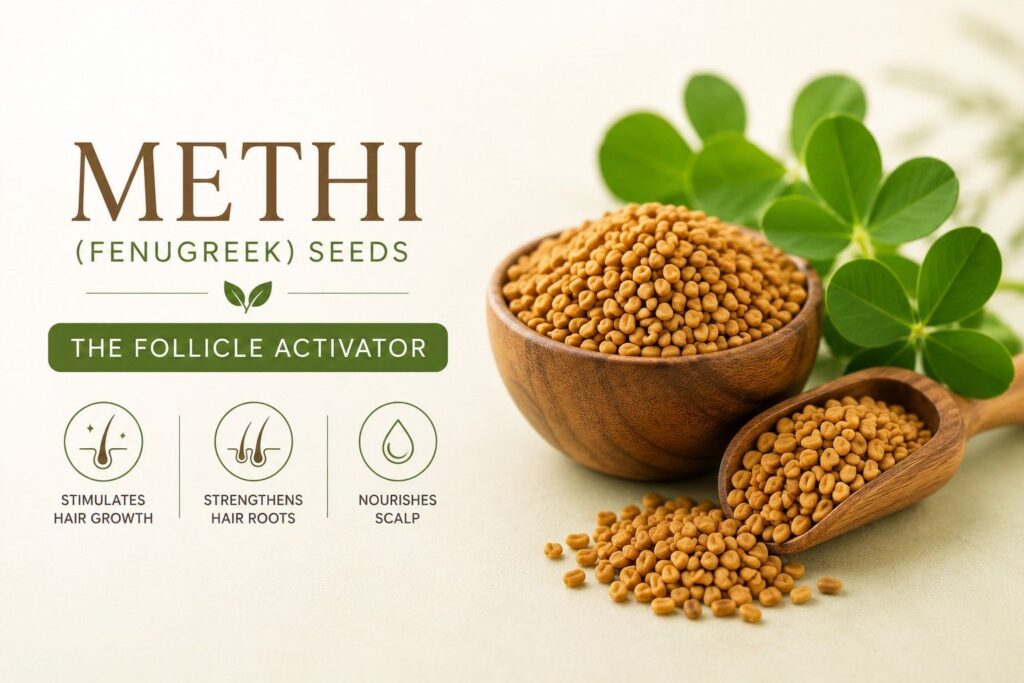
Key Nutrients: Nicotinic acid, protein, lecithin, iron, trigonelline
Methi seeds are one of the most underutilized hair regrowth foods in the Indian diet — despite being available in every Indian kitchen. Fenugreek is rich in nicotinic acid (niacin/Vitamin B3), which directly stimulates blood circulation in the scalp, ensuring follicles receive more oxygen and nutrients.
Methi also contains lecithin — a fatty compound that moisturizes and strengthens hair strands — and a unique compound called trigonelline, which has been shown in preliminary studies to promote hair follicle cycling from the resting phase back to the active growth phase.
A 2016 study published in the Journal of Cosmetics, Dermatological Sciences and Applications found that participants who consumed fenugreek seed extract showed significant improvement in hair volume and thickness within 6 months.
How to include it (internally): Soak 1 tablespoon of methi seeds overnight and eat them on an empty stomach in the morning. Alternatively, add ground methi to dal, paratha dough, or raita. Methi leaves (fresh or dried) in sabzi are also beneficial.
Best for: Thinning hair, slow growth, scalp dryness.
5. Spinach and Palak — The Iron-Folate Duo
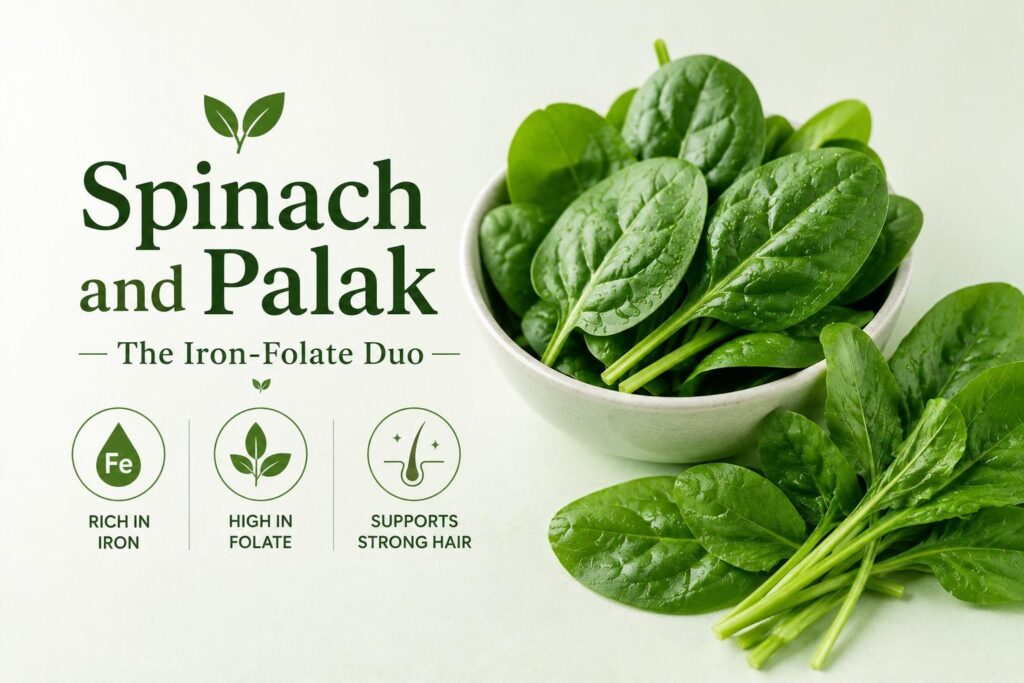
Key Nutrients: Iron, folate, Vitamin A, Vitamin C, beta-carotene
Palak (spinach) is one of the most nutrient-dense vegetables available in India year-round, and it delivers a combination of nutrients that are particularly powerful for hair regrowth.
Folate (Vitamin B9) in spinach is essential for DNA synthesis and rapid cell division — both critical in hair follicles, which are among the fastest-dividing cells in the body. Vitamin A and beta-carotene regulate sebum production in the scalp, keeping follicles lubricated and the scalp environment healthy for hair growth.
Spinach also provides a meaningful dose of plant-based iron, though it must be consumed with Vitamin C to maximize absorption (a squeeze of lemon on your palak sabzi makes a real nutritional difference).
How to include it: Palak sabzi, palak dal, palak paneer, palak paratha, or blended into a smoothie with amla. Aim for at least 1 cup of cooked spinach 4–5 times per week.
Best for: Women with hair thinning linked to nutritional deficiency, postpartum hair loss.
6. Til (Sesame Seeds) — The Calcium and Zinc Bomb
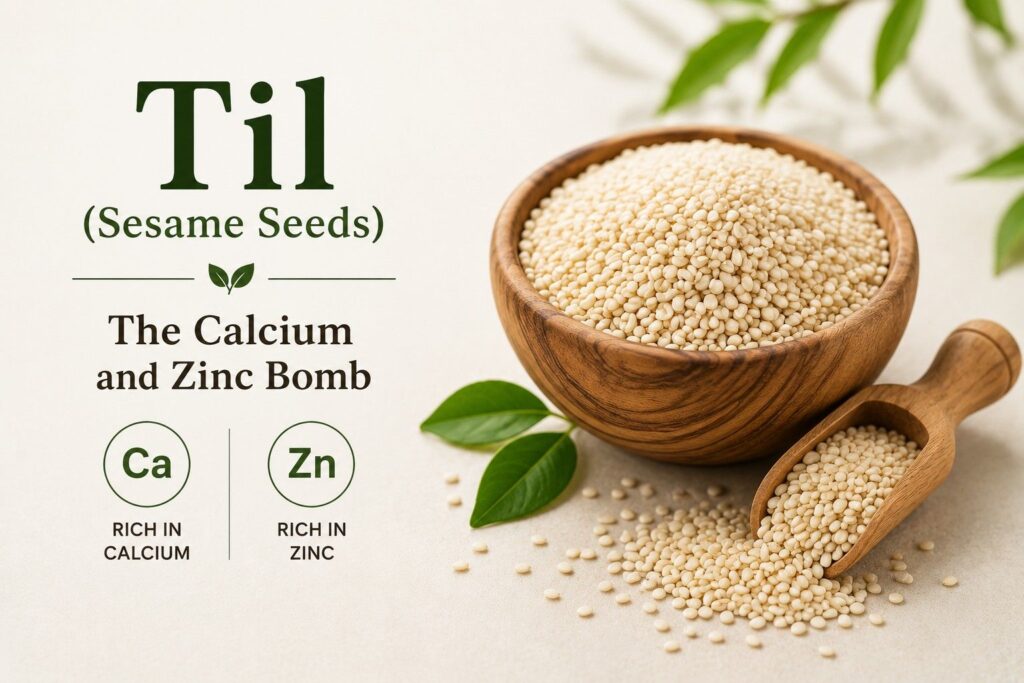
Key Nutrients: Zinc, calcium, magnesium, protein, healthy fats, Vitamin B1
Sesame seeds — black til especially — are a traditional Indian hair food that modern nutrition science fully backs. They are extraordinarily rich in zinc, a mineral that regulates the hair follicle growth cycle, controls oil gland function around follicles, and prevents follicle regression.
Zinc deficiency is a common but underdiagnosed cause of hair loss in India, particularly among those on plant-heavy diets (zinc from plant sources is less bioavailable than from meat). Just 2 tablespoons of black sesame seeds deliver nearly 20% of daily zinc requirements.
Black til is also high in copper, which works alongside zinc to maintain hair pigmentation — making it particularly valuable for preventing premature greying.
How to include it: Til chikki (sesame jaggery bars), til ladoo, sprinkle on rotis or salads, mix into curd, or use til oil for cooking. A daily tablespoon of til is one of the easiest hair-nutrition habits to build.
Best for: Premature greying, slow growth, vegetarians and vegans.
7. Curd (Dahi) — The Probiotic Hair Builder
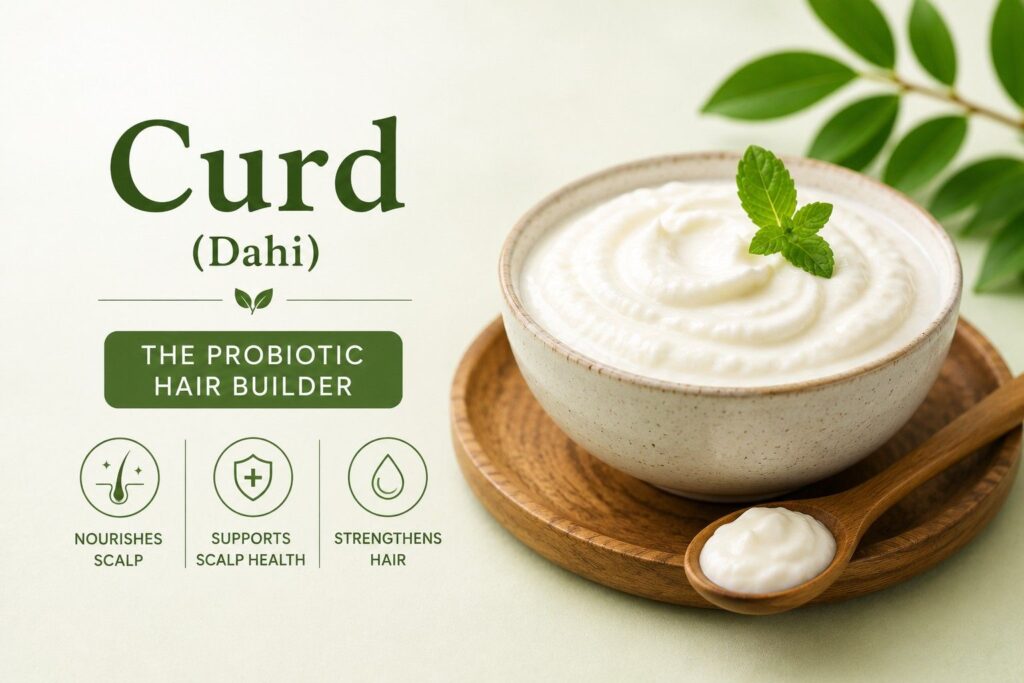
Key Nutrients: Protein, Vitamin B5 (pantothenic acid), Vitamin D, probiotics, calcium
Curd is a daily staple in most Indian households — and it’s one of the most hair-friendly foods you can eat. Full-fat dahi provides complete protein, Vitamin B5 (pantothenic acid) — which has been shown to strengthen hair follicles and prevent hair thinning — and probiotics that improve gut health.
The gut-hair connection is an emerging area of research. A healthy gut microbiome improves absorption of iron, zinc, biotin, and B vitamins — all critical for hair growth. Poor gut health (common with antibiotic use, high-sugar diets, or stress) impairs nutrient absorption even when your diet is good, which is why many Indians are deficient despite eating nutritious meals.
How to include it: 1–2 cups of full-fat curd daily — as lassi, raita, chaas (buttermilk), or plain. Avoid flavoured or low-fat commercial yoghurts with added sugar.
Best for: Anyone with digestive issues, antibiotic history, or chronic stress-related hair loss.
8. Nuts and Seeds Mix — Walnuts, Almonds, Sunflower Seeds
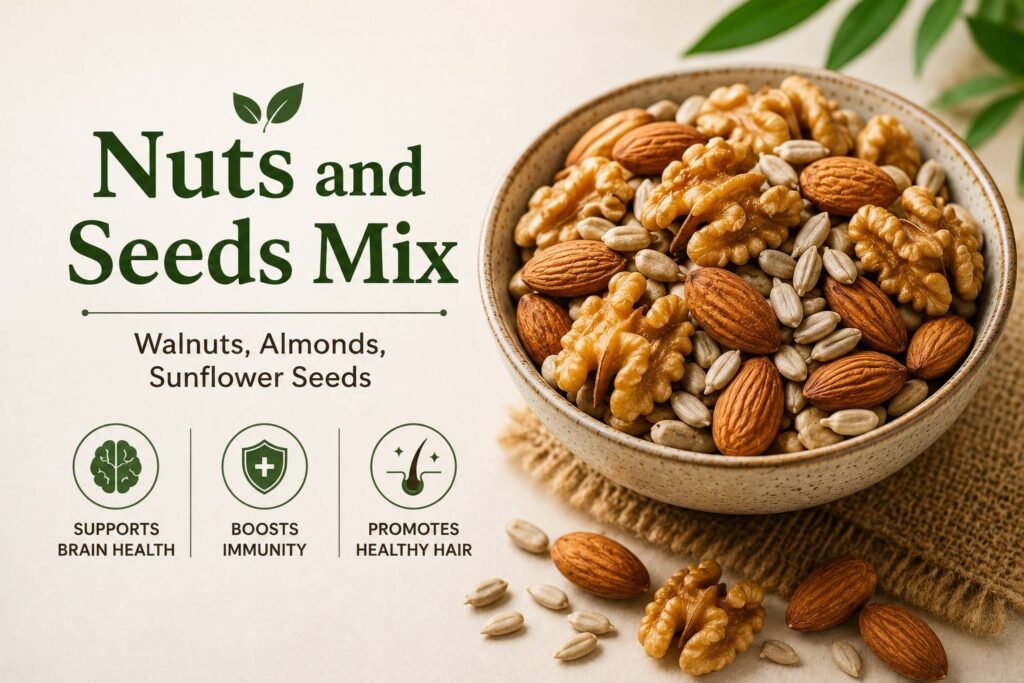
Key Nutrients: Omega-3 fatty acids, Vitamin E, selenium, zinc, biotin
A daily handful of mixed nuts is one of the highest-return dietary habits for hair regrowth. Here’s what each delivers:
| Nut/Seed | Key Hair Nutrient | Primary Benefit |
| Walnuts (Akhrot) | Omega-3 fatty acids, biotin | Reduces scalp inflammation, nourishes follicles |
| Almonds (Badam) | Vitamin E, magnesium | Protects follicles from oxidative damage |
| Sunflower Seeds | Vitamin E, selenium | Boosts scalp circulation, prevents breakage |
| Pumpkin Seeds | Zinc, iron | Regulates DHT, supports follicle health |
Omega-3 fatty acids deserve special mention. India has one of the world’s lowest omega-3 to omega-6 ratios in dietary intake, contributing to widespread scalp inflammation — a major driver of hair follicle miniaturization. Eating walnuts daily is one of the most effective dietary corrections for this imbalance.
How to include it: 4–5 walnuts + 8–10 almonds + 1 tablespoon sunflower or pumpkin seeds as a morning snack. Or blend into a smoothie or sprinkle over oatmeal/poha.
Best for: Scalp inflammation, pattern baldness (early stage), dry and damaged hair.
9. Carrots — The Beta-Carotene Scalp Conditioner
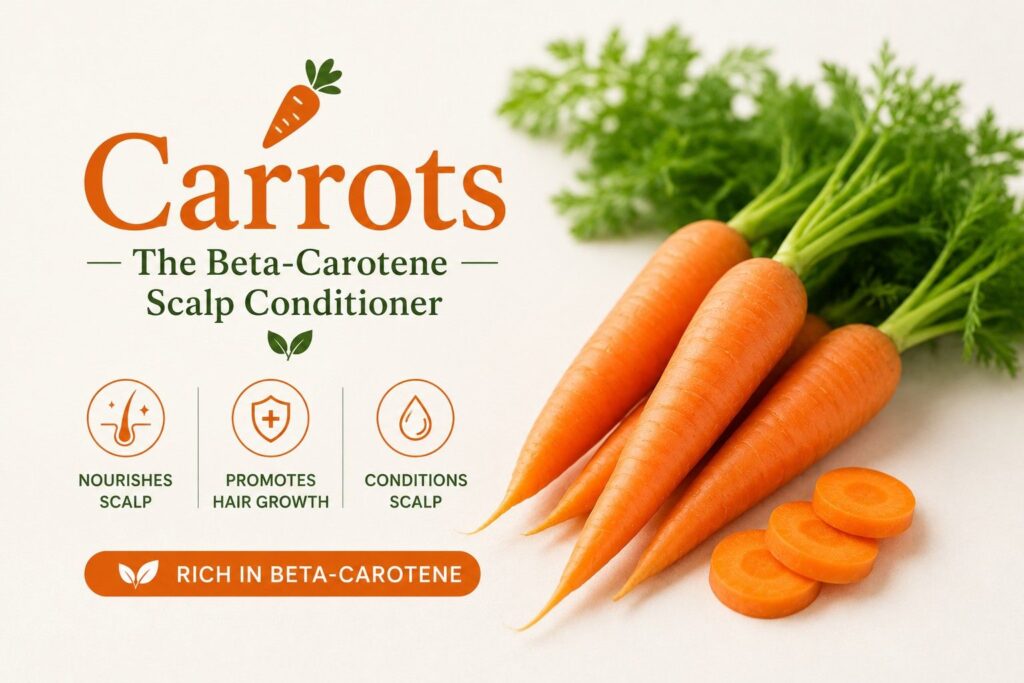
Key Nutrients: Beta-carotene (Vitamin A precursor), Vitamin C, biotin, potassium
Carrots are rich in beta-carotene, which the body converts to Vitamin A — a nutrient that governs sebum production in the scalp. Sebum is the natural oil that lubricates hair follicles, keeps the scalp moisturised, and protects hair shafts from breakage.
Vitamin A deficiency causes the scalp to become dry, flaky, and inhospitable to hair growth. However, too much preformed Vitamin A (from supplements) can actually cause hair loss — making beta-carotene from whole foods like carrots the safest and most effective source.
Biotin in carrots additionally supports keratin production, making them a well-rounded hair food that’s extremely affordable and available across all of India year-round.
How to include it: Raw gajar as a snack, gajar ka halwa (in moderation), carrot juice, or mixed vegetable sabzi. One medium carrot daily is sufficient.
Best for: Dry scalp, flaky dandruff linked to sebum deficiency, brittle hair.
10. Jaggery (Gud) — The Iron-Rich Sugar Swap
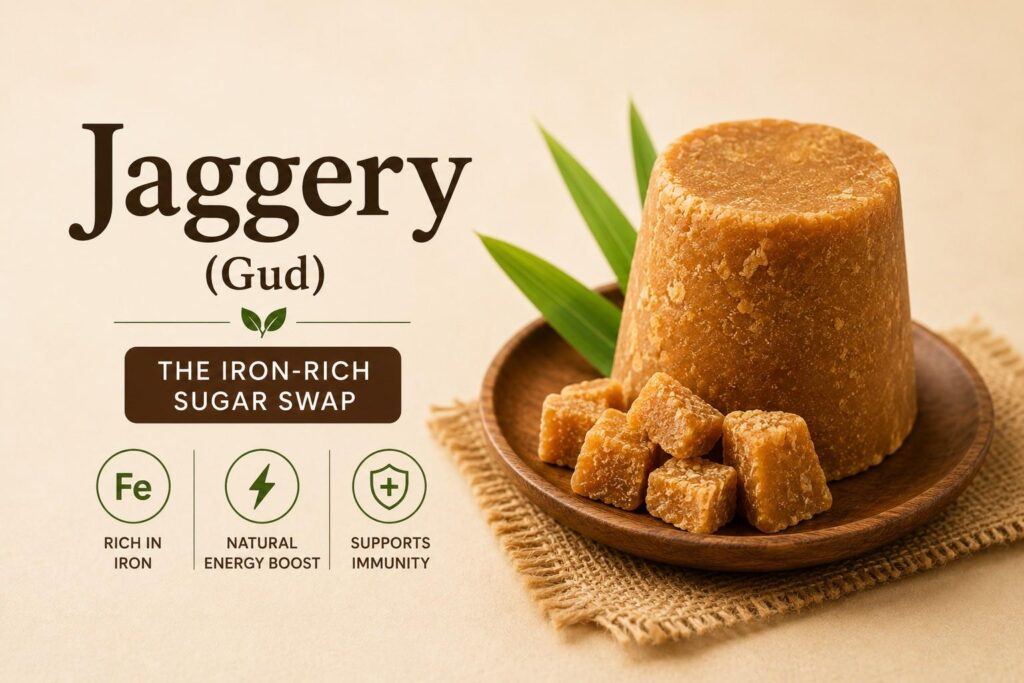
Key Nutrients: Iron, magnesium, potassium, Vitamin B complex
If you have a sweet tooth, replacing refined sugar with jaggery is one of the simplest dietary switches you can make for hair health. Traditional Indian gur contains significant amounts of iron (approximately 11 mg per 100g — nearly 60% of the daily requirement) along with magnesium and B vitamins that refined sugar completely lacks.
Iron, as established earlier, is the single most important mineral for preventing diffuse hair shedding in Indian women. Jaggery consumed with Vitamin C-rich foods (like amla or citrus) enhances iron absorption significantly.
Jaggery also contains molasses, which provides trace minerals like copper and zinc — both essential for hair pigmentation and follicle health.
How to include it: A small piece of gud after meals, gud-til chikki, jaggery in tea or kadha, or added to dal for a subtle sweetness. Keep intake moderate — 1–2 teaspoons daily is sufficient.
Best for: Iron-deficiency hair loss, women with heavy periods, those making dietary transitions.
The 7-Day Indian Hair Regrowth Diet Plan
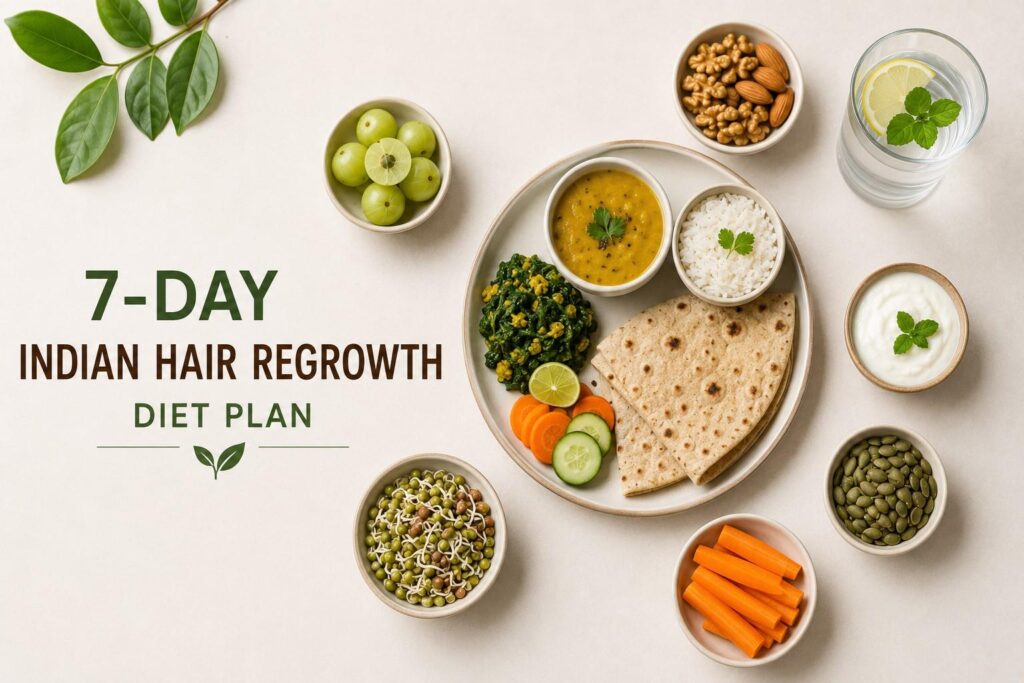
Here’s a practical, budget-friendly meal structure you can follow:
| Day | Breakfast | Lunch | Dinner | Snack |
| Mon | Egg bhurji + whole wheat toast | Masoor dal + palak sabzi + roti | Moong dal khichdi + curd | Handful of walnuts + amla |
| Tue | Methi paratha + dahi | Rajma + carrot salad + rice | Palak paneer + roti | Boiled egg + almonds |
| Wed | Poha with peanuts + amla juice | Chana dal + spinach roti | Mixed dal tadka + curd | Til ladoo (1 piece) |
| Thu | Oats with banana + soaked almonds | Egg curry + brown rice | Moong dal + sabzi + roti | Carrot sticks + pumpkin seeds |
| Fri | Vegetable omelette (2 eggs) | Toor dal + drumstick sabzi | Dahi rice + salad | Amla + walnuts |
| Sat | Ragi dosa + curd | Palak dal + roti | Egg/paneer bhurji + roti | Mixed seeds mix |
| Sun | Sprouts + boiled eggs | Rajma rice + raita | Khichdi with ghee + carrot | Til chikki + amla |
Foods That Cause Hair Loss — Avoid These
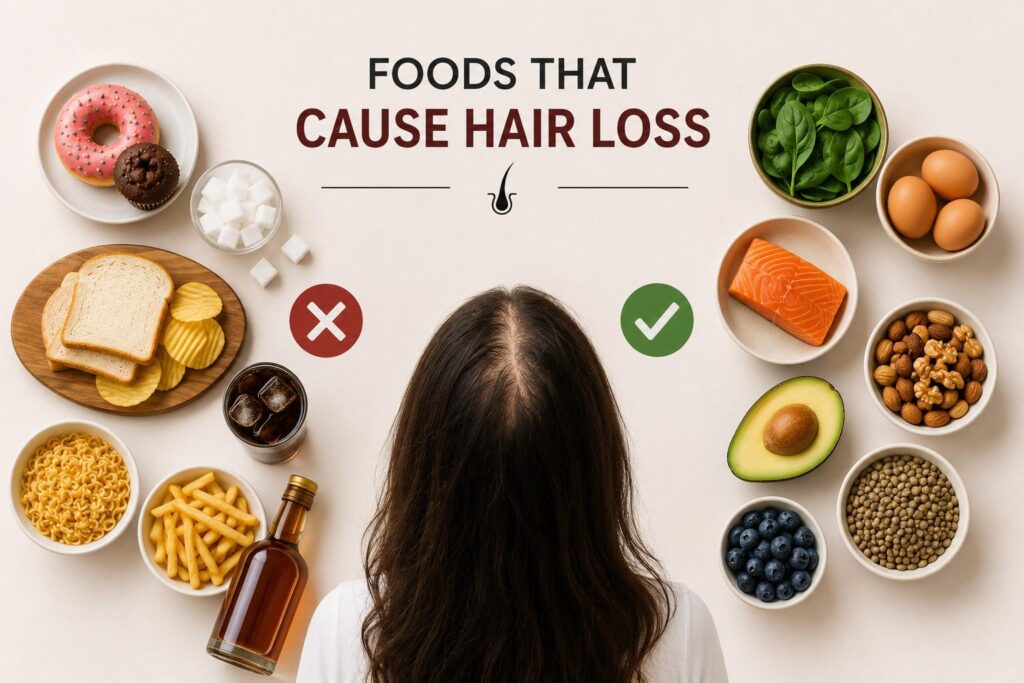
Foods That Secretly Worsen Hair Loss
Your diet for hair regrowth only works if you’re also reducing the foods that actively damage hair follicles and disrupt healthy growth cycles.
Refined Sugar
High sugar intake causes rapid insulin spikes. Elevated insulin can increase androgen activity, especially DHT (dihydrotestosterone), which is strongly linked to hormonal hair thinning and pattern hair loss. Excess sugar also increases inflammation and oxidative stress around follicles.
White Bread, Maida & Processed Snacks
Foods made with refined flour have very low nutritional value and a high glycemic index. They quickly raise blood sugar levels while providing almost no iron, zinc, protein, or vitamins needed for hair formation. Regular consumption can weaken follicles over time.
Excess Tea & Coffee
Tea and coffee contain compounds called tannins and caffeine that can interfere with iron absorption, especially when consumed immediately before or after meals. Since iron deficiency is one of the biggest causes of hair fall in India, excessive chai or coffee with meals can silently worsen shedding.
Alcohol
Alcohol reduces the body’s ability to absorb and store essential nutrients like zinc, biotin, folic acid, and protein — all crucial for keratin production. It also increases dehydration, which can make hair dry, brittle, and weak from the roots.
High-Sodium Packaged Foods
Chips, instant noodles, processed sauces, and packaged snacks are often loaded with sodium and preservatives. Excess sodium may contribute to scalp inflammation, water retention, and poor circulation around follicles, affecting nutrient delivery to the hair roots.
Crash Diets & Prolonged Fasting
Hair is considered “non-essential tissue” by the body. During severe calorie restriction or fasting, nutrients are redirected toward vital organs instead of hair growth. This commonly triggers telogen effluvium — sudden excessive shedding that often appears 2–3 months after aggressive dieting.
Deep-Fried Foods & Trans Fats
Frequent consumption of fried foods may increase scalp oil production and inflammation. Trans fats can negatively affect hormone balance and blood circulation, both of which are important for maintaining strong follicles and healthy growth cycles.
Soft Drinks & Sugary Beverages
Sugary beverages combine high sugar with almost zero nutritional value. Regular intake can worsen insulin resistance and inflammation while replacing nutrient-rich foods that support hair regrowth.
Ultra-Processed Foods
Highly processed foods often contain artificial additives, preservatives, unhealthy fats, and excess sugar or salt. These foods may disrupt gut health and reduce nutrient absorption, indirectly impacting hair quality and density.
Low-Protein Diets
Hair is primarily made of protein (keratin). Diets lacking adequate protein force the body to conserve resources, slowing hair production and increasing hair fall. This is especially common in restrictive vegetarian diets that lack pulses, dairy, eggs, or quality protein sources.
For more information:https://hairglowguide.com/hair-care-oil-benefits / https://hairglowguide.com/best-hair-care-routine
Frequently Asked Questions
Q: How long does diet for hair regrowth take to show results?
Hair follicles have a natural cycle of 3–6 months. Dietary improvements typically show visible results in new hair growth within 3–4 months of consistent nutritional correction. Patience is essential — you’re growing new hair from the root.
Q: Can a vegetarian Indian diet support complete hair regrowth?
Absolutely. Dal, eggs (for lacto-ovo vegetarians), curd, amla, til, and spinach together provide nearly all the nutrients needed for healthy hair regrowth. Vegans should pay extra attention to zinc, Vitamin D, and Vitamin B12.
Q: Is protein the most important nutrient for hair regrowth? Protein is foundational since hair is made of keratin. But iron and Vitamin D deficiencies are the most common nutritional causes of hair loss in India, making them equally critical in the Indian context.
Q: Should I take hair supplements along with diet changes?
Diet changes should come first. Supplements are useful when deficiencies are confirmed by blood tests (ferritin, Vitamin D, zinc, B12). Over-supplementing — especially Vitamin A — can worsen hair loss. Always consult a doctor before starting supplements.
Q: What is the best Indian drink for hair regrowth?
Amla juice with warm water on an empty stomach is considered the gold standard in Ayurvedic and modern nutritional advice. Alternatively, a smoothie with amla, spinach, banana, and soaked methi seeds covers multiple hair nutrients in one go.
The Bottom Line
Hair regrowth through diet is not a quick fix — it’s a 3–6 month investment in nourishing your follicles from the inside out. But it is one of the most powerful, sustainable, and affordable approaches available, especially for Indians who already have access to most of these foods.
Start with the simplest changes: add eggs or dal to every day, drink amla juice each morning, replace sugar with jaggery, and eat a handful of mixed nuts as your snack. These four habits alone can meaningfully shift your nutritional profile within weeks.
Your hair doesn’t fall from your head without reason. Fix the nutrition — and in most cases, it will come back.
This article is for informational purposes only and does not replace medical advice. If you are experiencing severe or sudden hair loss, consult a dermatologist or trichologist for a proper diagnosis including blood tests for ferritin, Vitamin D, thyroid function, and B12.

 Admin
Admin