 Admin
Admin The moment the first rains hit, something shifts — the air turns thick, your scalp starts itching, and your hair seems to have a mind of its own. If you live in India, you already know that monsoon season does not just bring relief from the heat. It brings a whole new set of hair problems that can feel impossible to manage.
The good news? Every single one of these problems has a solution. In this article, we are breaking down the 9 most common hair problems during monsoon season, why they happen specifically in Indian climates, and exactly what you can do to fix them — starting today.
Why Does Monsoon Affect Hair So Much?
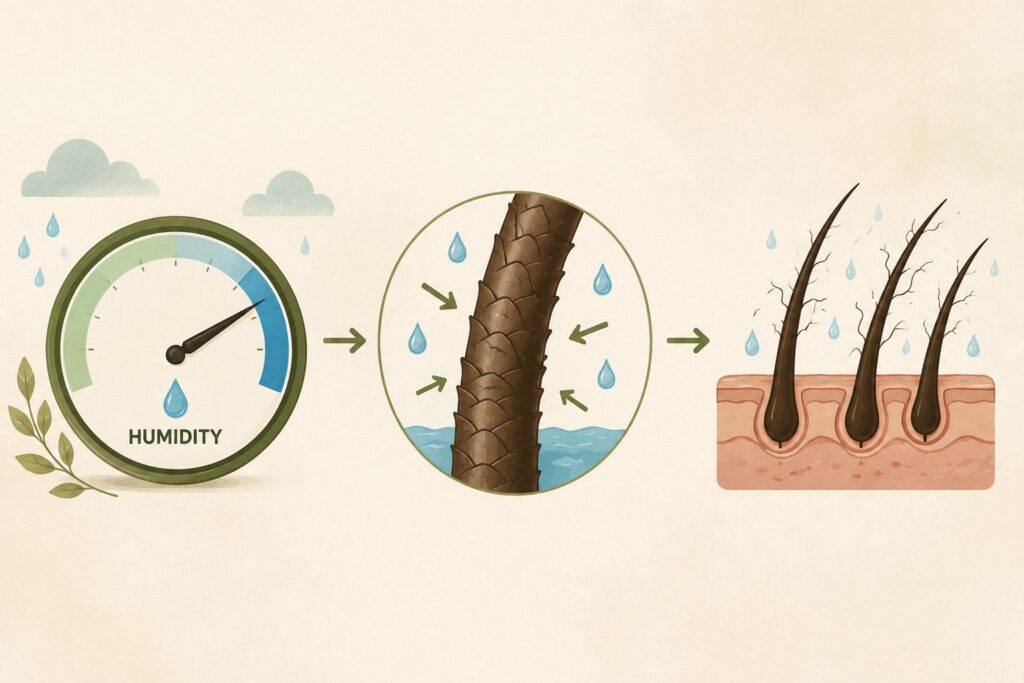
India’s monsoon season (June to September) brings humidity levels between 80–95% in most regions. This extreme moisture in the air throws off the natural balance of your scalp and hair shaft. Add to that factors like hard water, pollution mixing with rain, and heat trapped beneath the clouds — and you have the perfect storm for hair damage.
Understanding why monsoon harms your hair is the first step to protecting it.
1. Excessive Hair Fall
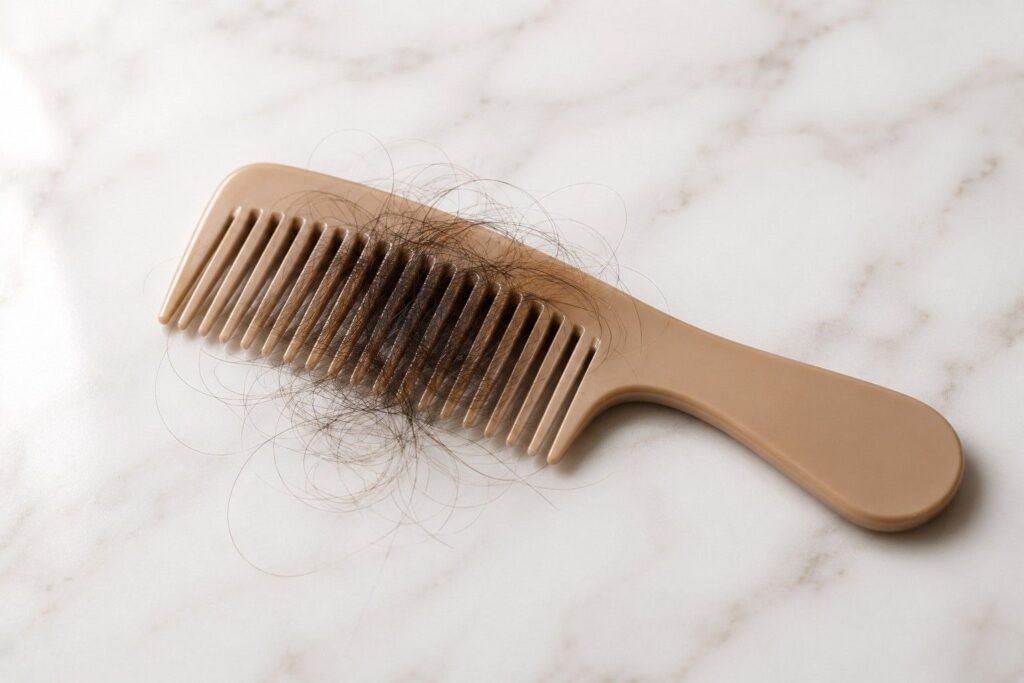
Why it happens: High humidity weakens the hair shaft by causing it to swell and contract repeatedly. At the same time, the scalp becomes sweaty and prone to clogged follicles, which disrupts the natural hair growth cycle. Studies suggest that hair shedding peaks during the autumn months — right after monsoon — because the season triggers the telogen (resting/shedding) phase in hair follicles.
What to do:
- Massage your scalp with warm bhringraj or castor oil twice a week to stimulate follicles and improve blood circulation
- Avoid tying wet hair tightly — this puts mechanical stress on already-weakened roots
- Include protein-rich foods in your diet: dal, paneer, eggs, and sprouts help rebuild keratin from within
- Take a biotin or iron supplement if your diet is lacking — deficiency in these nutrients dramatically worsens monsoon hair fall
Quick fix: Mix 2 tablespoons of onion juice with 1 tablespoon of coconut oil and apply to the scalp for 30 minutes before washing. The sulphur in onion juice strengthens the hair root.
2. Dandruff and Flaky Scalp

Why it happens: Dandruff spikes during monsoon because the humidity creates a warm, moist environment — ideal for Malassezia, the fungus responsible for dandruff. Sweat mixes with dead skin cells and product buildup, feeding this fungus and triggering rapid skin cell turnover on your scalp.
What to do:
- Wash your hair every 2–3 days (not every day) with an anti-dandruff shampoo containing ketoconazole, zinc pyrithione, or selenium sulphide
- Apply diluted neem water (boil neem leaves, cool it, strain it) as a scalp rinse after shampooing — neem is a potent natural antifungal
- Avoid oiling your scalp right before washing if you are dandruff-prone; oil traps dead skin cells and worsens flaking
- In Ayurvedic practice, applying pure aloe vera gel directly to the scalp for 20 minutes before washing significantly reduces fungal activity
AEO Answer Box: Why does dandruff increase in monsoon? — High humidity during monsoon promotes growth of Malassezia yeast on the scalp, which breaks down scalp oils and causes irritation, flaking, and itching.
3. Frizzy and Unmanageable Hair
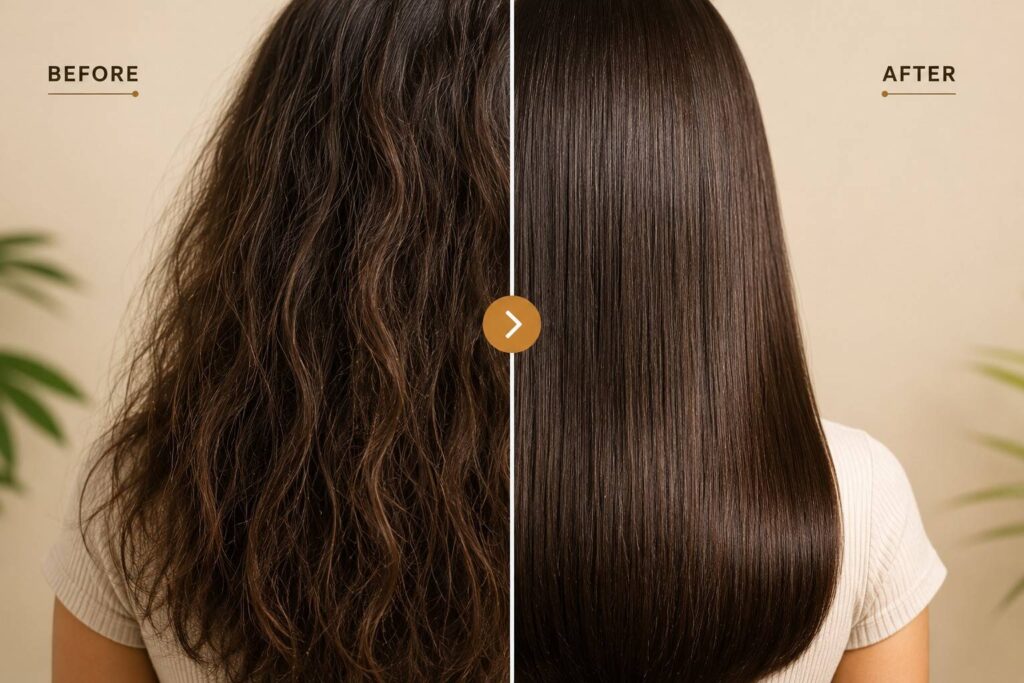
Why it happens: Hair is hygroscopic — it absorbs moisture from the air. In high-humidity conditions, the hydrogen bonds in your hair shaft break and reform in random patterns, causing the hair fibre to swell and puff outward. This is why Indian hair, which tends to be thicker and more porous, looks frizzy the moment you step outside.
What to do:
- Apply a leave-in conditioner or hair serum with silicone or argan oil before leaving the house — it creates a barrier against humidity
- Use a microfibre towel instead of a regular cotton towel; rough drying roughens the cuticle and worsens frizz
- Switch to a wide-tooth comb for detangling wet hair — never brush wet hair
- Try the LOC method: apply a leave-in (L), then an oil like almond or coconut (O), then a cream (C) to seal moisture in and lock humidity out
DIY tip: Mix 1 teaspoon of glycerin with 3 teaspoons of rosewater and 1 teaspoon of coconut oil. Spray lightly on damp hair as a frizz-control mist. Glycerin works as a humectant that manages moisture exchange.
4. Scalp Infections and Itching

Why it happens: Rainwater contains pollutants, acids, and microorganisms. When it lands on your scalp and stays trapped — especially under hair that doesn’t dry quickly — it creates a breeding ground for bacterial and fungal infections. This leads to intense itching, red bumps, and in severe cases, folliculitis (infection of hair follicles).
What to do:
- If you get caught in the rain, wash your hair within 1–2 hours with a mild, pH-balanced shampoo
- Apply tea tree oil diluted in coconut oil (5 drops in 2 tablespoons of carrier oil) as a pre-wash treatment 2x per week
- Keep your scalp dry between washes — use a dry shampoo if needed to absorb excess sweat and oil
- Never sleep with wet hair — the damp warmth against your pillow is a perfect infection environment
When to see a doctor: If you notice pus-filled bumps, persistent sores, or extreme tenderness on the scalp, consult a dermatologist — it may be folliculitis requiring topical antibiotics.
5. Limp and Greasy Hair
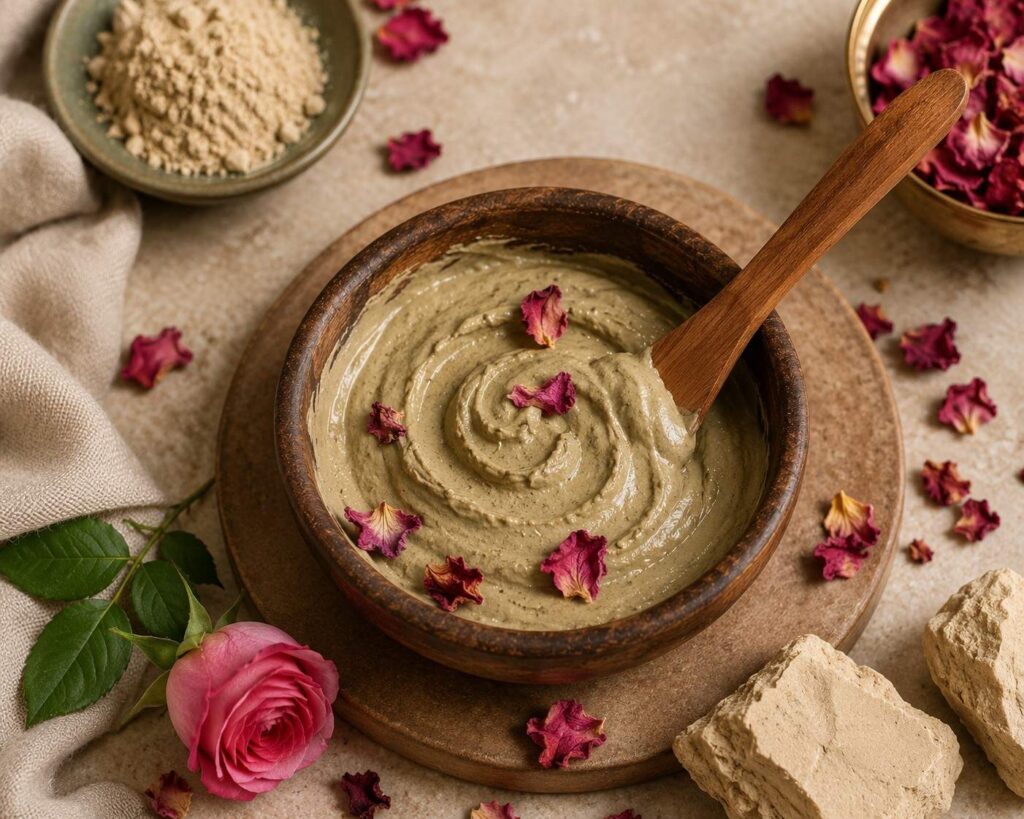
Why it happens: Humidity causes sweat and sebum (scalp oil) to accumulate faster. Your scalp is already working overtime in the heat, and monsoon humidity prevents natural evaporation — so oil and sweat sit on your scalp and weigh hair down, making it look flat, greasy, and dull within hours of washing.
What to do:
- Wash your hair with a clarifying or volumizing shampoo 2–3 times per week to remove buildup without over-stripping
- Avoid applying conditioner directly to the roots — focus it on the mid-lengths and ends only
- Use multani mitti (Fuller’s Earth) as a weekly scalp mask: mix with rose water and apply for 20 minutes before washing. It absorbs excess oil beautifully and is a classic Indian remedy
- Choose lightweight hair oils (like grapeseed or jojoba) instead of heavy ones like mustard oil during monsoon
6. Slower Hair Growth

Why it happens: Monsoon-related hair fall, nutritional deficiencies, and scalp issues all collectively slow down the hair growth cycle. Additionally, stress — which naturally spikes during season changes — elevates cortisol, a hormone that pushes more follicles into the resting phase, reducing growth rate.
What to do:
- Eat a monsoon hair growth diet: methi seeds, spinach, amla, walnuts, and seeds like flaxseed and sunflower seeds are rich in Omega-3, zinc, and biotin — all proven to support hair growth
- Try a scalp massage with rosemary oil (mix 5 drops into 2 tablespoons of coconut oil): rosemary has been shown in research to be as effective as minoxidil for stimulating hair growth over time
- Stay consistent with sleep — 7–8 hours per night supports hormone regulation and hair cycle health
- Take Triphala churna with warm water at night: in Ayurveda, it is believed to cleanse toxins that impede hair growth
7. Hair Breakage and Split Ends

Why it happens: Monsoon air weakens the protein bonds in your hair. Combined with frequent washing, rough handling of wet hair, and humidity-induced swelling, the hair shaft becomes brittle and prone to breaking mid-length and at the ends.
What to do:
- Do a protein hair mask once a week: blend 1 egg with 2 tablespoons of curd and 1 tablespoon of honey. Apply for 30–40 minutes. Curd contains lactic acid which gently exfoliates and the egg provides direct keratin protein
- Trim your hair every 6–8 weeks during monsoon to remove split ends before they travel up the shaft
- Reduce heat styling to a minimum — the combination of internal moisture (from humidity) and external heat causes severe cuticle damage
- Always apply a heat protectant if you must use a blow dryer; use the cool setting whenever possible
8. Colour-Treated Hair Damage

Why it happens: Chemically treated or colour-processed hair is highly porous — the cuticle is already compromised from bleaching or colouring. In monsoon, this porous structure absorbs excess moisture chaotically, causing colour to fade faster, brassiness to intensify, and the hair texture to become rough and straw-like.
What to do:
- Use a sulphate-free, colour-safe shampoo and a hydrating conditioner every wash
- Apply coconut oil the night before washing — it is a small enough molecule to penetrate the hair shaft and reduce protein loss during washing (a finding supported by hair science research)
- Use colour-protecting leave-in sprays with UV filters to prevent fade from post-rain sun exposure
- Do a deep conditioning mask with shea butter or keratin cream weekly to temporarily seal the cuticle and lock colour in
9. Scalp Odour

Why it happens: A combination of sweat, rainwater pollution, fungal activity, and humidity creates an unpleasant odour on the scalp — something many people in India deal with silently during the monsoon months but rarely talk about.
What to do:
- Add a few drops of peppermint or tea tree essential oil to your shampoo for a naturally refreshing wash with antimicrobial properties
- Apply diluted apple cider vinegar (ACV) — mix 1 part ACV with 3 parts water and pour over the scalp as a final rinse. ACV lowers scalp pH, which discourages bacterial and fungal growth
- Avoid covering wet hair with a dupatta or cap for extended periods — this traps humidity and worsens odour-causing bacteria
- Eat probiotic foods: curd, buttermilk, and fermented pickles support gut and skin microbiome health, which indirectly affects scalp environment
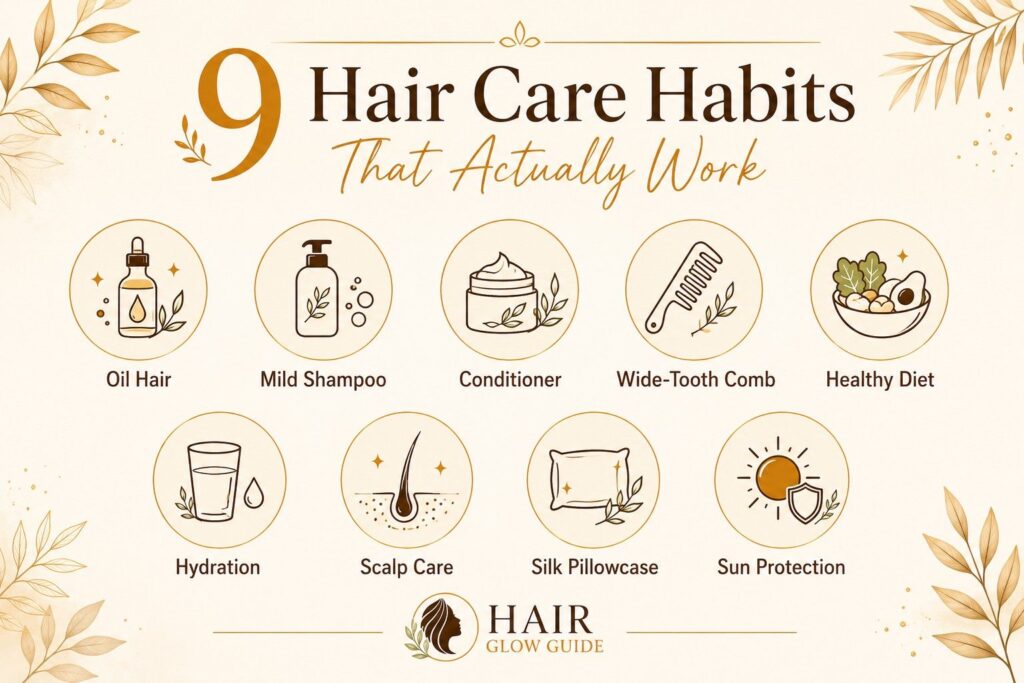
Monsoon Hair Care Routine: A Quick Cheat Sheet
| Problem | Best Remedy |
|---|---|
| Hair fall | Bhringraj oil massage + protein diet |
| Dandruff | Neem rinse + anti-dandruff shampoo |
| Frizz | Argan oil serum + LOC method |
| Scalp infection | Tea tree oil + wash after rain |
| Greasy hair | Multani mitti mask + volumizing shampoo |
| Breakage | Weekly egg-curd mask + trim |
| Slow growth | Rosemary oil massage + amla |
| Colour damage | Sulphate-free shampoo + coconut oil |
| Scalp odour | ACV rinse + peppermint shampoo |
For more information:https://hairglowguide.com/10-hair-care-tips-for-healthy-hair/
https://hairglowguide.com/how-to-remove-dandruff-permanently-naturally/
https://hairglowguide.com/complete-hair-care-routine-for-beginners/
Frequently Asked Questions
Q: Is it okay to oil hair daily during monsoon?
No. Daily oiling during monsoon can clog pores, attract pollution, and worsen dandruff. Limit oiling to 1–2 times per week and wash it off the same day or after an overnight soak.
Q: Should I wash my hair after getting wet in rain?
Yes, ideally within 1–2 hours. Rainwater contains pollutants and acid particles that can damage the scalp and hair shaft if left unwashed for too long.
Q: Which shampoo is best for Indian hair in monsoon?
Look for shampoos that are sulphate-free or mild, with active ingredients like ketoconazole (for dandruff), neem or tea tree (for scalp hygiene), or keratin (for frizz control). Avoid heavy moisturising shampoos meant for dry climates.
Q: How many times should I wash hair during monsoon?
2–3 times per week is ideal. Washing too frequently strips natural oils and weakens roots; washing too infrequently allows sweat, pollution, and fungal growth to build up.
Q: Can monsoon cause permanent hair loss?
Monsoon-related hair fall is usually seasonal and temporary. It typically reduces once the season ends and you restore your hair care routine. However, if hair loss continues beyond 3 months after monsoon, consult a dermatologist to rule out underlying conditions.
Final Thoughts
Monsoon hair problems are not a sign that your hair is “bad” — they are a sign that your hair care routine needs to adapt to the season. The humidity, rain, and pollution that define Indian monsoon months require a specific, targeted approach: lighter oils, more frequent cleansing, protein support, and protective styling.
The moment you stop fighting the season and start working with it, your hair will thank you. Start with one or two changes from this list this week — and build from there.

 Admin
Admin