 Admin
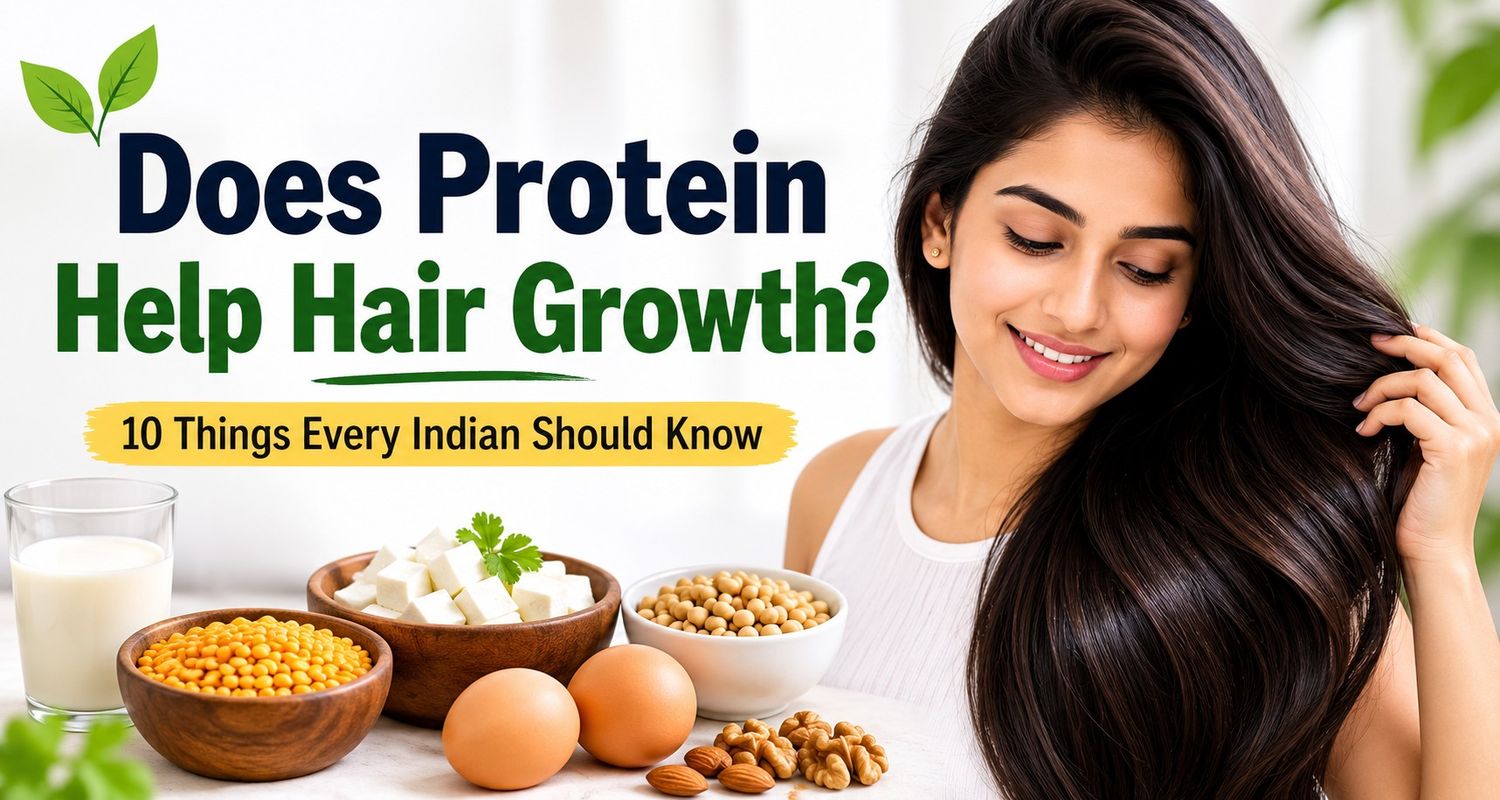
Admin Your dal, dahi, and paneer might be the best hair-growth treatment you’re ignoring. Here’s what the science says — and what your plate should look like.
95%of your hair strand is made of keratin protein
61%of people with eating disorders face hair loss
6–8 wk for shedding to reduce after fixing protein intake
3–6 mo for visible new hair regrowth to appear
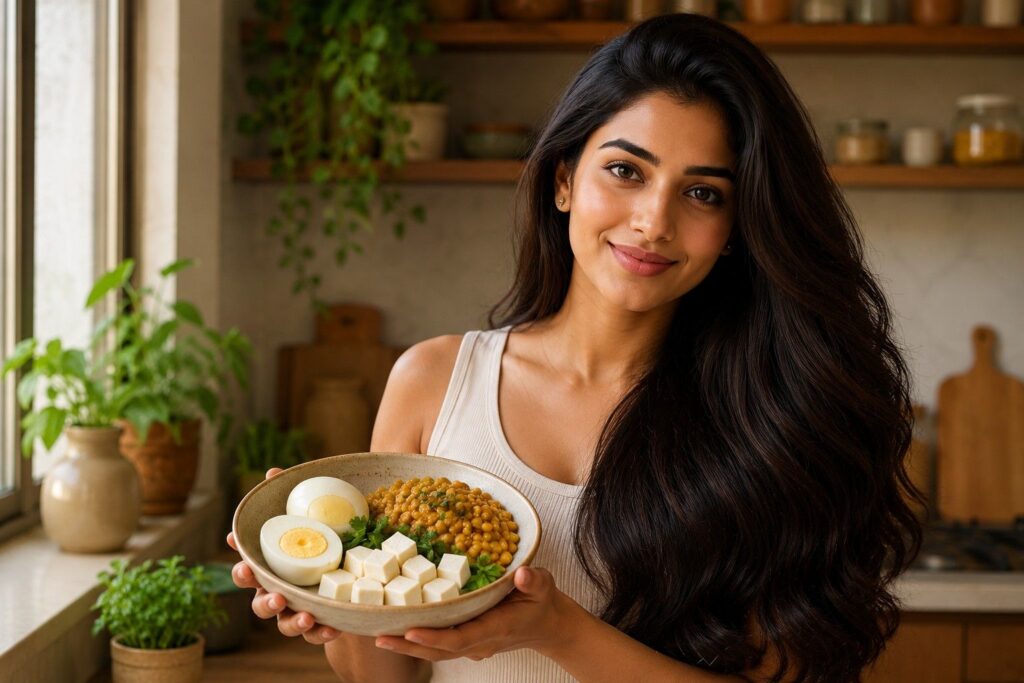
Every morning, millions of Indians stare at the shower drain wondering why their hair keeps falling. They try oil massages with coconut oil, expensive shampoos, and herbal remedies — but never look at their plate. The truth? Hair problems in India are often a protein problem hiding in plain sight. Up to 95% of your hair strand is made of a structural protein called keratin. Without adequate dietary protein, your body simply cannot build strong, healthy hair — full stop. This article breaks down 10 science-backed reasons why protein is essential for hair growth, and exactly how Indians can get more of it from everyday desi foods.
AEO Quick Answer:
Yes, protein does help hair growth.Hair is mostly made of a thing called keratin, which’s a type of protein that gives structure. If you do not eat protein, the things that make your hair, which are called hair follicles stop working too soon. This makes your hair fall out more. It gets thinner. Your hair is made of keratin. When you do not have enough protein the hair follicles that make your hair just stop working like they should. Restoring protein intake can reverse this within 3–6 months.
1 Your Hair Is Literally Made of Protein
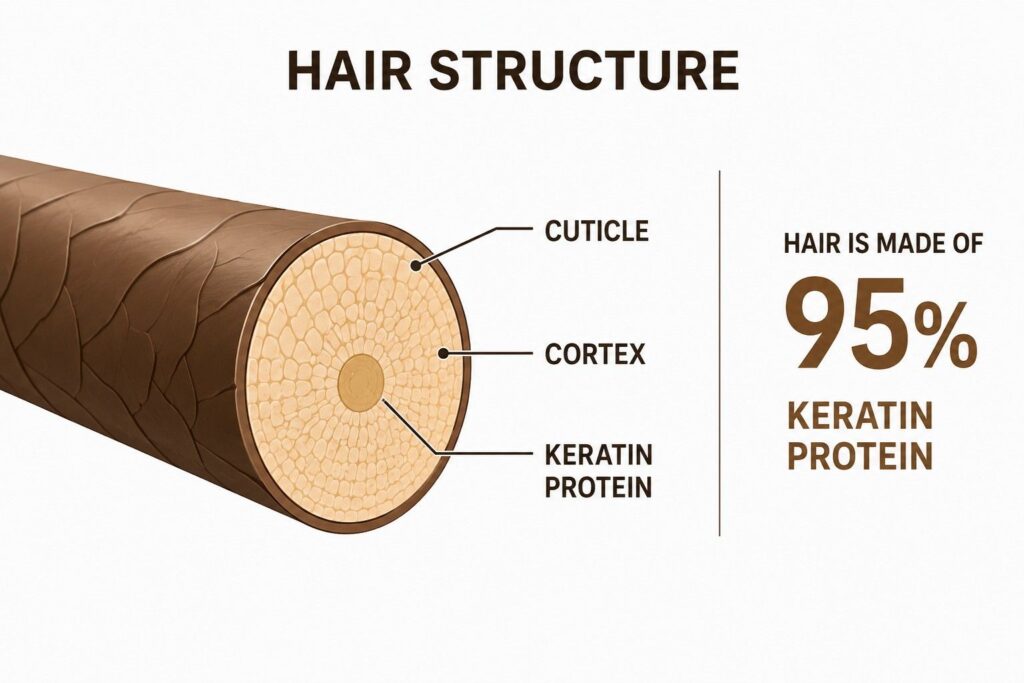
Before anything else, understand this fundamental fact: hair is not skin, not oil, not water — it is protein. Up to 95% of every single hair strand on your head is composed of keratin, a tough fibrous structural protein. Keratin is made from a chain of amino acids. These are the units your body uses from the protein you eat.
Think of it like making chapati. You need atta or flour to make chapati. In the way you need enough protein from your diet for your body to make keratin. Without it your hair follicles do not have the materials to grow hair. This is the link, between eating protein and growing hair.
Science shows that keratin proteins have a lot of cysteine. This amino acid has sulfur bonds that make hair strong and give it structure. When you do not eat protein there is less cysteine available. This makes hair weak and fragile. Keratin needs protein protein helps keratin and keratin makes hair strong.
2 Protein Deficiency Directly Causes Hair Shedding
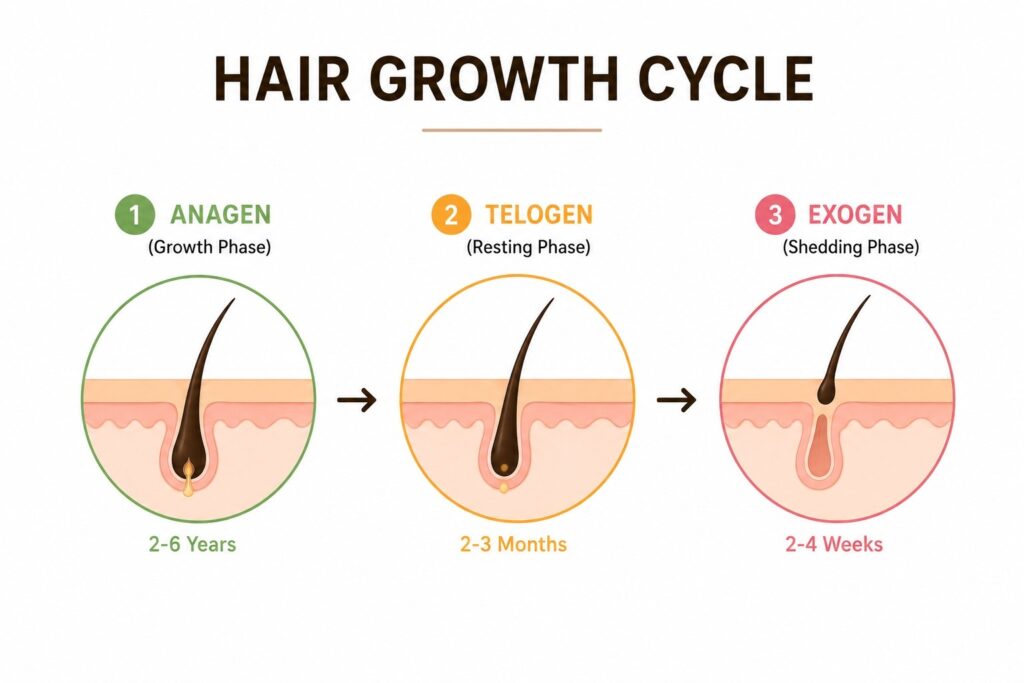
This is not something people talk about. It is actually written down in medical records. When the body of a person does not get protein the body goes into a mode where it tries to stay alive. The body starts to use the protein it has for the important parts like the heart, the liver and the kidneys. The hair is not necessary for the body to stay alive so the body stops giving protein to the hair. The protein supply, for the hair is basically stopped.
The result: more and more hair follicles are forced prematurely into the telogen (resting) phase — and 2–3 months later, that hair sheds in alarming clumps. This condition is medically known as telogen effluvium, and protein deficiency is one of its most common dietary triggers in India.
Anagen — Active growth phase (2–7 years). Requires protein consistently.Growth
Telogen — Resting phase (2–3 months). Protein deficiency pushes more follicles here prematurely.Resting
Exogen — Shedding phase. Hair falls out. Visible hair loss begins.Shedding
Indian context:
A study on people with eating disorders found that hair problems like hair loss, brittle hair and thinning hair affect patients. Up to 61% of them. In India people often go on very low-calorie diets before weddings and big events. This can also cause hair loss because of lack of protein, in the diet.
3 Protein Powers the Hair Growth (Anagen) Phase
The anagen phase is when your hair is actively growing — and it can last 2 to 7 years if everything is right. During this phase, cells in the hair bulb divide rapidly — some of the fastest-dividing cells in the human body. Rapid cell division requires a constant, steady supply of protein and amino acids.
A 2025 study published in Nature Communications shed new light on this: researchers discovered a protein called MCL-1 that acts as a “protector” for active hair follicle stem cells. When follicle stem cells switch on and start dividing, they become vulnerable to stress signals that trigger cell death. MCL-1 shields them, allowing hair regeneration to proceed. This breakthrough reveals that proteins aren’t just building blocks — they actively regulate whether your follicles live and grow, or stop.
What this means for you: A protein-sufficient diet doesn’t just provide keratin material — it supports the entire molecular machinery that keeps your follicles active and growing longer.
4 Amino Acids Are the Real Heroes Behind Keratin Production
Protein is not one thing it is a chain of amino acids. The different amino acids have jobs when it comes to keeping your hair healthy. When you eat things like dal or eggs or paneer your body breaks down the protein into amino acids and then puts them back together into keratin that is just right for your hair.
- Cysteine. This is the important amino acid for your hair. It helps create bonds that give your hair its shape and make it strong.
- Lysine. This one helps make collagen, which’s good for the roots of your hair. You can find lots of lysine in eggs and dairy products.
- Methionine. This amino acid has sulfur in it which helps make keratin. You can find it in eggs and fish and sesame seeds.
- Glycine and Proline. These are important for making collagen that keeps your hair anchored to your scalp. You can find them in dals and lentils.
- Arginine. This one helps get blood flowing to your scalp, which means your hair follicles get the food they need. You can find it in groundnuts and chickpeas.
If you eat a diet you should know that plant proteins like dal and rajma and chana are good but they are not complete. This means they do not have all the amino acids your body needs. So it is an idea to eat them with rice or roti or dairy products. This way you get all the amino acids you need. For example if you eat dal with rice you get a protein. This is why the traditional meals we eat in India are actually very smart and good, for us.
5 Low Protein Makes Hair Dull, Brittle, and Lifeless
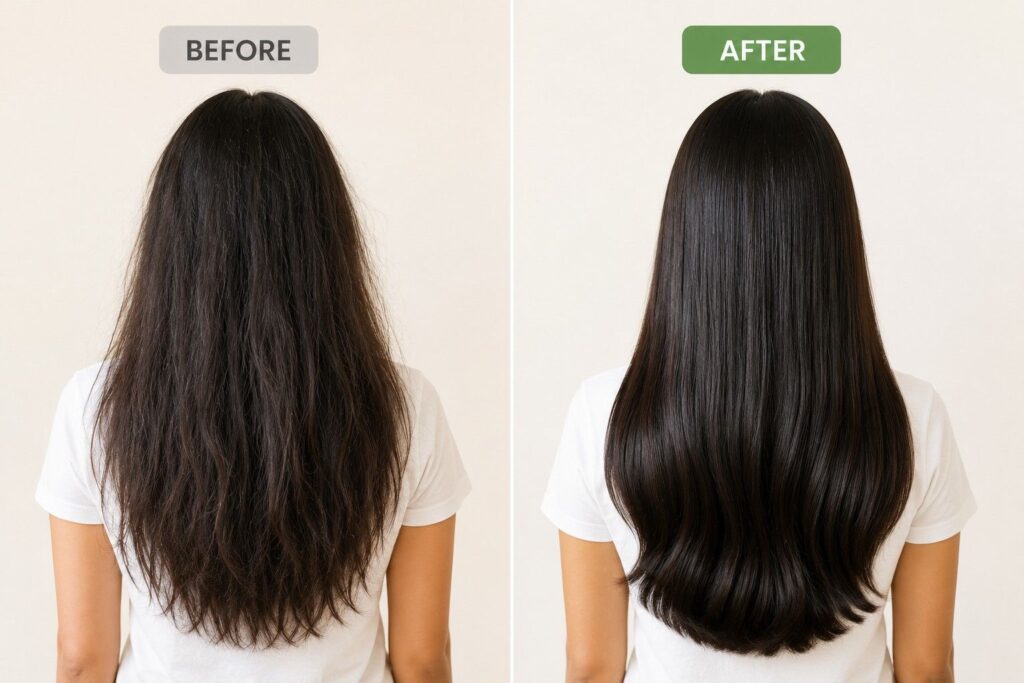
You might not even notice your hair falling out at first. The first sign that you are not getting protein is usually a change in the way your hair looks and feels. Your hair becomes really dry and dull. It loses its natural spring. The part of your hair that is inside called the hair shaft gets weak and breaks easily. This happens a lot when you are combing your hair or putting oil in it or tying it up.
This is because the middle part of your hair, which is called the cortex is made mostly of a type of protein called keratin. When you do not have protein the cortex gets weak and full of holes. Your hair has a time keeping moisture so it gets frizzy and breaks easily. And this can happen even before your hair starts to fall out.
You should watch out for hair that breaks when you pull on it of just bouncing back. You should also watch out for hair that feels rough, like straw even when you put oil in it.. If your hair looks dull even, in the light these are all signs that your hair is not getting enough protein.
6 Your Scalp Health Depends on Protein Too
TThe scalp is really just skin and skin is made up of a lot of protein, collagen which is also a protein. If you have a scalp with a dermal layer that is well taken care of it will give your hair follicles the support they need to stay in place.
If your scalp is not healthy the hair follicles will be loose. It will be easier to lose hair.
The blood vessels that give nutrients to the hair follicles are in the scalp in the tissue that’s rich in collagen. When you do not eat protein your body makes less collagen the blood vessels do not work as well and the hair follicles do not get the nutrients they need. This happens even if you are eating vitamins and minerals.
There was a study in 2025 that was published in Frontiers in Bioengineering. This study found that a special kind of collagen called humanized collagen really helped the scalp and the hair follicles. It made the proteins in the scalp stronger. It helped the hair grow in animal tests. This study shows how important protein is, for the scalp and the hair follicles.
7 The Best Indian Protein Sources for Hair Growth
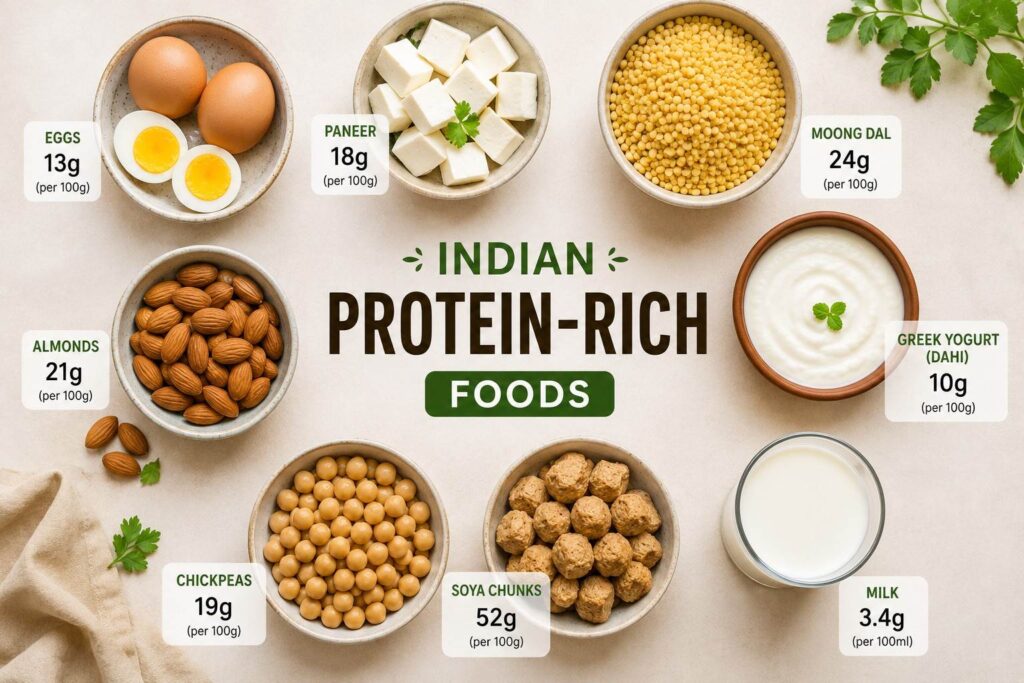
You do not need to buy protein shakes. The Indian kitchen is already full of things that have protein, which is good for your hair. Here is what you should eat:
- Eggs. Each egg has six grams of protein. It also has biotin and zinc.
- Paneer. One hundred grams of paneer has eighteen grams of casein protein.
*. Lentils. For every one hundred grams of dal or lentils you get ten to twenty grams of protein. You also get iron and zinc.
*. Curd. It has eleven grams of protein and vitamin B5.
*. Chickpea. It has nine grams of protein and biotin.
- Groundnuts. One hundred grams of groundnuts has twenty six grams of protein.
- Milk. One glass of milk has eight grams of protein and calcium.
*. Fish. For every one hundred grams of chicken or fish you get twenty five to thirty grams of protein.
Here is a good tip for people who do not eat meat: you can eat rajma with rice or dal with roti or paneer with some seeds. When you eat these things together they make protein that has all the amino acids that your hair needs. Indian kitchens have all these protein sources, for hair health so you can use them to make your hair healthy.
8 How Much Protein Do Indians Actually Need for Hair?
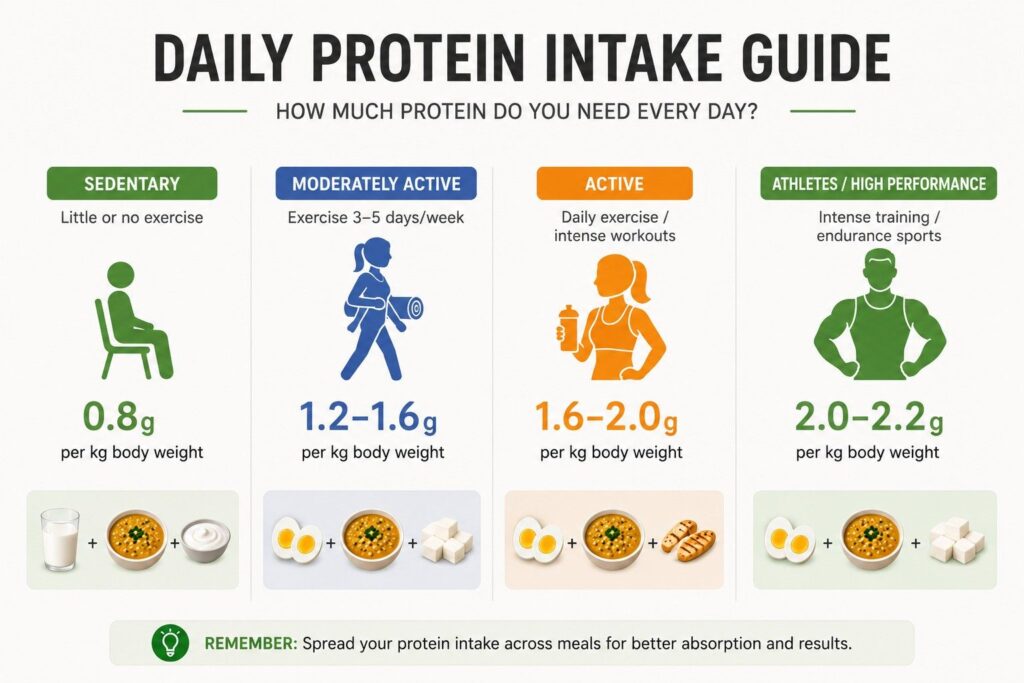
Most Indians, those who eat mostly vegetables are not getting enough protein.
They eat around 40 to 47 grams of protein every day.
The doctor says adults need protein than that.
The rule of thumb is to eat 0.8 to 1.2 grams of protein, for every kilogram that you weigh.
You need to eat much protein every day if you are an adult.
- The general guideline is0.8 to 1.2 grams of protein per kilogram of body weightper day for adults.
- For a 60 kg Indian woman, that’s48–72g of protein daily— just for general health, not even factoring in active hair growth goals.
- Men require around56g per dayas a baseline according to dietary guidelines.
- After correcting protein intake, shedding typically reduces in6–8 weeks, and visible regrowth appears in3–6 months.
Reality check: A typical Indian meal of 2 rotis + 1 katori dal + sabzi provides roughly 12–15g of protein. To reach 60g daily, you need to intentionally add eggs, paneer, curd, or legumes at every meal — not just dinner.
9 Signs You’re Not Getting Enough Protein for Your Hair
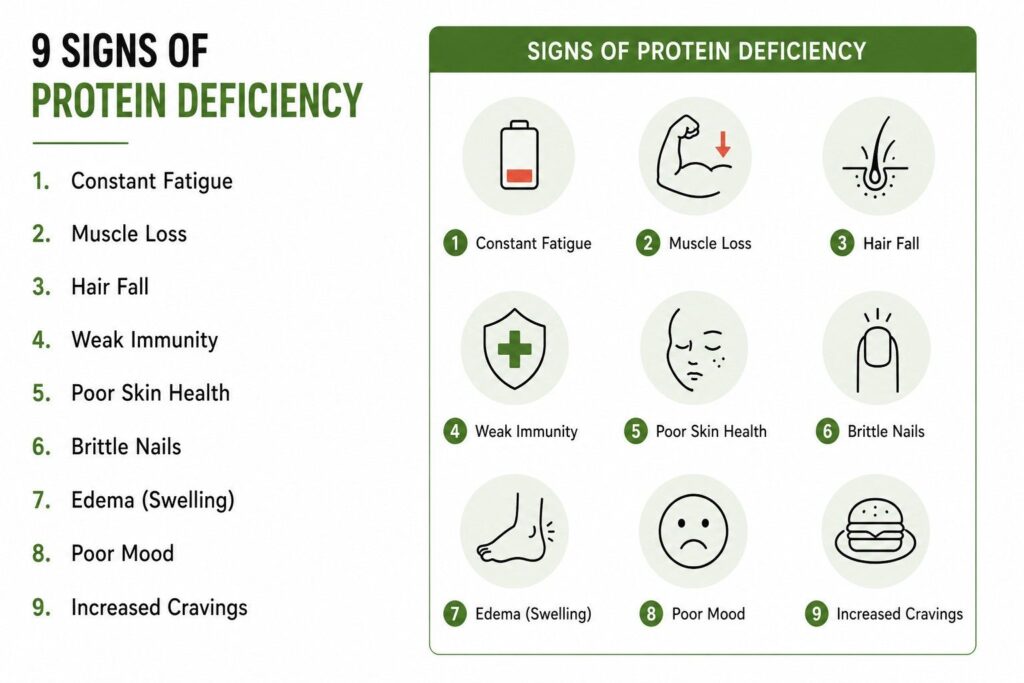
Your hair will let you know something is wrong before you even get a blood test. You should look out for these things that are happening to your hair.
- When you comb or wash your hair it is falling out a lot.
- Your hair feels thin. It does not have as much body as it used to.
- Your hair breaks easily not just at the roots but also in the middle of the hair.
- Your hair looks dull and lifeless even when you put oil in it.
- Your hair is not growing fast it seems like it is not getting any longer.
- Your nails are breaking easily too this is because they are made of the stuff as your hair.
- The color of your hair is fading it looks like it has been washed many times.
- Your hair is really frizzy and it feels rough it is like it is full of holes.
- You are feeling really tired all the time you are losing muscle and your cuts are not healing fast these are all signs that you are not getting enough protein and this is affecting your hair.
Your hair is, like a warning sign it will tell you if something is wrong so you should pay attention to what your hair’s telling you.
10 Protein Myths Indians Should Stop Believing
Protein misinformation is everywhere in India. Around hair. Let us look at the common myths about protein:
Myth: “Protein is only for bodybuilders.”. Every cell in your body including every hair follicle needs protein every day. Protein is not a supplement for people who go to the gym it is a basic thing that our bodies need.
Myth: “My dal intake is enough.”. Dal is a source of protein but the protein from plants is not as good as the protein from animals. This means you need to eat dal or you need to eat it with other foods that have protein.
Myth: “Protein shampoos will fix my hair.”. When you use a protein shampoo it just puts a layer of protein on your hair it does not really help your hair grow. If you want your hair to really grow you need to eat protein not just use protein shampoos.
Myth: “Hair fall’s genetic diet does not matter.”. The way your hair falls out can be because of the genes you got from your family. If you are losing hair because you are not eating well then you can fix this by eating better. Do not think that you cannot do anything about your hair fall.
Myth: “Eating protein will cause kidney problems.”. If you are a person and you do not have any kidney problems then eating the right amount of protein is completely safe and you need to do it. Protein is necessary, for your body so you should eat it every day.
For more information:https://hairglowguide.com/diet-for-grey-hair-indian-foods/
https://hairglowguide.com/soft-water-hair-problems/
https://hairglowguide.com/hair-looks-thinner-in-certain-lighting/
Frequently Asked Questions
1 Does protein help hair growth?
Yes. Hair is made mostly of a protein called keratin. If you eat protein you get the amino acids you need to make keratin and keep your hair follicles working. If you do not eat protein your hair follicles stop working too soon and you lose more hair.
2 Which protein is best for hair growth in India?
There are a lot of sources of protein. Eggs and paneer and dahi and dal and rajma and groundnuts are all great. If you eat meat, chicken and fish have a lot of protein that your body can use. If you are a vegetarian you can eat dal with rice or roti to get all the amino acids you need.
3 How long does it take to see hair growth after increasing protein?
If you start eating protein you will probably shed less hair in about six to eight weeks. You will start to see new hair growing in three to six months. This is because it takes a while for your hair to start growing
4 Can protein deficiency cause hair loss?
Most of the time if you lose hair because you do not eat protein it is not permanent. If you start eating protein again your hair will start growing back. The sooner you start eating protein the better your hair will grow back. Protein is really important, for hair growth. If you want to grow your hair you need to eat protein. Protein helps your hair grow so you should try to eat protein every day.
The Bottom Line
Protein is super important, for hair growth. It’s the base. If you have hair fall, thinning, weak strands or slow growth check what you eat before looking for medicine. Many Indians don’t get protein without knowing it. Eat eggs, paneer, dal, yoghurt and peanuts with every meal. Give your body 3 to 6 months of eating food in protein. The facts are clear: when your body gets protein your hair will look healthy.
 Admin
Admin