 Admin
Admin Quick Answer: What Is the Best Diet for Grey Hair?
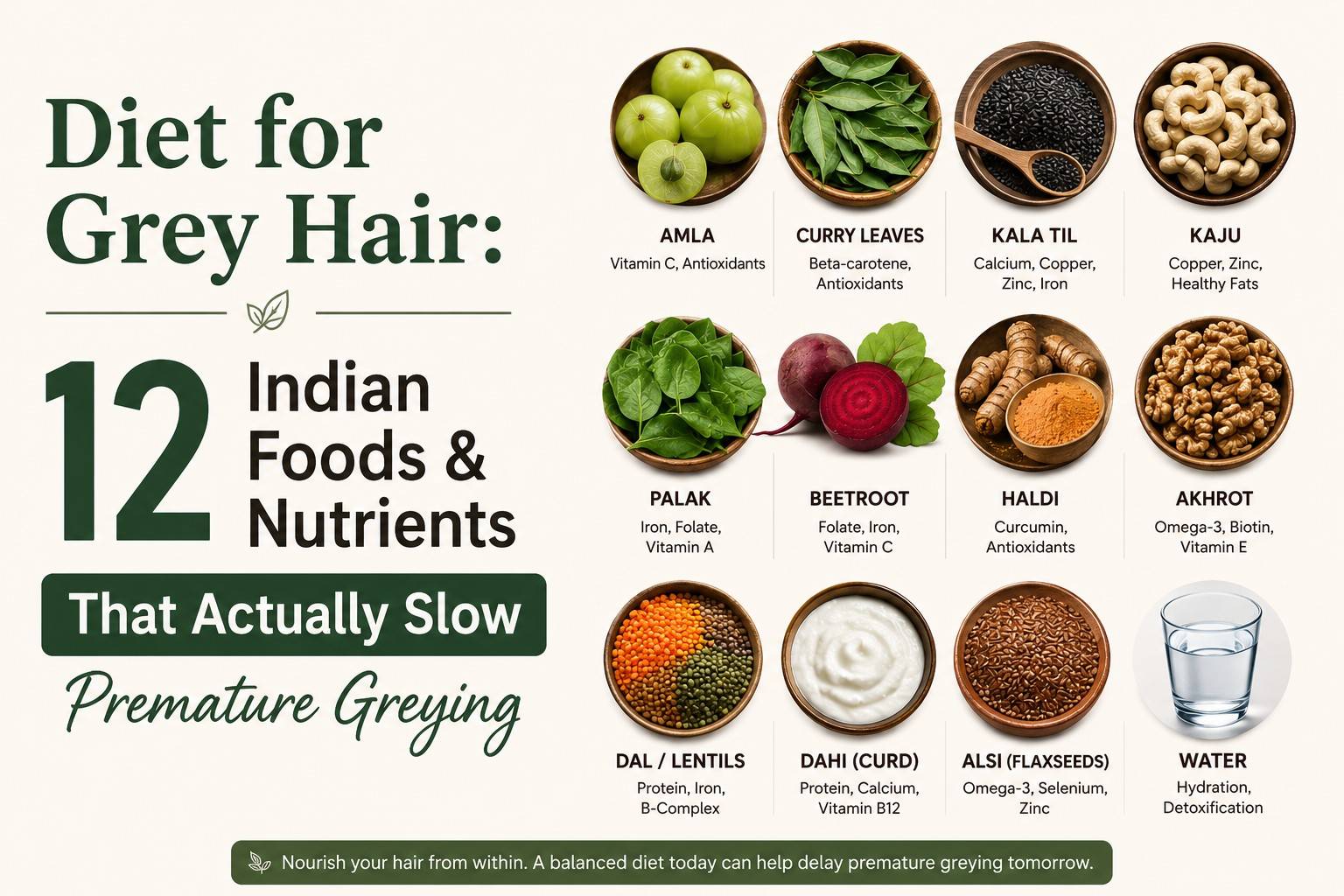
The best diet for people with grey hair is one that has a lot of Vitamin B12, copper, iron, zinc and antioxidants. For Indians it is really good to eat foods like amla, curry leaves, black sesame seeds, kala chana, spinach and dahi. These foods help our body make melanin, which’s the thing that gives our hair its colour.
If we look at what scientists found they showed that eating foods with Vitamin B12, iron and other things can really help people with grey hair. In the year 2025 some scientists wrote a report, in the International Journal of Dermatology. They found out that not having Vitamin B12, ferritin, calcium and Vitamin D3 can cause people to get grey hair when they are still young. This is something that happens to a lot of Indian adults.
Why Your Diet Is the First Place to Look When Hair Turns Grey Too Soon
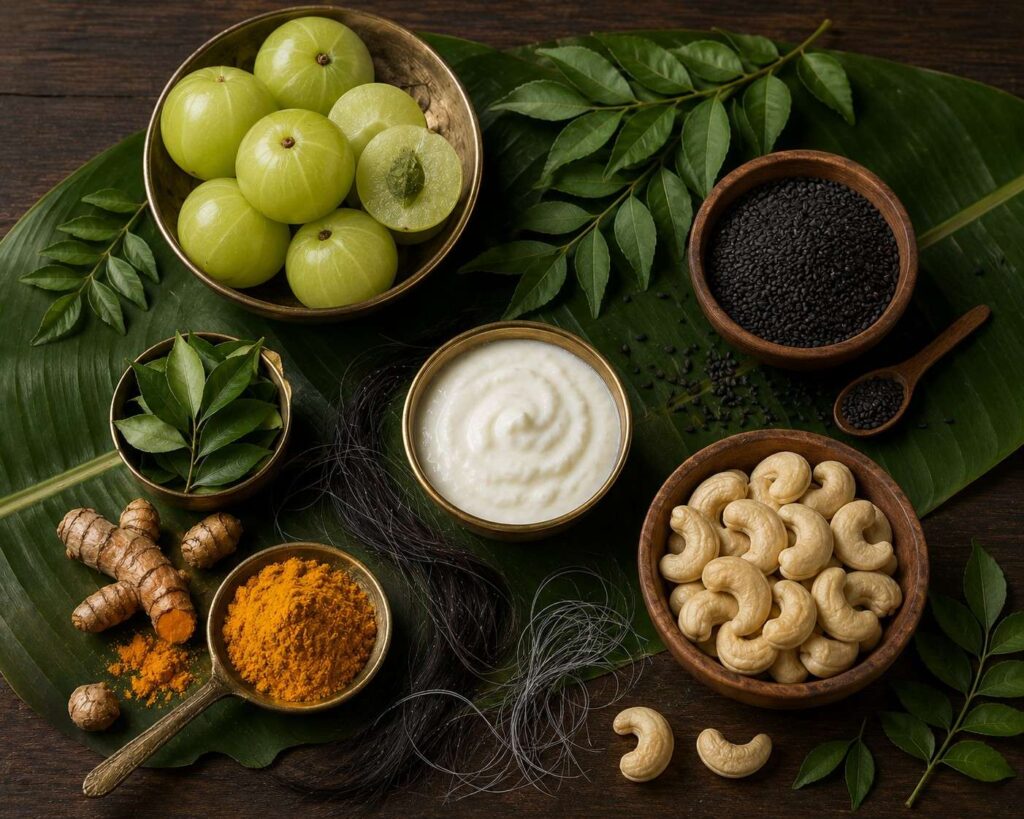
Finding a hair in your twenties or early thirties is not unusual in India anymore. The air we breathe the stress we are under and the way we sleep all play a role in this.. One thing that people often do not think about and that can be changed is the food we eat every day.
Hair gets its colour from cells called melanocytes that are, inside each hair follicle. These cells need foods to keep making the colour. When they do not get these foods they slow down. Stop working and the hair turns grey or white too soon.
The good thing is that many of the foods that help prevent grey hair are already part of the food people eat in India. You do not need to buy vitamins. You just need to know what food to eat why it helps and how much of it to eat.
What the Science Says : A big study in the International Journal of Dermatology found out that people in India who got grey hair when they were young did not have ferritin, calcium and Vitamin D3 in their blood. You can stop grey hair from coming soon by eating food that is good for you and making sure you get enough nutrients, like B12, folate, copper and calcium.
12 Indian Foods & Nutrients for Your Diet for Grey Hair
1. Amla (Indian Gooseberry) — The Gold Standard
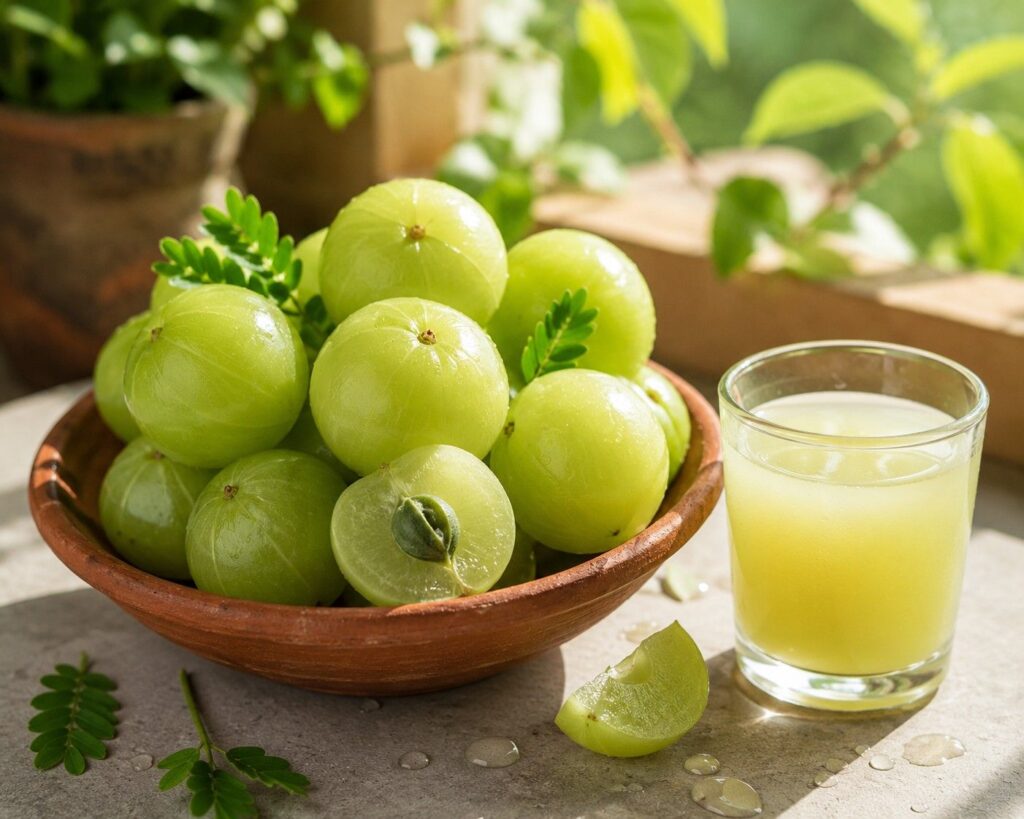
Key Nutrients: Vitamin C, Antioxidants, Iron, Tannins
When we talk about foods that can help our hair colour one thing that always comes up is amla. Amla has a lot Vitamin C than an orange, which is really good for us. It helps stop the things that can hurt our hair and make it turn grey too soon.
Amla is very good at fighting off the things that can damage our hair colour. Some people did a review in 2025. They found out that when our body has too many bad things that it cannot fight off it can make our hair turn grey too soon. Amla helps with this problem.
The Vitamin C in amla also helps our body use iron from plants, which’s very important. A lot of people in India do not have iron in their body, especially women. And we need iron to make the things that give our hair its colour so amla is very helpful, for this.
How to Eat It: To get the results from amla you should have one fresh amla every day. You can eat it raw or as murabba. Another option is to mix two tablespoons of amla juice with water and drink it on a stomach every morning.
The thing that really matters is doing this every day. It is not about how amla you have it is, about having amla daily. If you use amla every day for weeks you will see the results.
2. Curry Leaves (Kadi Patta) — The Overlooked Superfood
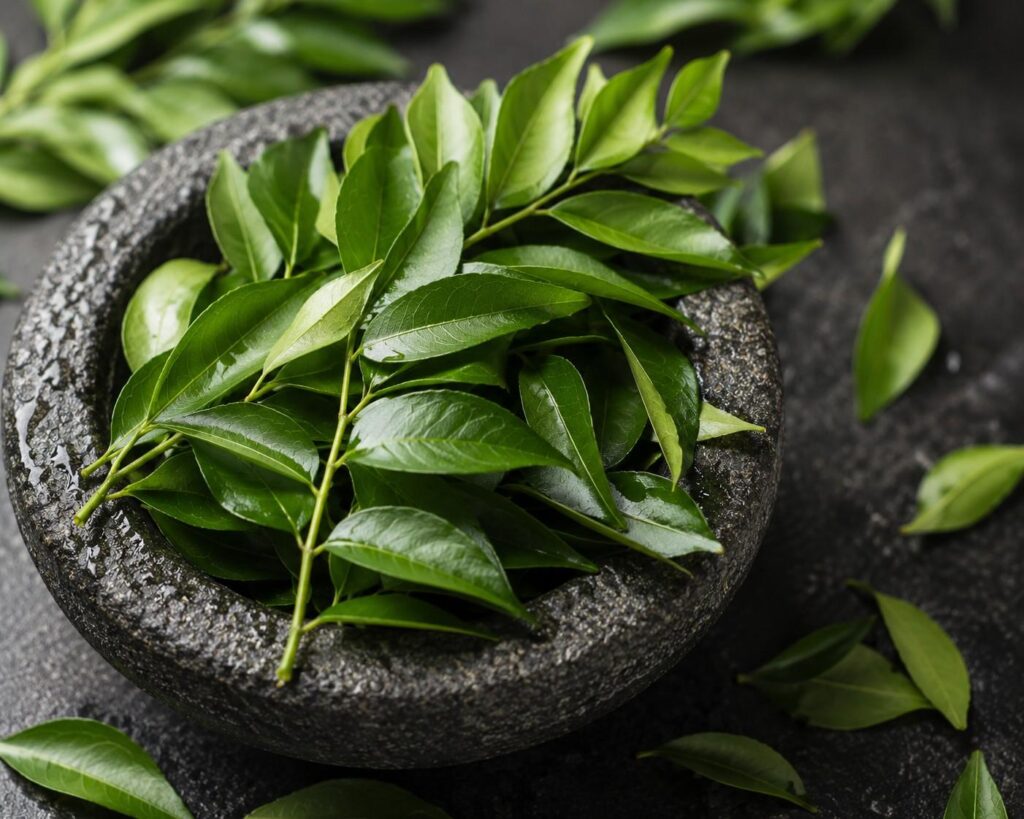
Key Nutrients: Vitamin B6, Iron, Folic Acid, Antioxidants
Curry leaves can really help with grey hair. It is not just something people say. They have a lot of things in them like B vitamins, especially B6 and folate. These things help our bodies make melanin, which’s what gives our hair its color. Vitamin B6 is very important for making the color in our hair.
The iron in curry leaves also helps get oxygen to the hair follicles, which’s necessary for our hair to be healthy. Folic acid, which is also in curry leaves helps our bodies make cells and fix damaged ones in our hair follicles. If we do not have folic acid our hair can start to thin and turn grey. Curry leaves have all these things that can help our hair so they are not just a old remedy they really work.
For example the folate in curry leaves also known as kadi patta is very good, for our hair. It helps our hair grow and stay healthy. It can even help stop our hair from turning grey. So curry leaves are a thing to use if we want to keep our hair looking its best.
How to Eat It: Add a generous handful to your morning dal tadka, sabzi, or sambar. Chewing 8–10 raw curry leaves every morning on an empty stomach is a time-tested Indian practice. Crucially — do not just use them for flavour and discard them. Eat them.
3. Black Sesame Seeds (Kala Til) — The Melanin Enzyme’s Best Friend
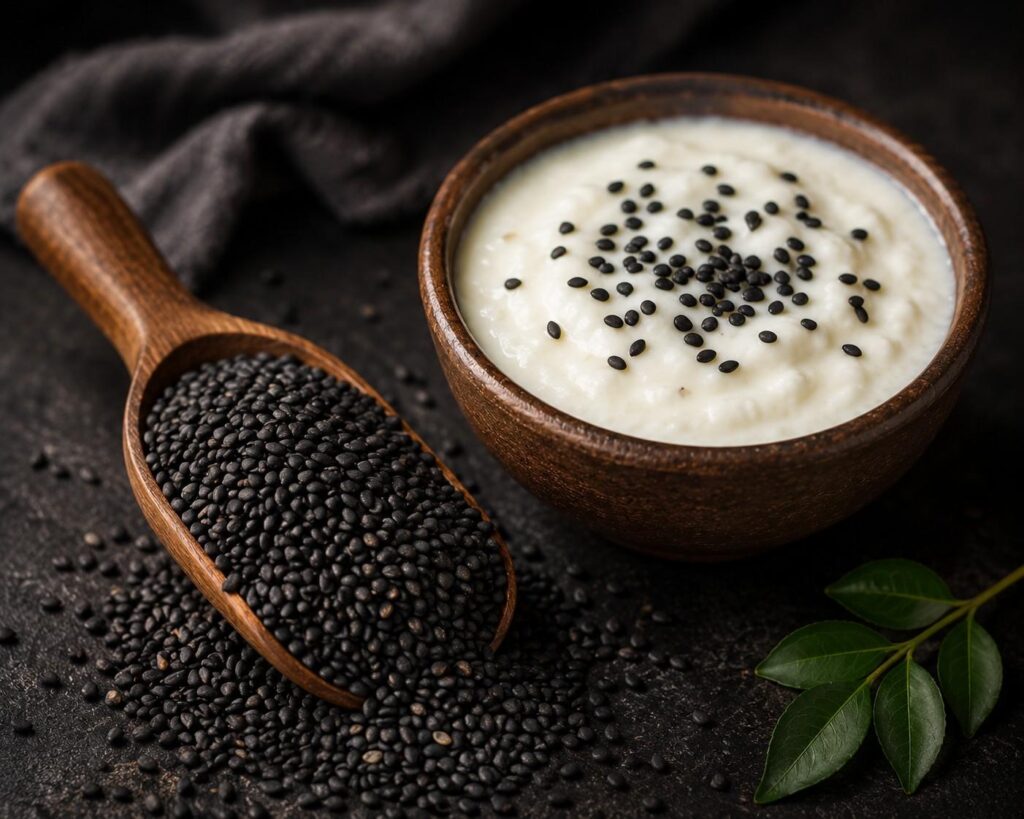
Key Nutrients: Copper, Zinc, Vitamin B1 & B3, Antioxidants
Copper is really important for the enzyme that helps make melanin, which’s the stuff that gives your hair color. If you do not have copper your hair will start to turn grey too soon. This is because your hair follicles need copper to make pigment no matter how healthy they are otherwise.
Black sesame seeds are a source of copper that you can easily find in Indian kitchens. They are one of the things you can eat to help stop your hair from turning grey. When you eat sesame seeds they can really help your hair. This is more effective than putting them on your hair. The zinc, in sesame seeds works with the copper to help make your hair pigment. It also helps keep your hair follicles safe from damage.
How to Eat It: One teaspoon of lightly toasted black sesame seeds daily. Mix into curd, add to laddoos, sprinkle on khichdi, or consume with warm water. The traditional tilgul ladoo is an excellent vehicle for regular intake.
4. Vitamin B12 — Dahi, Paneer & Fortified Foods
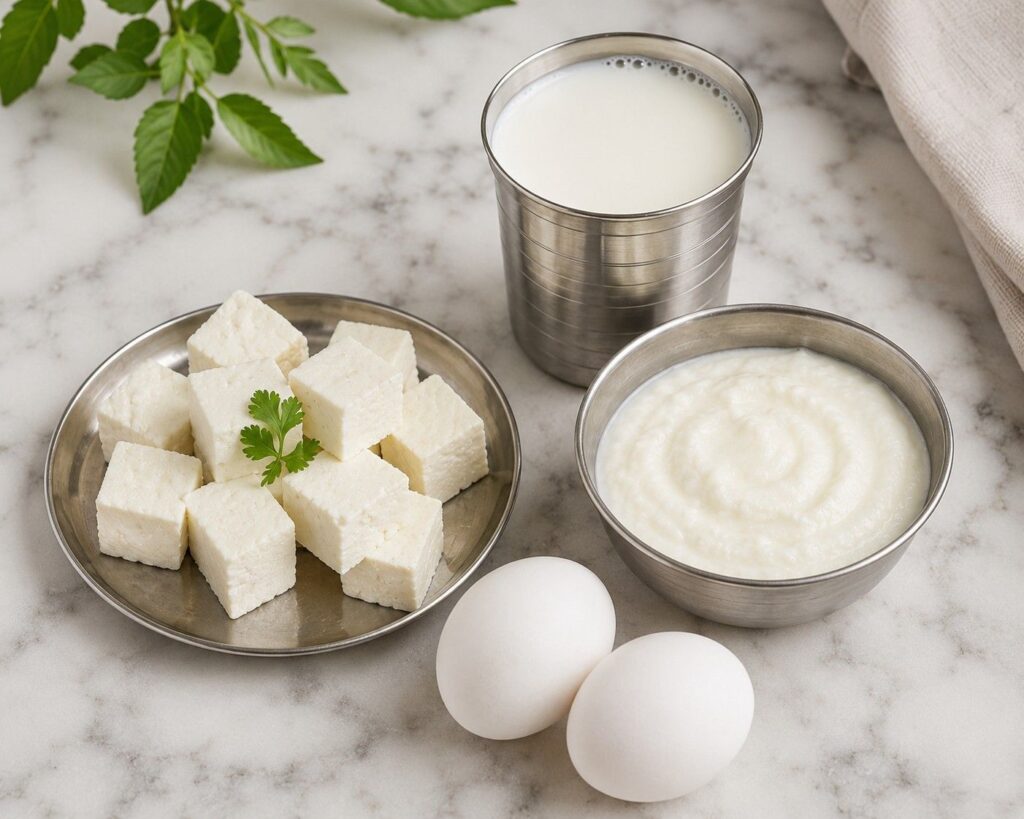
Key Nutrients: Vitamin B12, DNA Synthesis Support, Melanocyte Health
Board-certified hair restoration specialist Dr. Ross Kopelman says: “I have seen patients. Especially younger adults. Who had noticeable greying that turned out to be linked to a Vitamin B12 deficiency. Once we corrected the Vitamin B12 deficiency in some cases the greying slowed down.
Dr. Kopelman explains that Vitamin B12 plays a role in making red blood cells and helping cells work properly: “When someone is deficient in Vitamin B12 it creates stress in the hair follicle. This stress can damage the cells that make pigment causing hair to lose its colour earlier than it should.
A review in 2024 found that low Vitamin B12 can affect how hair cells grow and renew. Vitamin B12 helps keep hair in its growth stage and supports cells that make pigment. Vitamin B12 deficiency is very common among Indians because many of them follow a diet. This is often the important nutritional change, for premature greying.
How to Eat It: Two cups of dahi daily, 100g paneer, a glass of cow’s milk, or eggs if non-vegetarian. Strict vegans should strongly consider a B12 supplement or fortified plant milk, and the daily requirement to aim for is 2.4 micrograms.
5. Iron-Rich Foods — Palak, Kala Chana & Rajma
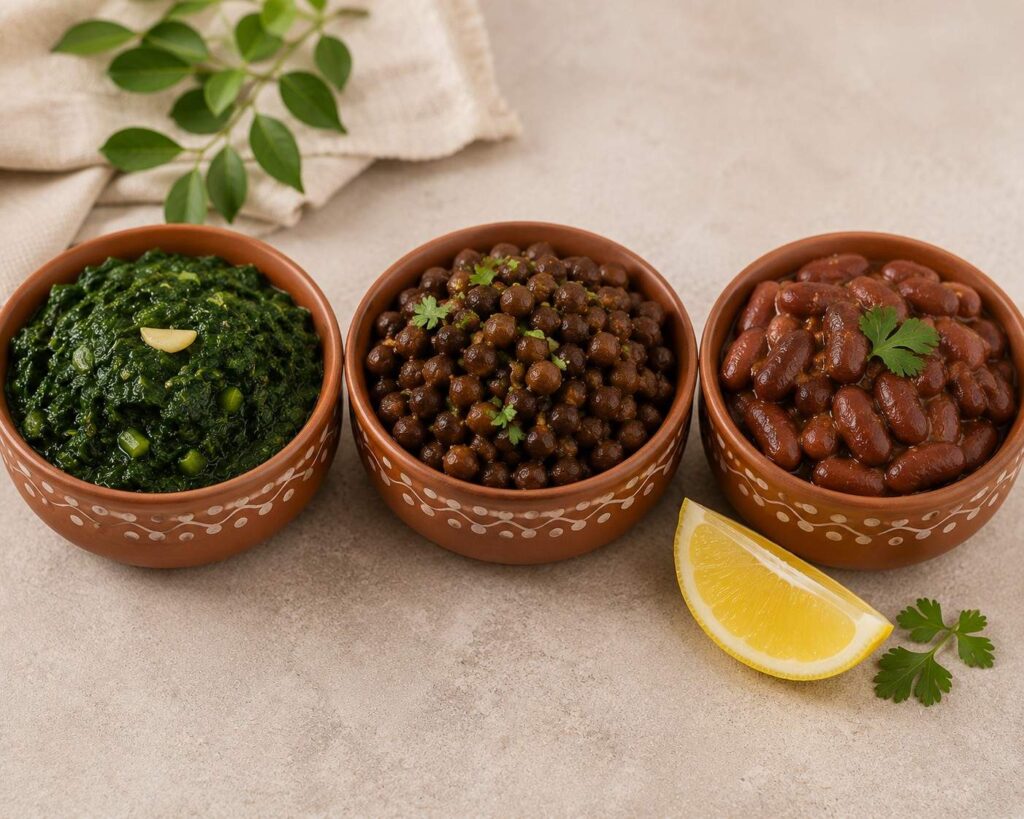
Key Nutrients: Non-Haem Iron, Folate, Protein
More than half of women in India and many men have iron deficiency. This can quietly cause hair to turn grey early. Iron helps make the enzymes that produce melanin, the colour of our hair. When iron levels are low less oxygen reaches the hair roots. This makes hair lighter even if other nutrients are present.
- Spinach is rich in iron and folate.
- Black chickpeas give iron, protein and zinc.
- Rajma provides iron and a lot of folate.
To get the most out of plant-based iron foods always eat them with something that has Vitamin C. You can have a squeeze of lemon or some amla juice. This helps your body absorb iron better, up to three times more.
How to Eat It: Palak dal or palak paneer three to four times a week. Kala chana chaat with lemon juice regularly. Rajma twice a week. Always add lemon or raw tomato to iron-rich meals to maximise absorption.
6. Pure Desi Ghee — Ayurvedic & Science Approved
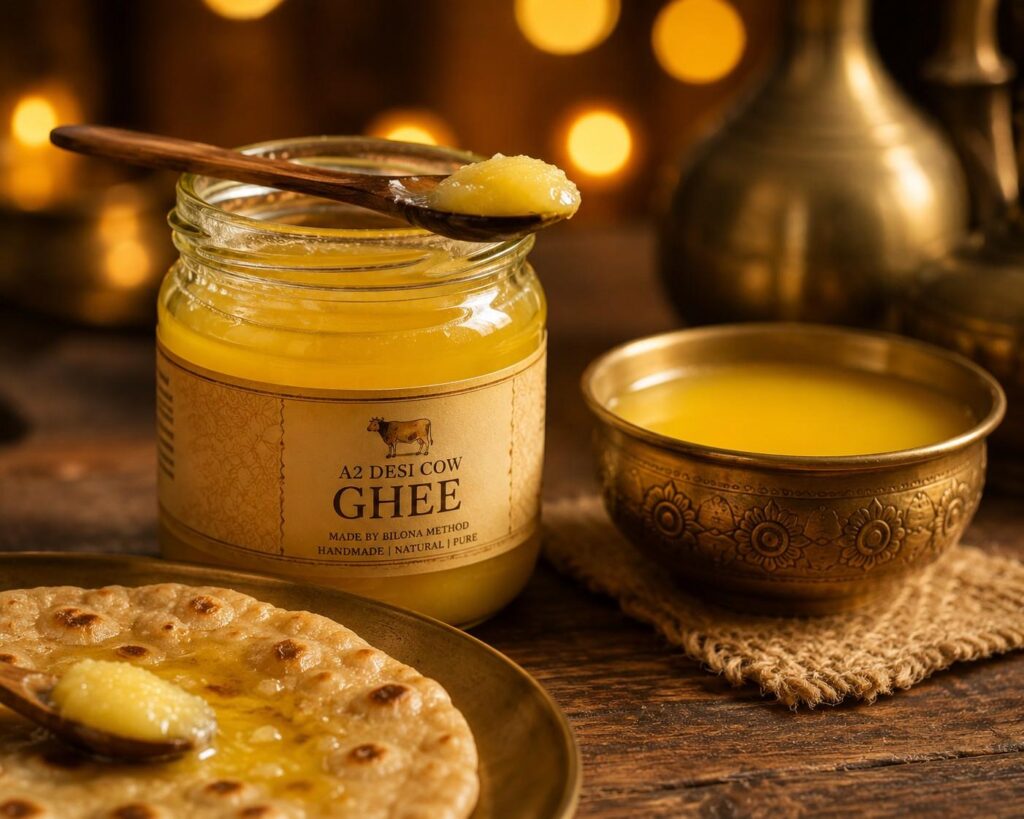
Key Nutrients: Vitamins A, D, E, K2
Vitamins like Vitamin E, Vitamin K, Vitamin D and Vitamin A that are found in ghee are really good at helping to stop hair from turning grey soon. There was a study in the 2025 International Journal of Dermatology review that said people in India who’re young and have grey hair often do not have enough Vitamin D3.
Vitamin E is very good at keeping the cells that make hair color safe from damage. Vitamin A helps the skin on the head. The hair follicles stay healthy.
Ghee is also very important because it helps our body use the vitamins from food we eat. When we eat food with soluble vitamins like Vitamin A, Vitamin D, Vitamin E and Vitamin K the ghee we eat, at the same time helps our body absorb these vitamins much better.
How to Eat It: One to two teaspoons of pure desi ghee daily on hot dal-chawal or rotis. This is not just nutritionally sound — it is one of the easiest dietary habits you can build.
7. Eggs & Lean Dals (Moong, Masoor) — Protein Is Hair’s Foundation
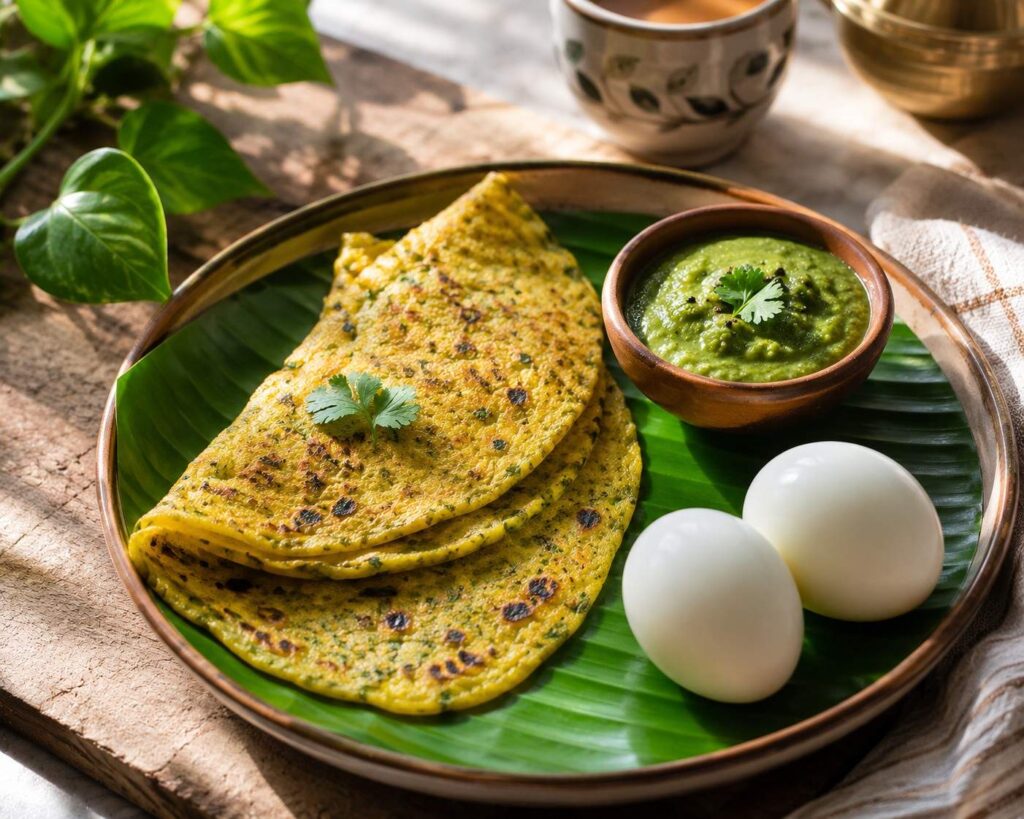
Key Nutrients: Tyrosine (amino acid), Cysteine, Biotin, B Vitamins
Hair is made of a thing called keratin which’s a type of protein. Now when we talk about protein it does a lot more than just give hair its structure. Protein has something called tyrosine which’s an amino acid that helps make melanin. We need to eat foods that have a lot of protein to get melanin. Foods with tyrosine and cysteine are really good, for this. If we do not eat enough of these foods then our bodies cannot make melanin even if we have all the necessary things.
Eggs are a food because they have a lot of tyrosine and something called biotin. Biotin is a type of vitamin that helps our hair grow and be strong. It does this by helping our bodies make keratin which’s the protein that hair is made of. Vitamin B5 is also good because it helps our bodies make red blood cells which help keep our hair follicles healthy and prevent hair from falling out. If you do not eat meat then moong dal and masoor dal are foods to eat because they have a lot of protein and tyrosine.
To eat it you should have two eggs every day if you are not a vegetarian. If you are a vegetarian you should have one bowl of dal for lunch and one bowl of dal for dinner. You should try to have kinds of dal, like moong dal, masoor dal and chana dal to get different amino acids. If you add a haldi and black pepper to your dal it will be easier for your body to use the nutrients in the dal.
8. Nuts — Walnuts, Almonds & Cashews
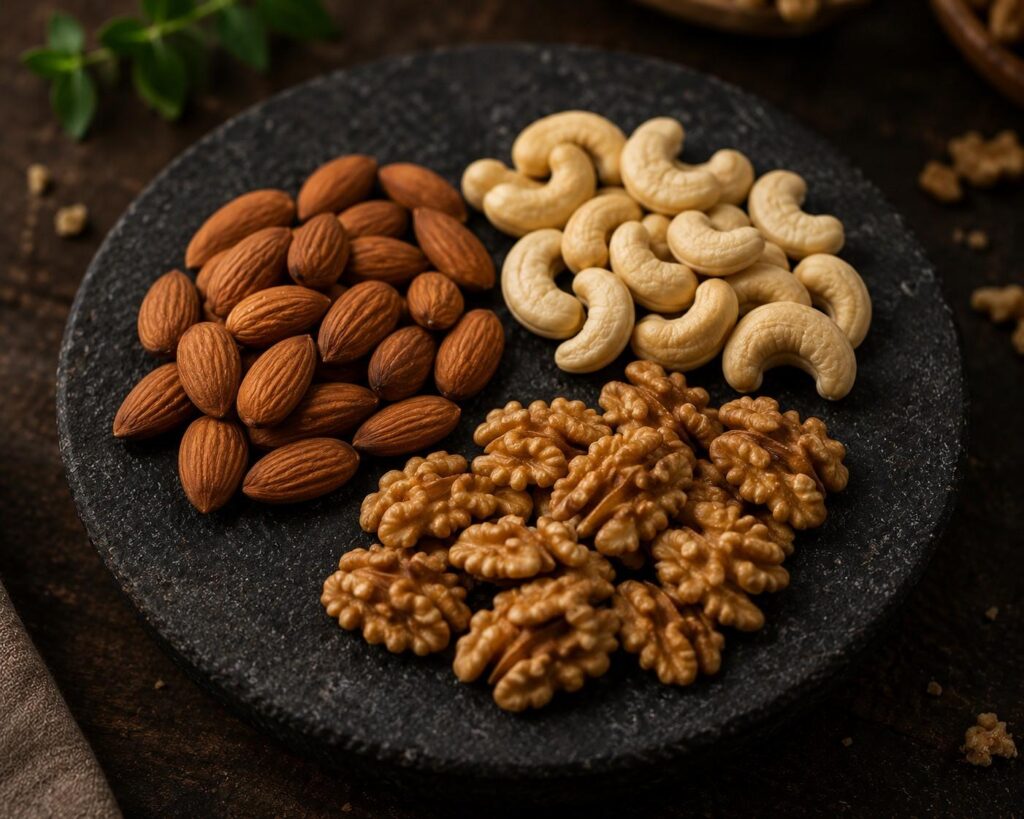
Key Nutrients: Copper (cashews), Vitamin E (almonds), Omega-3 (walnuts), Zinc
Cashews are really good for people in India because they have a lot of copper. This copper is important for the tyrosinase enzyme to work properly. Almonds have a lot of Vitamin E which helps keep the hair follicles safe, from damage. This damage is what usually causes hair to turn grey early. Walnuts are good too because they have Omega-3 fatty acids that help reduce inflammation around the hair follicles.
If you eat a mix of these three nuts every day you will get copper, zinc Vitamin E and Omega-3. Cashews, almonds and walnuts together are a way to prevent grey hair. You can get all these things by just eating a handful of cashews, almonds and walnuts and it only takes a few seconds.
To eat these nuts you should have four to five cashews, five to six almonds that you soaked overnight and two to three walnuts every day. The best time to have them is, in the morning. You can have the cashews, almonds and walnuts on a stomach or you can have them with your breakfast. It is better to avoid the cashews, almonds and walnuts that are salted or have flavour or are deep-fried.
9. Cow’s Milk & Fortified Plant Milks
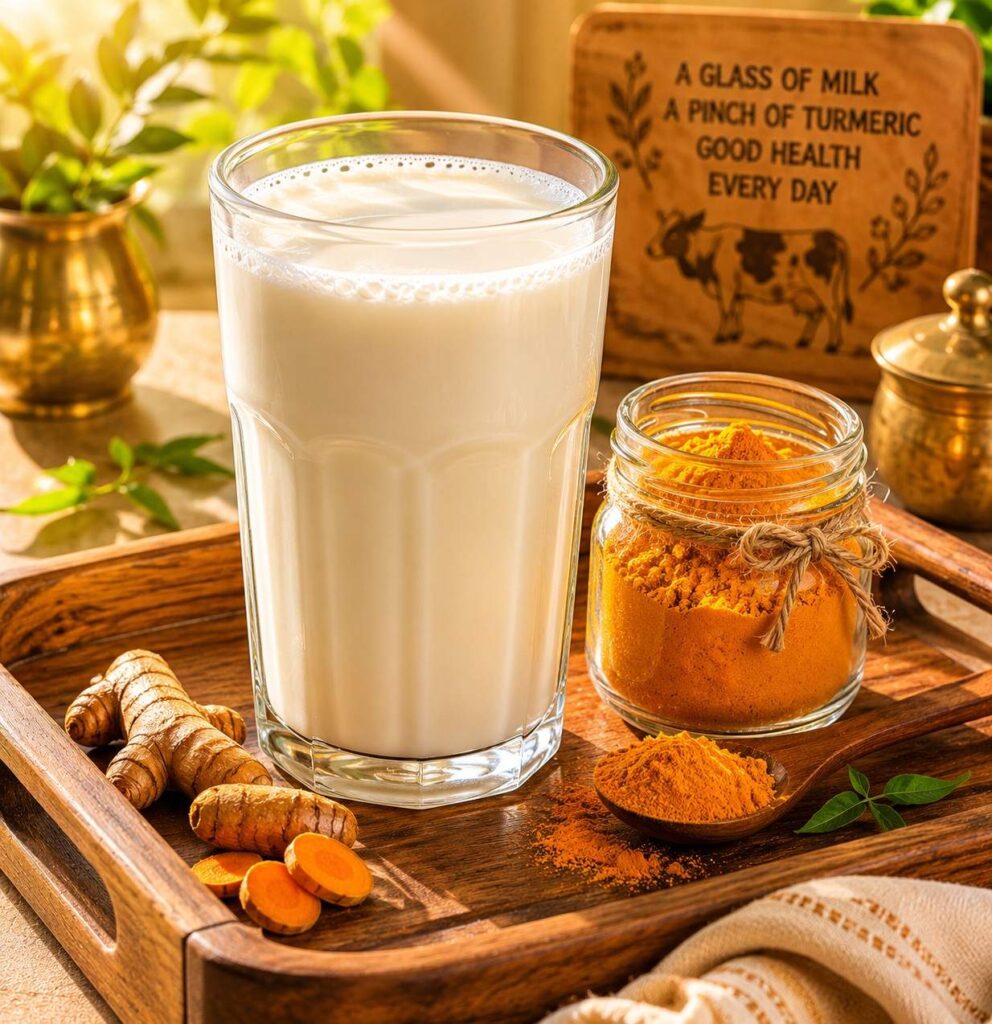
Key Nutrients: Calcium, Vitamin D, Vitamin B12, Protein
In the year 2025 a review was. It found that people who get grey hair early often have low levels of calcium and Vitamin D3. Milk from cows is a source of these and it is easy for our bodies to use them. We also get Vitamin B12 and all the amino acids we need from cows milk. For people who cannot drink milk because it has lactose or for people who’re vegan milk made from soy or oats is a good option because it has calcium and Vitamin D2 and Vitamin D3 added to it.
This food is really good because it helps with three things that people, in India often do not get enough of. Calcium, Vitamin D and Vitamin B12. And research says that not getting enough of these is connected to getting hair early.
To eat it you should drink one to two glasses of full-fat cows milk every day. If you do not like dairy then you can choose a plant milk that has at least 120mg of calcium and 1.5mcg of B12 in every 100ml of plant milk. You should drink milk. Also spend a few minutes outside in the sunlight every day so that your body can activate the Vitamin D3 from the milk.
10. Haldi (Turmeric) with Black Pepper — Anti-Inflammatory & Antioxidant
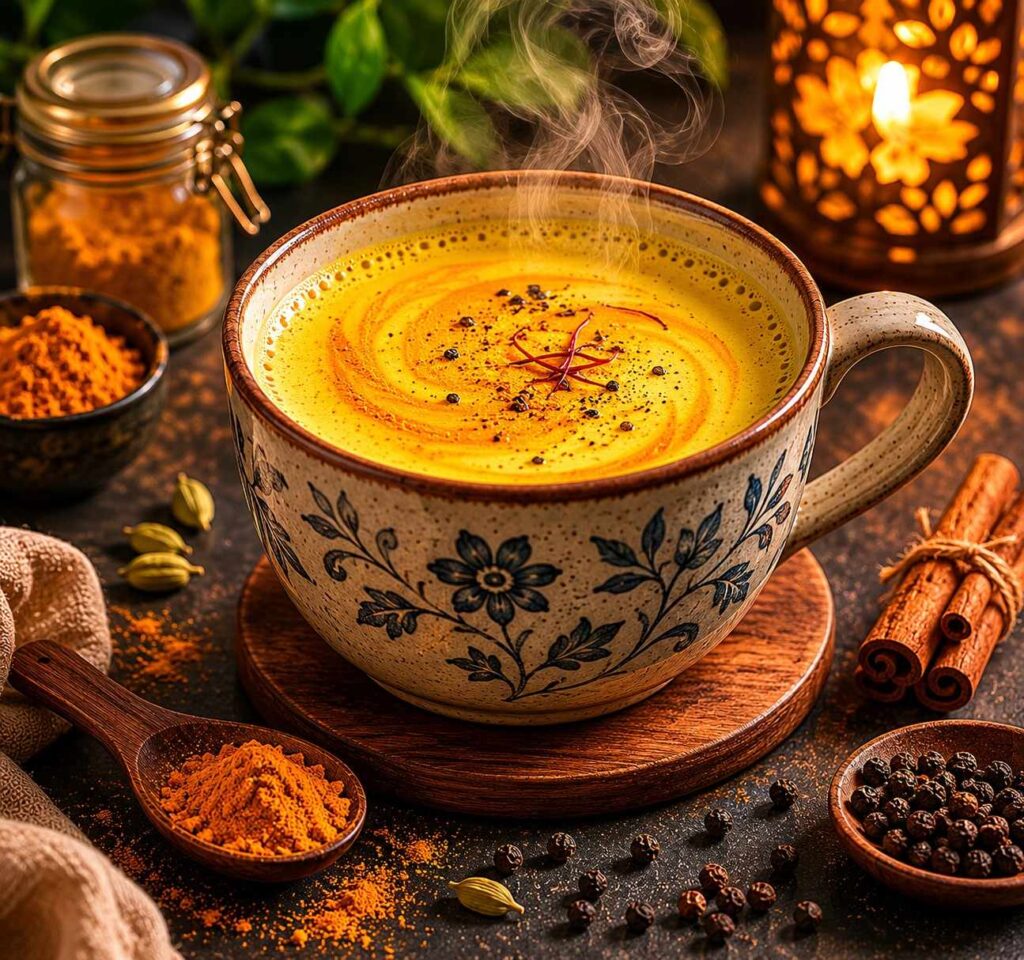
Haldi, which is also known as Turmeric, with Black Pepper. This is something that helps reduce inflammation and it has antioxidants too.
Key things that are good for us in Haldi:
- Curcumin
- things that help with inflammation
- antioxidants
The thing about Curcumin, which is found in Haldi is that it is really good for our bodies. People have done a lot of research on Haldi because Haldi has Curcumin and this helps keep the cells in our body from getting old. Haldi is really good, for us because Haldi has these helpers that keep our cells young.. When our cells get old it is usually because of something called stress, which hurts the cells that make our hair color. So if we take some curcumin every day it can help stop the things that make our hair turn gray too soon. If we take curcumin with pepper our body can use it a lot better which makes it work really well.
Getting inflamed a lot is also bad for our hair because it makes it turn gray faster. Turmeric is good, at stopping inflammation, which helps keep our hair healthy and strong.This is important because when our hair gets inflamed, the cells that make the hair color can get damaged over time and that makes the hair turn gray.
To have it you can drink Haldi doodh, which is also called milk at bedtime. You need to take half a teaspoon of turmeric an amount of black pepper, warm cows milk and a little bit of honey. You can also add a quarter teaspoon of turmeric with an amount of pepper, to your dal or sabzi every day.
11. Coconut & Coconut Water — Pitta-Cooling, Ayurveda-Approved
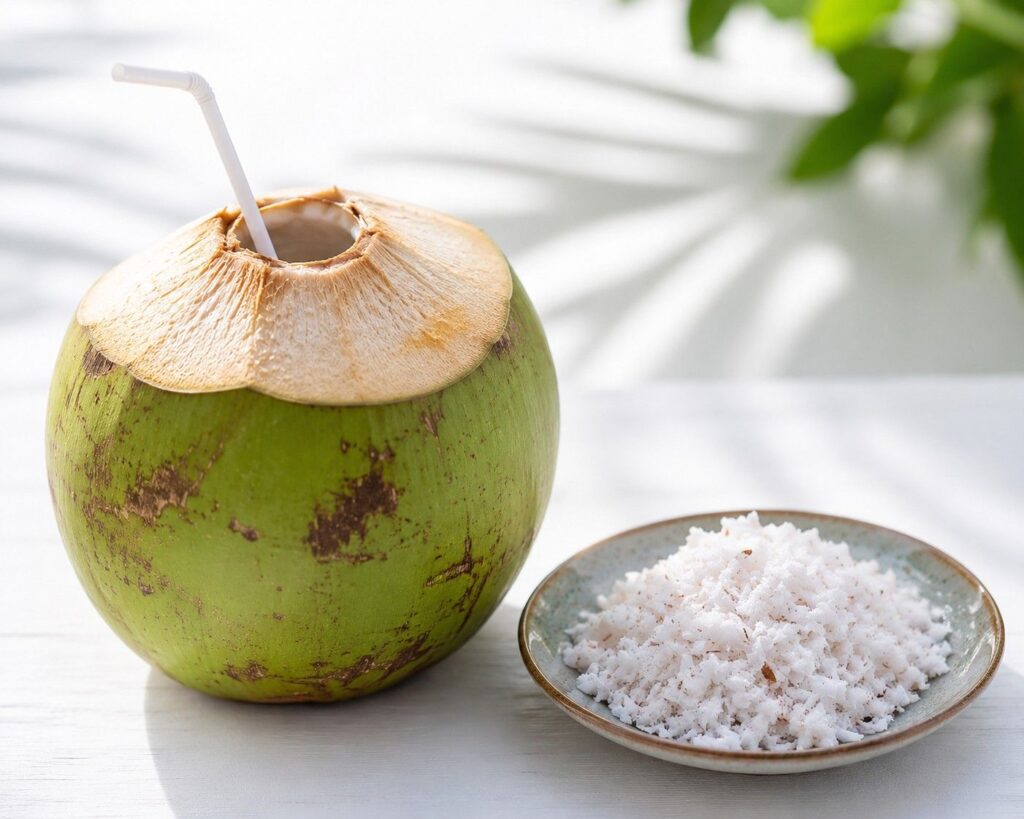
Key Nutrients: MCT fats, Cytokinins, Electrolytes, Lauric acid
Ayurveda says that we should eat cooling foods to balance Pitta and coconut is one of the coolest foods that is good for our hair health.
Coconut is a food for our hair because it has medium-chain triglycerides that help our body absorb the vitamins that are good for us.
Coconut water has things in it called cytokinins that are good for our cells and can even help stop them from getting old.
Tender coconut water is really good, for us. It has electrolytes and minerals that help our cells get the water they need. This also helps to reduce stress.
When we are worried or upset our body gets stressed. This can make our hair turn grey too soon.
So it is very important that we eat foods like coconut that can help reduce stress and keep our hair healthy.
Coconut is a good food, for our hair and we should try to eat it often to keep our hair looking good and feeling healthy.
How to Eat It:
Add grated coconut to your food. You can add it to chutneys, rice or stir-fries. Try to do this three to four times a week. This will give you the benefits of MCT. Help keep you cool.
Drink one tender coconut water every day. This is especially good, during summer months.
12. Pumpkin Seeds (Kaddu ke Beej) & Sunflower Seeds — Zinc + Folate Powerhouse
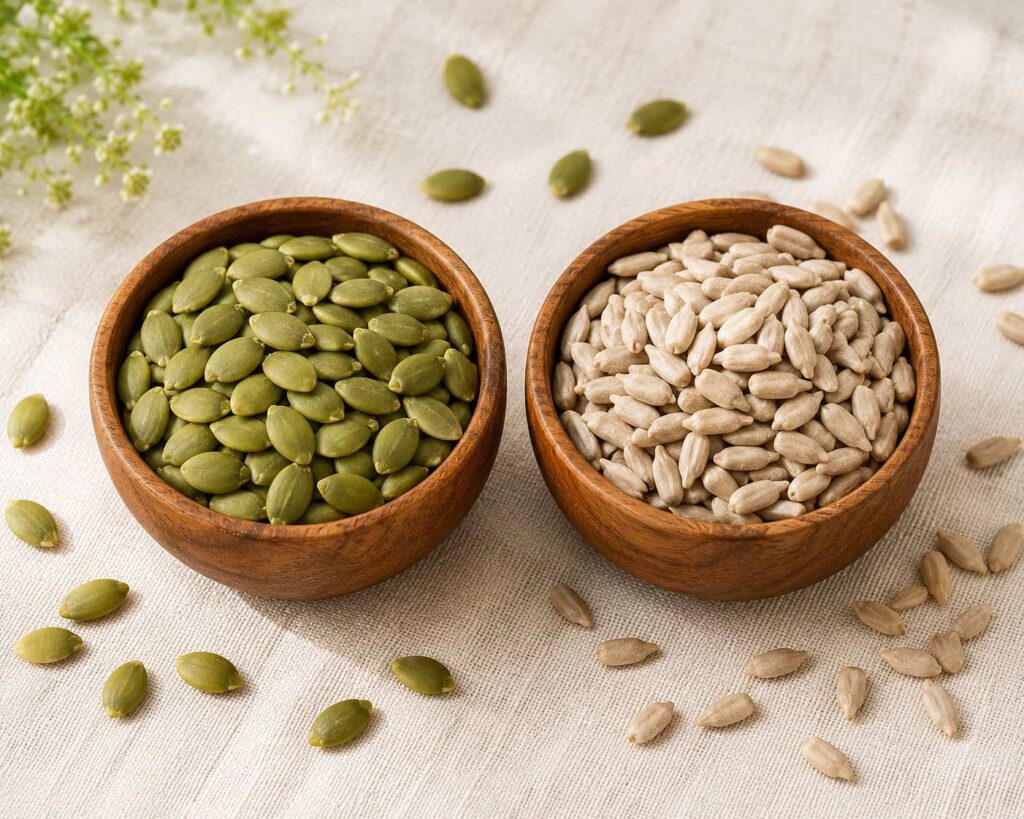
Key things in them are:
* Zinc
* Magnesium
* Vitamin E
* Iron
Zinc is very important for Pumpkin Seeds and Sunflower Seeds because it helps make melanin in our body. Pumpkin Seeds and Sunflower Seeds have Zinc that’s really good, for us..
They also give you magnesium. This mineral helps control a hormone that your body makes when you are stressed. This hormone can make your hair turn grey.
Sunflower seeds are also good. They have Vitamin E and folate. Some studies have found that not having enough of nutrients, like iron, vitamin D, folate, vitamin B12 and selenium can make your hair turn grey early. Seeds are a way to get many of these nutrients at the same time.
How to Eat It: Two tablespoons of pumpkin seeds as a mid-morning snack, added to smoothies, salads, or curd. Combine with a small handful of sunflower seeds for a comprehensive seed mix. Lightly roast with rock salt — avoid deep frying.
Key Nutritional Deficiencies Linked to Premature Greying in India
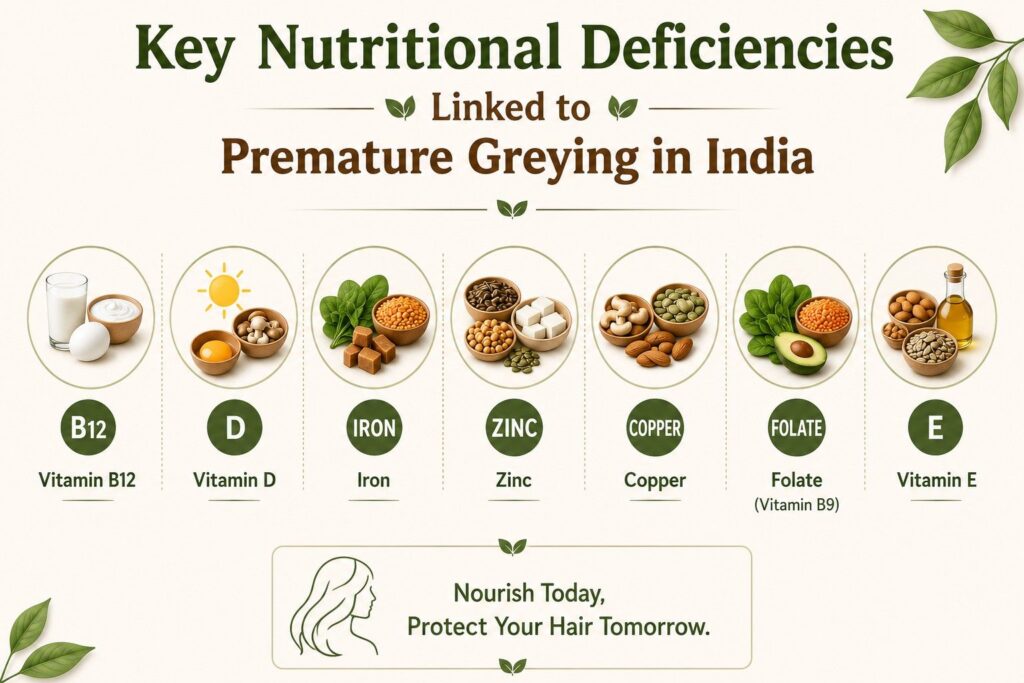
| Nutrient | Why It Matters | Best Indian Food Sources |
|---|---|---|
| Vitamin B12 | Damages melanocytes via oxidative stress; disrupts hair cell renewal | Dahi, paneer, eggs, milk |
| Copper | Cofactor for tyrosinase — the enzyme that makes melanin | Kala til, cashews, kala chana |
| Iron (Ferritin) | Reduces oxygen delivery to follicles; impairs melanin enzymes | Palak, rajma, masoor dal |
| Vitamin D3 | Consistently low in premature greying Indian population (2025 study) | Milk, ghee, sunlight |
| Zinc | Supports tyrosinase activity; essential for follicle repair | Pumpkin seeds, moong dal, nuts |
| Folate (B9) | Impairs DNA synthesis in follicle cells when deficient | Palak, kala chana, lentils |
| Calcium | New 2025 finding — low levels linked to early greying | Milk, dahi, ragi |
A 1-Day Sample Indian Meal Plan for Grey Hair Prevention
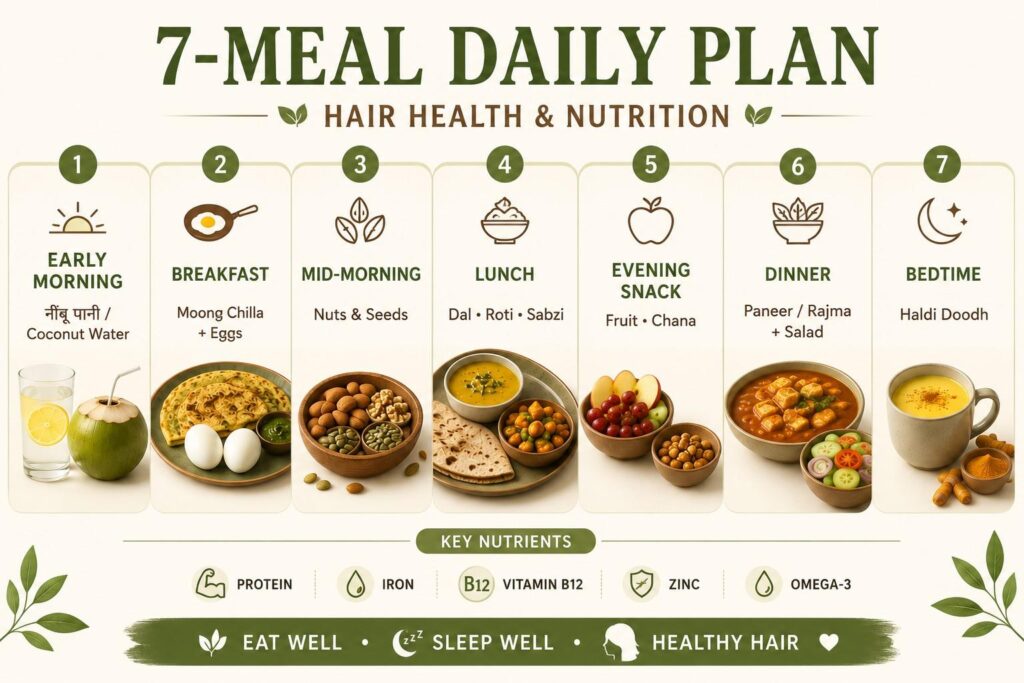
| Meal | What to Eat | Key Nutrients Covered |
|---|---|---|
| Early Morning | 8–10 raw curry leaves + 1 tsp amla juice in water + 4 soaked almonds + 2 cashews | B6, Folate, Vitamin C, Copper, Vitamin E |
| Breakfast | 2 eggs / moong dal chilla with palak + 1 glass milk with haldi & pepper | B12, Tyrosine, Iron, Calcium, Vitamin D |
| Mid-Morning | 2 tbsp pumpkin seeds + 1 fresh amla | Zinc, Iron, Vitamin C (enhances iron absorption) |
| Lunch | Palak dal + kala chana sabzi + 1 tsp ghee on roti + tomato salad with lemon | Iron, Folate, B Vitamins, Vitamins A/D/E/K |
| Evening | Tender coconut water + 1 tsp kala til in a small bowl of curd | Copper, Zinc, B Vitamins, Electrolytes |
| Dinner | Masoor dal + sabzi with curry leaves + paneer / boiled egg | Protein, Tyrosine, B12, Iron, B6 |
| Bedtime | Haldi doodh: warm milk + ½ tsp turmeric + pinch pepper + honey + 3 walnuts | Calcium, Vitamin D, Curcumin, Omega-3, B12 |
5 Diet Habits That Accelerate Grey Hair — Avoid These
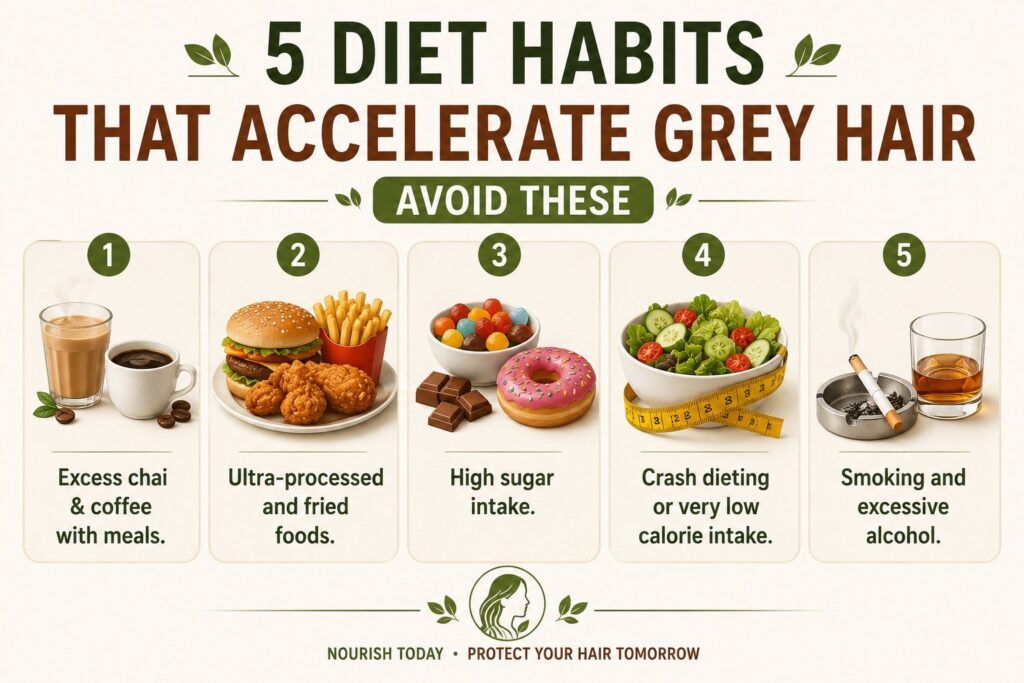
1. Excess chai & coffee with meals. Tannins in tea block iron absorption significantly. Have your chai at least 30 minutes before or after food — not during.
2. Ultra-processed and fried foods. These increase oxidative stress and systemic inflammation, directly damaging the melanocytes responsible for hair colour.
3. High sugar intake. Glycation — sugar binding to proteins — accelerates cellular aging across the body, including in hair follicle cells and melanocytes.
4. Crash dieting or very low calorie intake. Rapid nutrient depletion hits hair follicles fast. Extreme caloric restriction is one of the fastest routes to nutritional deficiency-driven greying.
5. Smoking and excessive alcohol. Both massively increase oxidative stress, robbing follicles of the antioxidants they need to protect the melanin production process.
For more information: https://hairglowguide.com/hair-looks-thinner-in-certain-lighting/
https://hairglowguide.com/home-remedies-for-dry-hair/
https://hairglowguide.com/soft-water-hair-problems/
Frequently Asked Questions
Can grey hair be reversed by diet alone?
Hair shafts that have already turned grey cannot be repigmented — the melanin has permanently stopped being deposited into that shaft. However, if premature greying is driven by a nutritional deficiency (especially B12, copper, or iron), correcting that deficiency through diet can slow further greying and, in some cases, cause new hair growing from the follicle to appear darker. Diet works best as prevention and to slow progression — not as a reversal agent for existing grey strands.
How long does this diet take to show results?
Hair grows approximately 1–1.5 cm per month. Nutritional changes affect new hair growth from the follicle, not existing strands. You would typically need three to six months of consistent dietary improvement before noticing a meaningful difference in new hair at the roots. Treat it as a long-term lifestyle commitment, not a short-term fix.
Is premature greying before age 25 always genetic?
No. A study employing a young Indian population correlated premature greying with lower serum ferritin, calcium, and Vitamin D3 levels — all of which are nutritional and correctable. Stress, smoking, and nutritional deficiencies account for a significant proportion of early greying cases even in genetically predisposed individuals.
Fresh amla or amla powder — which is better for grey hair?
Fresh amla has the highest Vitamin C content. Cold-pressed amla juice (unsweetened) is a practical second choice that retains most bioactive compounds. Amla powder has significantly lower Vitamin C due to heat processing but still provides tannins and antioxidants. Fresh or cold-pressed juice is the first choice; powder is a backup option.
Should I take supplements if I am vegetarian?
Get a blood test first — check serum B12, ferritin, and Vitamin D3 levels. If deficient, supplementation is strongly recommended alongside dietary changes, particularly for B12, which cannot be adequately obtained from plant sources alone. Do not supplement blindly. Diet is the foundation; supplements address documented gaps.
The Bottom Line
Premature grey hair in India is overwhelmingly driven by factors within your control — nutritional deficiencies in B12, copper, iron, zinc, folate, and Vitamin D3, combined with oxidative stress and chronic stress. The right diet for grey hair is not exotic or expensive. It is dal-chawal with ghee, kala til in your curd, kadi patta in your sabzi, and amla every morning. Start with your thali — and be consistent.

 Admin
Admin