
 Admin
Admin Hair fall remedies for Indians living abroad have become one of the most searched topics in recent years, and for good reason. Moving abroad is one of life’s biggest transitions. There’s the excitement of a new city, a new job or college, maybe even a new identity you’re still figuring out. But somewhere between unpacking suitcases and learning which aisle has the spices at the local supermarket, many Indians notice something unsettling: clumps of hair on the pillow every morning, strands wrapped around the shower drain, or a hairbrush that suddenly looks like it belongs to someone else. If you’ve been quietly struggling with this, you are absolutely not alone — this is one of the most common and most under-discussed side effects of relocation, whether you’ve moved to the US, UK, Canada, Australia, or the Gulf.
What makes this particularly frustrating is that it often catches people off guard. You expected jet lag, homesickness, maybe a bit of culture shock — but nobody warns you that your hair might react to the move too. The reassuring part is that this kind of hair fall is, in the vast majority of cases, temporary and very treatable once you understand exactly why it’s happening and address the right combination of triggers, rather than randomly trying every product on the shelf.
Why Does Hair Fall Increase After Moving Abroad?
Before jumping into remedies, it’s worth slowing down and understanding the actual mechanics behind this, because most people treat the symptom without ever addressing the cause — and that’s why so many remedies fail to stick. Most NRIs and international students report noticing increased shedding somewhere between the first three to six months of relocating, and almost never because of just one isolated factor. It’s usually a combination of several smaller stressors hitting the body’s hair growth cycle all at once.
Water quality change is, by far, the biggest and most underestimated culprit. Many popular destination countries — the UK, the USA, several Gulf nations, and large parts of continental Europe — have significantly harder water than what most Indian cities supply, while a few regions have unusually soft water instead. Hard water carries a heavier load of dissolved calcium and magnesium, which gradually deposits onto the scalp and hair shaft like a thin invisible film, clogging follicles, dulling shine, and making strands brittle over weeks of repeated washing. Soft water, on the other hand, can sometimes strip hair of natural protective oils faster than you’re used to, leaving it feeling unusually flat or fragile.
Climate shock plays an equally large role. If you’ve moved from India’s humid, tropical, or subtropical climate into a cold, dry country, or from a milder Indian city into intense desert heat in the Gulf, your scalp’s oil production and moisture balance has to recalibrate almost overnight — and hair fall is often the visible result of that internal adjustment period.
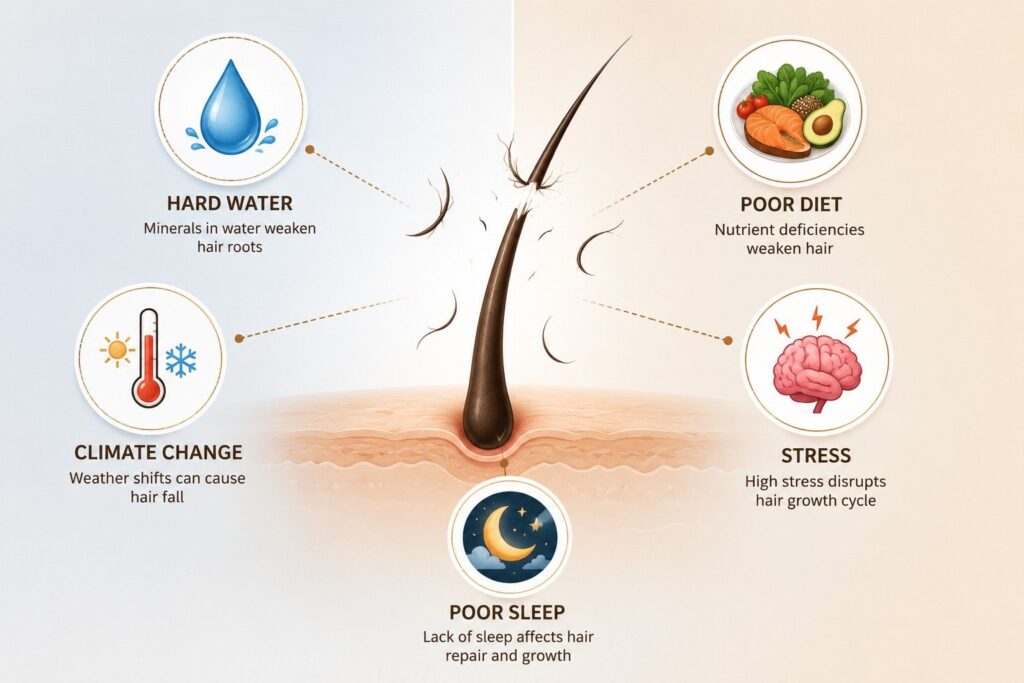
Dietary changes matter more than most people initially realize. A sudden shift away from home-cooked dal, rice, ghee, fresh seasonal vegetables, and regular paneer or curd toward unfamiliar, often more processed or convenience-based foods abroad frequently leads to a quiet drop in iron, protein, zinc, and biotin intake — all nutrients your hair follicles depend on heavily for the keratin production cycle.
Stress and homesickness are arguably the most powerful trigger of all, even though they’re the easiest to dismiss. The adjustment period of moving abroad — new currency, new social codes, missing family functions back home, navigating bureaucracy alone — activates a stress response in the body that can push a noticeable percentage of hair follicles into a resting (telogen) phase prematurely. This condition, called telogen effluvium, has a frustrating delay built into it: the actual trigger might happen in month one, but the visible shedding often doesn’t show up until two to three months later, which is exactly why so many people can’t connect the dots themselves.
Disrupted sleep cycles from jet lag, time zone adjustment, and the general chaos of settling into a new routine also interfere with the body’s natural hair growth rhythm, since a large portion of cellular repair, including hair follicle activity, happens during deep sleep phases that get repeatedly cut short during the adjustment period.
Once you understand which of these factors apply to your specific situation, the remedies below will make a lot more practical sense, because you’ll be treating the actual cause rather than guessing.
12 Natural Home Remedies to Stop Hair Fall After Moving Abroad
1. Identify Your New Water Type and Adjust Accordingly

This is the step almost everyone skips, and it’s the one that quietly undoes every other effort. If you’ve moved somewhere with notoriously hard water — large parts of the UK, much of the southwestern and midwestern US, and most Gulf countries — your hair is very likely dealing with ongoing mineral buildup that weakens strands and clogs follicles over time, even if you can’t see it happening day to day. A simple water testing strip, available cheaply at most local pharmacies or hardware stores, will confirm your water hardness level within minutes. Once you actually know what you’re dealing with, you can stop guessing and start taking targeted action, like the shampoo and rinse adjustments covered below, instead of randomly switching products every few weeks out of frustration.
2. Rinse With Diluted Apple Cider Vinegar

This is a classic remedy that works beautifully against hard water buildup, and it costs almost nothing. Mix one tablespoon of raw, unfiltered apple cider vinegar with two full cups of water, and use this as a final rinse after shampooing, once or twice a week — never daily, since overuse can dry out the scalp. Pour it slowly over your scalp and hair after your regular wash, leave it for two to three minutes, then rinse with plain water. The mild acidity helps dissolve mineral deposits left behind by hard water, restores your scalp’s natural pH balance (which tends to skew alkaline from many international shampoos and tap water), and leaves strands noticeably smoother and shinier without needing any expensive salon treatment.
3. Bring or Order Your Amla, Bhringraj, and Methi Oils From Home

Indian herbal hair oils are genuinely effective for a reason — they’ve been refined over generations specifically for hair fall, and they’re often surprisingly hard to find, or absurdly overpriced, once you’re abroad. Before you travel, stock up on cold-pressed amla (Indian gooseberry), bhringraj, and methi (fenugreek)-infused hair oils from a trusted Indian brand, or order them through Indian grocery platforms and Amazon sellers that now ship internationally to most major countries. Warm a small amount between your palms or in a small bowl of hot water (never directly on the stove), then massage it gently into your scalp using circular motions for five to ten minutes, twice a week. Leave it on for at least an hour, ideally overnight if your schedule allows, before washing it out. These herbs are rich in antioxidants, iron, and vitamin C, and have a long-documented history in Ayurveda specifically for strengthening hair roots and slowing down shedding.
4. Switch to a Sulfate-Free, pH-Balanced Shampoo

Many shampoos sold abroad are formulated with different water chemistry and hair-type assumptions than what’s common back home, which means a product that worked perfectly in Mumbai or Delhi might behave completely differently once you’re washing your hair in London or Dubai tap water. Look specifically for sulfate-free, pH-balanced shampoos, since sulfates can be especially harsh when combined with hard water buildup. Additionally, incorporate a chelating shampoo once every two weeks — these are specifically designed to lift mineral deposits off the scalp and hair shaft that regular shampoos leave behind. This one switch alone resolves a surprising amount of dryness-related breakage and shedding within just a few weeks for most people.
5. Rebuild Your Plate With Protein and Iron

This is where kitchen-based fixes matter the most, and it’s also where most people unintentionally slip up after moving abroad. Hair is literally constructed from a protein called keratin, so even a moderate dip in your protein intake shows up in hair health within a matter of weeks, not months. Make a deliberate effort to add eggs, paneer, lentils, soaked moong, chickpeas, and sprouts into your daily meals, even if you’re cooking for one in a small kitchen abroad. Pair iron-rich foods like spinach, lentils, and dried fruits with vitamin C sources such as citrus fruit or bell peppers in the same meal, since vitamin C significantly boosts iron absorption. This particular combination is actually one of the 15 Kitchen Ingredient Home Remedies for Hair That Actually Work, and it works just as effectively in a foreign kitchen with foreign grocery store ingredients as it does back home.
6. Add More Fresh Fruit to Your Diet

It’s remarkably easy to slip into processed, frozen, or convenience-based food when you’re newly settled abroad, still learning your way around an unfamiliar grocery store, and juggling a hundred other adjustments at once. Make a conscious, almost non-negotiable effort to include fresh fruit in your diet daily, even if it’s just one piece with breakfast. Citrus fruits like oranges and grapefruit, berries, bananas, and pomegranate (when available) are particularly excellent for hair strength, shine, and overall scalp health, since they supply a combination of vitamin C, antioxidants, and micronutrients that directly support the hair growth cycle. If you want a much deeper breakdown of exactly which fruits work best for hair and why, along with how to actually incorporate them into your routine, our detailed guide on the 12 Best Fruits for Hair Growth and Thickness covers this extensively.
7. Practice Pranayama or Simple Breathing Exercises Daily

Stress-induced hair fall responds remarkably well to consistent stress reduction, and the good news is you don’t need a yoga studio membership, special equipment, or even much space to get started — just ten quiet minutes and a chair. Anulom-vilom (alternate nostril breathing) or even simple slow, deep belly breathing every morning before you start your day measurably lowers cortisol levels over time, and since cortisol is directly linked to the kind of stress-triggered telogen effluvium that’s extremely common during the first several months abroad, this small daily habit can meaningfully reduce shedding within a few weeks of consistent practice.
8. Fix Your Sleep Schedule as a Priority, Not an Afterthought

Jet lag and time zone adjustment genuinely disrupt hair growth cycles, because a large portion of the body’s repair processes, including hair follicle activity and protein synthesis, are tightly tied to your circadian rhythm and happen predominantly during deep sleep. Rather than letting your sleep schedule drift for weeks while you “adjust naturally,” aim to lock in a consistent sleep and wake time within your very first two weeks of arrival, using tools like blackout curtains, melatonin (if recommended by a doctor), and a fixed morning alarm to anchor your body clock. This single habit shift often has a bigger overall impact on hair fall recovery than any shampoo, oil, or supplement, simply because it restores the internal conditions your body needs to regrow hair properly.
9. Switch From Hot Showers to Lukewarm Water

Cold climates make long, scalding-hot showers incredibly tempting, especially in your first winter abroad, but very hot water strips away the scalp’s natural protective oils and weakens hair at the root with repeated exposure. Make the switch to lukewarm water specifically for washing your hair, even if you keep the rest of your shower warmer, and finish with a brief cool-water rinse if you can tolerate it. This simple change helps seal the hair cuticle flat, locks in moisture, and noticeably reduces breakage and frizz over just a couple of weeks.
10. Use a Leave-In Conditioner or Weekly Hair Mask in Dry Climates

If you’ve relocated to a country with central heating, low ambient humidity, or a generally drier climate than most of India, your hair is very likely losing moisture faster than it used to, even if your washing routine hasn’t changed at all. Introduce a lightweight leave-in conditioner for daily use, plus a weekly hair mask using simple, easily available ingredients like plain yogurt, mashed banana, or aloe vera gel — all of which are widely available in most international grocery stores too. Apply generously from mid-length to ends, leave on for twenty to thirty minutes, and rinse thoroughly. This restores lost moisture and significantly reduces the dry-climate breakage that often gets mistaken for hair fall.
11. Get Your Vitamin D and B12 Levels Checked

This is a remedy people frequently overlook, but it can be genuinely important depending on where you’ve moved. If you’ve relocated to a country with noticeably less sunlight than most of India, especially during the long winter months in places like the UK, parts of Europe, or northern North America, vitamin D deficiency can quietly contribute to hair thinning over time without any other obvious symptoms. Similarly, B12 deficiency is already fairly common among vegetarian Indians, and dietary changes after moving abroad can sometimes make this worse if you’re not deliberately compensating. A simple blood test through your local GP or clinic, followed by a doctor-recommended supplement if levels come back low, can meaningfully improve hair density within a few months.
12. Be Patient and Give It Three to Six Months
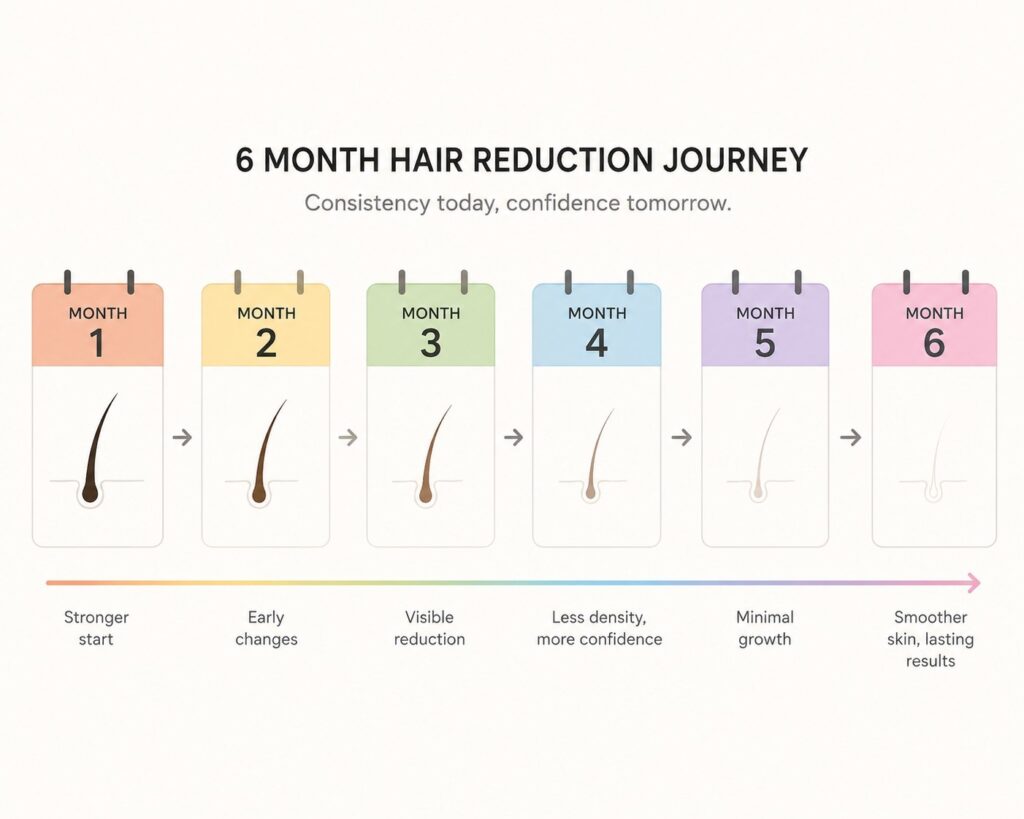
This is, without question, the most important piece of advice on this entire list, and also the one most people ignore in their panic. Relocation-related hair fall, especially when it’s driven primarily by stress, sleep disruption, and dietary shifts, typically peaks around the two to three month mark after the initial trigger, and then begins resolving naturally by month four to six, provided you’re consistently addressing diet, water quality, and stress in the meantime. Panicking and switching shampoos, oils, or remedies every single week, chasing quick fixes, often does considerably more harm than the original problem ever did, because it keeps shocking an already stressed scalp. Consistency with even two or three of the remedies above, sustained over months rather than days, matters far more than trying everything at once for a week and giving up.
A quick note worth keeping in mind for when you visit home: seasonal hair triggers don’t disappear just because you’ve relocated abroad, and many NRIs notice a fresh round of hair fall during trips back to India, particularly around monsoon season, due to humidity shifts, water changes, and fungal scalp issues that are common during that time of year. It’s worth reading through our piece on 9 Common Hair Problems During Monsoon Season before your next visit home, so you’re prepared either way and don’t undo months of progress in a couple of weeks.
Frequently Asked Questions
Is hair fall after moving abroad permanent?
No, in the vast majority of cases it’s temporary and directly related to telogen effluvium, a stress and adjustment-related shedding phase that affects a portion of hair follicles at once. It typically resolves naturally within three to six months once diet, water quality, sleep, and stress factors are properly addressed.
Why does hard water abroad cause more hair fall than water in India?
Hard water contains significantly higher concentrations of dissolved calcium and magnesium, which build up on the scalp and along the hair shaft over repeated washes, weakening strands, clogging follicles, and making hair feel coarse or brittle. Many parts of India have comparatively softer municipal water, so the shift after moving abroad can be quite noticeable within just a few weeks.
Can diet alone fix hair fall caused by relocation?
Diet is a major contributing factor but is rarely the only one at play. Combining better nutrition with deliberate stress management, consistent sleep, and proper scalp care, such as oiling and switching to the right shampoo for your new water type, produces noticeably faster and more complete results than diet changes attempted in isolation.
How soon should I expect to see improvement after starting these remedies?
Most people notice a reduction in daily shedding within four to eight weeks of consistent effort across multiple remedies, though visible new hair growth and improved thickness typically take three to four months to become obvious, since hair growth naturally operates on a delayed cycle rather than an immediate one.
Should I bring Indian hair oils with me when moving abroad?
Yes, this is genuinely worth the suitcase space. Authentic amla, bhringraj, and methi-based oils can be considerably harder to find, or far more expensive, once you’re abroad, and having a trusted bottle on hand from day one lets you start proper scalp care immediately rather than waiting weeks to source a suitable alternative locally.
Is it normal to lose more hair in winter after moving to a colder country?
Yes, this is a very commonly reported pattern. Cold, dry air combined with indoor central heating reduces scalp moisture levels significantly, and reduced winter sunlight can lower vitamin D production in the body, both of which independently contribute to increased shedding during the colder months abroad.
Final Thoughts
Moving abroad changes almost everything about your daily routine, and your hair is simply responding to all of that change at once, not failing you. The water is different, the climate is different, the food is different, and your stress levels and sleep patterns have likely been disrupted too. None of that means something is permanently wrong, and it definitely doesn’t mean you need expensive clinical treatments before giving natural remedies a real chance.
If you genuinely want to know how to stop hair fall after moving abroad naturally, the answer isn’t one miracle product, it’s a combination of small, consistent habits: adjusting to your new water type, feeding your scalp with the right oils, rebuilding your diet around protein and fresh fruit, managing stress, fixing your sleep schedule, and most importantly, giving your body the three to six months it actually needs to recalibrate. Pick two or three remedies from this list that feel realistic for your current routine and stick with them consistently, rather than trying all twelve at once and burning out within a week.
Your hair adjusted to India’s water and climate over years. Give it a fair amount of time to adjust to its new home too, and in most cases, it will.

 Admin
Admin